
- BGG rank
- BGG #8,861
- BGG rating
- 7.4
Flame & Fang
- 1–4 players
- 30–60 min
- Complexity 2.4/5
- 2024
2025
Rules assistance for The Great Commission: Strategic Card Game
Plain-language explanations of turns, card effects and disputed situations, with official source references and saved question history.
For 1 player
What would you like to know?
Answers come from the official rulebook, with the page to check.
The Great Commission: Strategic Card Game is a board game released in 2025 for 1–4 players, 60–90 minutes per game, and ages 12 and up. It was designed by Simon Amadeus Pillario and Paul Snuggs and its main mechanics are Variable Player Powers, Simultaneous Action Selection, and Cooperative Game.

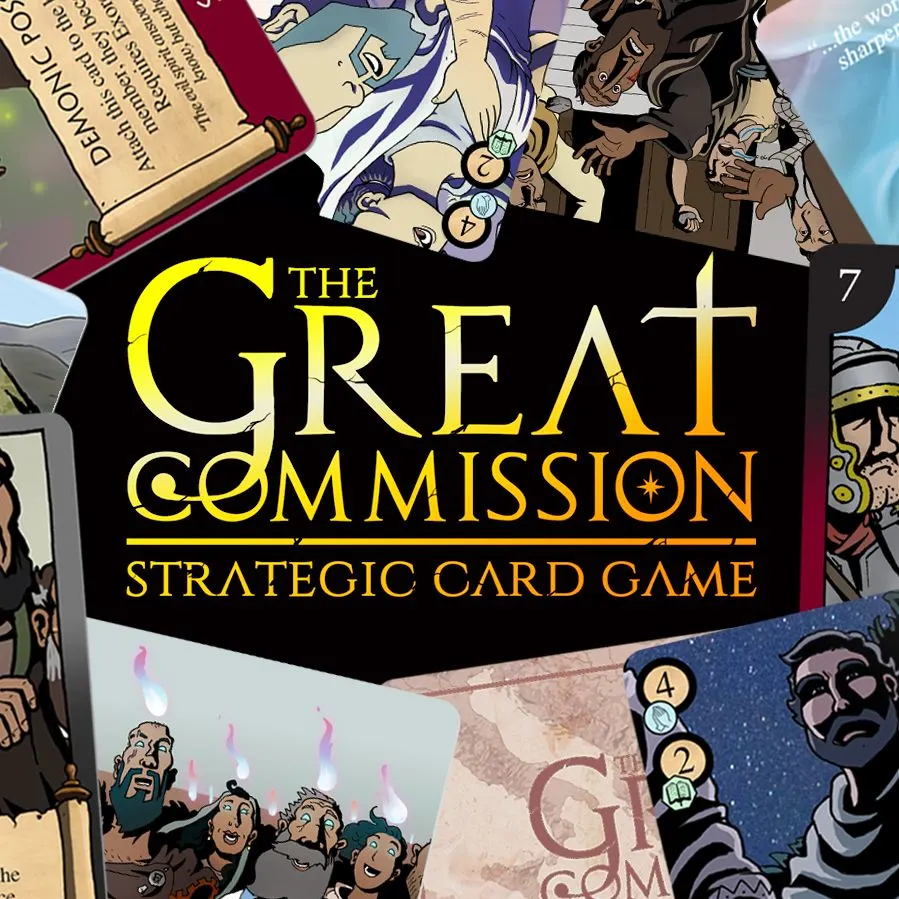
The Great Commission is a cooperative (or solo) strategy game where you take on the challenge of leading a church in the tumultuous Roman era. Manage a church full of diverse personalities, each contributing their own unique abilities and gifts, but also bringing their struggles with sin, conflict or even demonic opposition. FEATURES: Cooperative multiplayer mode Fully developed solo mode Child-friendly modes Tableau-Building Resource Management Engine Building Multiuse cards Simultaneous Turns Variable Difficulty settings The rich historical setting and spiritual themes interwoven with the gameplay lead to not only tactical decisions but sometimes philosophical ones. The aim is to share the gospel and assemble your church before your time runs out! The game is set in the first-century Roman Empire, and the bold contemporary artwork is drawn from the Acts of the Apostles: Word for Word Bible Comic. OVERVIEW OF THE GAME Each player starts the game with a location for their church (Rome, Jerusalem, etc), a Leader (The Apostle Peter, Paul, James, Mary Mother of Jesus, etc) and six initial church members with which to begin sharing the Good News and "make disciples of all nations". These starting combinations will strongly influence different play styles as you navigate the strengths and weaknesses of your initial team and location. The game has a number of ways in which you can increase or decrease the difficulty for new or experienced players. For example, the location cards are double-sided, having a “Standard Mode” and a “Challenge Mode”. Efficiently utilising the unique talents and abilities of your church's leader and team members can result in satisfying engine-building mechanics involving strategy, cooperation and careful resource management as you try to beat the clock! Over time, your church is very likely to accrue “Troubles” like persecution, internal struggles and spiritual attacks that must be dealt with by intercession with wisdom or faith. If this is not resolved effectively, it will harm and eventually kill the life of the church, losing the game. Powerful "Event Cards" will "turn the world upside down" for better or worse, rocking your strategy, giving unexpected boons or putting temporary roadblocks in your way. However, the game-changing "Blessing Cards" can be utilised to call upon divine intervention or potent spiritual gifts like prophecy, exorcism or even resurrection into play! Players are encouraged to communicate freely and may choose who does what and in what order. To win the game, churches must bring the Gospel to every person in the "World Deck" before the "Event Deck" is exhausted and you run out of time! You will also need to be extra diligent at identifying and dealing with various troubles in the church, causing you to lose the game. Co-created by Paul Snuggs and Simon Amadeus Pillario.
The Great Commission: Strategic Card Game supports 1–4 players according to the catalogue. This range comes from the publisher’s listed player count, so the game can be set up for any group size within it. Some setups, rules and scoring details may still vary by player count, so check your edition’s rulebook for the exact configuration.
The listed playing time for The Great Commission: Strategic Card Game is 60–90 minutes. This is the publisher’s estimate for a full game. The actual duration depends on the group, the player count and familiarity with the rules: first sessions usually run longer, while experienced groups often finish faster. Setup and teaching time are not included in this estimate.
The catalogue lists The Great Commission: Strategic Card Game for ages 12 and up. This is the publisher’s recommendation and reflects reading demands, rule complexity and small components rather than theme alone. Younger players can often join with help from an adult, so check the age guidance on your edition and consider your group’s experience with board games.
The Great Commission: Strategic Card Game has a complexity rating of 2.9 out of 5 from BoardGameGeek players, which makes it a medium-light game. The rating reflects how much rules knowledge, planning and decision-making a typical game demands. Expect a longer first teach for heavier games, and use a preparation guide before game night.
The Great Commission: Strategic Card Game belongs to these categories: Card Game, Comic Book / Strip, and Ancient. Its main mechanics are Variable Player Powers, Simultaneous Action Selection, and Cooperative Game. Categories describe the theme and setting of a game, while mechanics describe what players actually do on their turns. Each mechanic links to a catalogue hub with similar games, which helps when you want something comparable.
The credited designers of The Great Commission: Strategic Card Game are: Simon Amadeus Pillario and Paul Snuggs. These credits come from the published game data and name the people responsible for the game’s design, not its illustrators or publishers. Designer pages on MeepleRules collect other titles by the same designers, which helps when you enjoy a game and want to find similar ones.
The catalogue lists The Great Commission: Strategic Card Game as a base game. It can be played on its own with the components in the box and does not require any other title. Expansions, if any exist, add new content or rules on top of it and are listed separately in the catalogue with a link back to this base game.