

- BGG rank
- BGG #23,374
- BGG rating
- 6.2
Leipzig: Napoleon Encircled
- 1–2 players
- 60 min
- Complexity 3.0/5
- 2010

2015
Rules assistance for Wellington's Victory: The Battle of Waterloo, 18 June 1815 (Second Edition)
Plain-language explanations of turns, card effects and disputed situations, with official source references and saved question history.
What would you like to know?
Answers come from the official rulebook, with the page to check.
Wellington's Victory: The Battle of Waterloo, 18 June 1815 (Second Edition) is a board game released in 2015 for 1–2 players, 60–1000 minutes per game, and ages 14 and up. It was designed by Chris Perello and its main mechanics are Simulation.
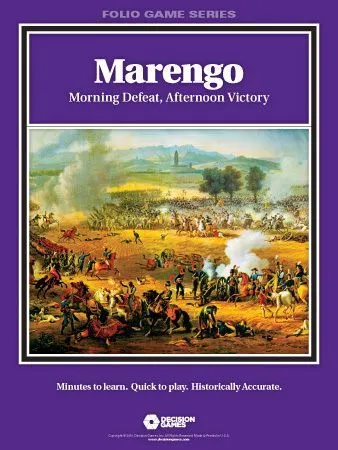
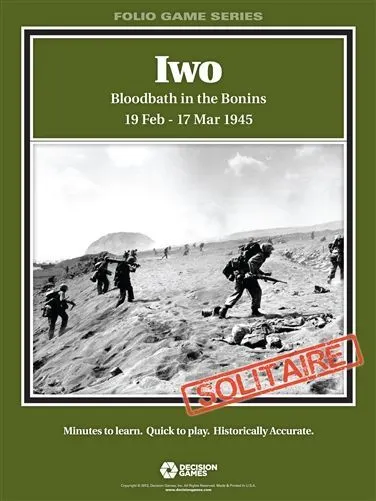
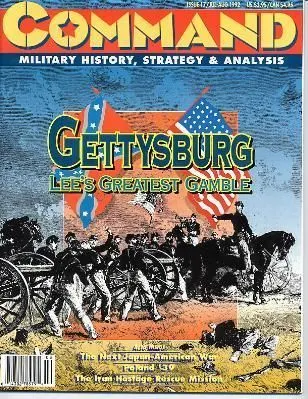
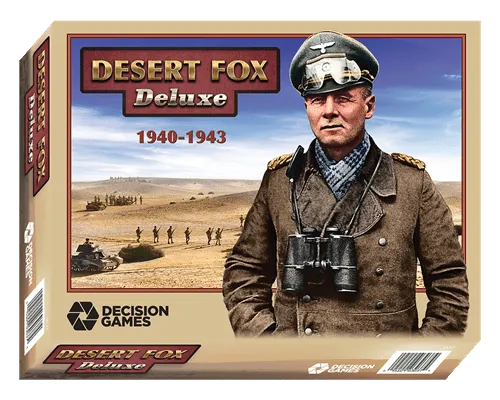


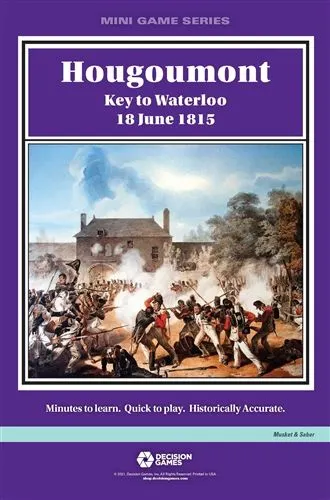
The classic SPI game covering the battle of Waterloo returns in this redesigned version. Napoleon's French Army of the North faces Wellington's hodge-podge Army of the Low Countries, who are fighting for time while awaiting the arrival of Blucher's Prussian Army of the Lower Rhine. The maps use natural contours to show elevations, withterrain features including the critical chateaux, villages and farms, walls, woods, hedges, sunken roads, slopes, streams, and marshes. Most of the vividly colored counters represent combat units: infantry battalions, cavalry squadrons, artillery batteries, and engineer detachments. Many battalions have additional counters for specialist skirmishers, or additional counters to represent greater size. Unit capabilities are modified by a number of formation markers, from infantry squares to cavalry vedettes. Individual leaders enhance unit performance, while each army's high command is represented by key commanders and unit headquarters. The game mechanics have been streamlined; a single dice roll inflicts casualties and disorder. Units and larger organizations wear down over time and must be rested or risk a catastrophic collapse. Finesse trumps brute strength in combat; players must utilize a variety of arms, formations, and tactics to seize key ground and destroy enemy units. Hidden movement allows each player to prepare surprises for the other. Multiple scenarios cover everything from the historical battle to a fight for an individual chateau. The French player may decide on an early start, or even on turning the battle into a demonstration. The Prussian arrival can occur early with fewer troops, or later with more, at the will of the allied player. It's all here, from massive cavalry charges to grand bombardments to skirmishing to wild melees, with the fate of Europe in the balance. Game Components: 1 32-page Color Rules Book 1 16-page Color Battle Analysis & OB (extract from S&T #292) 7 Counter Sheets (1,960 die-cut counters) 4 34" x 22" soft maps 2 Player Aid Sheets 1 Time Display Sheet 3 Army Display Sheets 1 Prussian Off-Board Approach Sheet 6 6-Sided Large Dice Storage Bags
Wellington's Victory: The Battle of Waterloo, 18 June 1815 (Second Edition) supports 1–2 players according to the catalogue. This range comes from the publisher’s listed player count, so the game can be set up for any group size within it. Some setups, rules and scoring details may still vary by player count, so check your edition’s rulebook for the exact configuration.
The listed playing time for Wellington's Victory: The Battle of Waterloo, 18 June 1815 (Second Edition) is 60–1000 minutes. This is the publisher’s estimate for a full game. The actual duration depends on the group, the player count and familiarity with the rules: first sessions usually run longer, while experienced groups often finish faster. Setup and teaching time are not included in this estimate.
The catalogue lists Wellington's Victory: The Battle of Waterloo, 18 June 1815 (Second Edition) for ages 14 and up. This is the publisher’s recommendation and reflects reading demands, rule complexity and small components rather than theme alone. Younger players can often join with help from an adult, so check the age guidance on your edition and consider your group’s experience with board games.
Wellington's Victory: The Battle of Waterloo, 18 June 1815 (Second Edition) has a complexity rating of 4.0 out of 5 from BoardGameGeek players, which makes it a heavy game. The rating reflects how much rules knowledge, planning and decision-making a typical game demands. Expect a longer first teach for heavier games, and use a preparation guide before game night.
Wellington's Victory: The Battle of Waterloo, 18 June 1815 (Second Edition) belongs to these categories: Wargame and Napoleonic. Its main mechanics are Simulation. Categories describe the theme and setting of a game, while mechanics describe what players actually do on their turns. Each mechanic links to a catalogue hub with similar games, which helps when you want something comparable.
The credited designers of Wellington's Victory: The Battle of Waterloo, 18 June 1815 (Second Edition) are: Chris Perello. These credits come from the published game data and name the people responsible for the game’s design, not its illustrators or publishers. Designer pages on MeepleRules collect other titles by the same designers, which helps when you enjoy a game and want to find similar ones.
The catalogue lists Wellington's Victory: The Battle of Waterloo, 18 June 1815 (Second Edition) as a base game. It can be played on its own with the components in the box and does not require any other title. Expansions, if any exist, add new content or rules on top of it and are listed separately in the catalogue with a link back to this base game.