

- Puesto en BGG
- BGG #5135
- Puntuación BGG
- 7,3
Stalingrad Pocket: 2nd Edition – The Wehrmacht's Greatest Disaster
- 1–2 jugadores
- 180–900 min
- Complejidad 2,6/5
- 1996
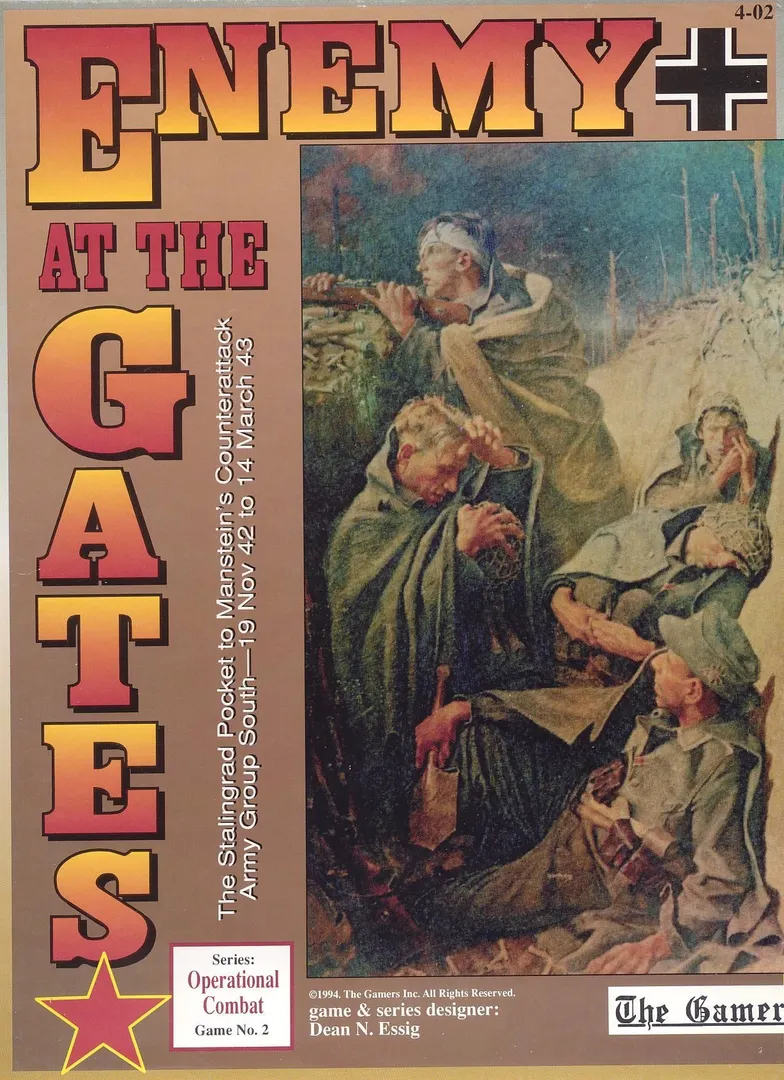
1994
Ayuda con las reglas de Enemy at the Gates
Explicaciones claras de turnos, efectos de cartas y situaciones dudosas, con referencias a fuentes oficiales e historial de preguntas guardado.
Para 1 jugador
¿Qué quieres saber?
Las respuestas salen del reglamento oficial, con la página para comprobarlo.
Enemy at the Gates es un juego de mesa publicado en 1994 para 1–4 jugadores, con partidas de 240 a 6000 minutos y a partir de 12 años. Fue diseñado por Dean Essig y sus mecánicas principales son Dice Rolling, Hexagon Grid y Simulation.
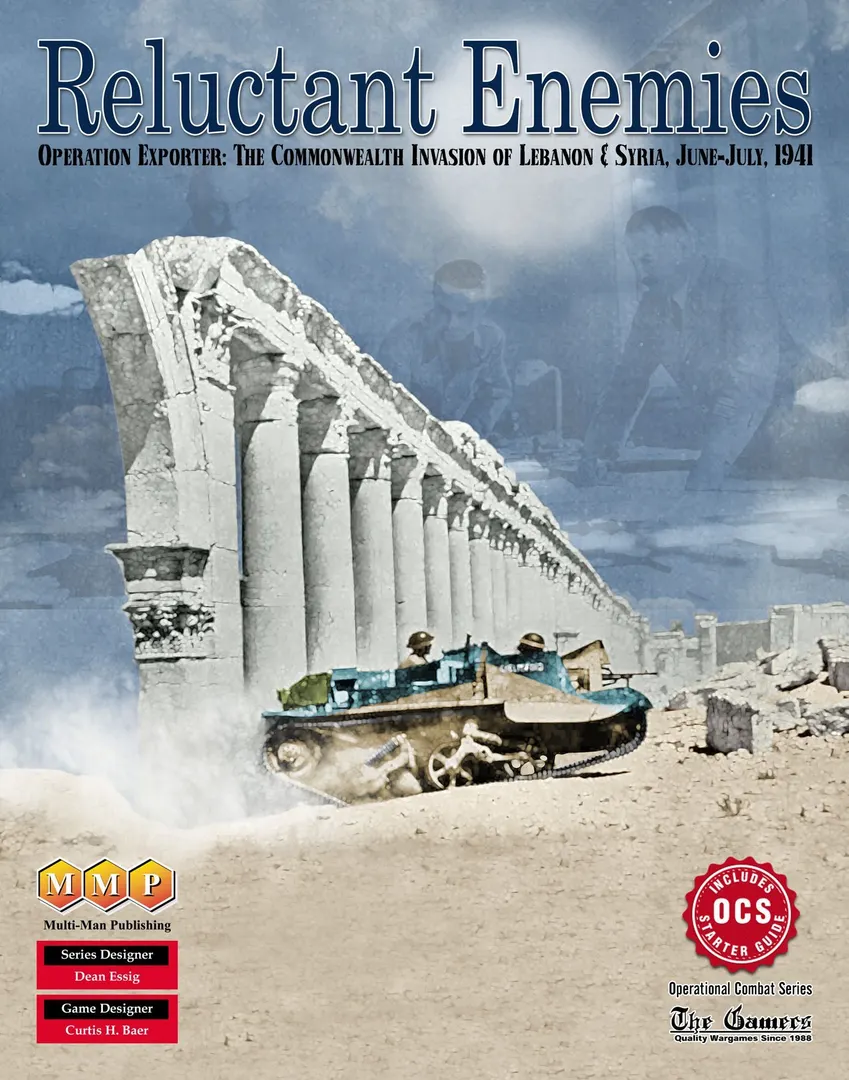




En inglés
On a cold, foggy morning in November, 1942, a four-hour artillery barrage rocked the Rumanian lines north and south of Stalingrad. Countless swarms of Red infantry, tanks, and guns then swept the lines. In four days, the pincers met near Kalach-um-Don – entombing the 6th Army in Stalingrad. During the next three months, the Germans will reel from successive Soviet hammer blows, try in vain to relieve the 6th Army, and fail to supply it from the air. The 6th Army surrenders, and only the counter-attack by von Manstein’s panzers stop the red tide. The turning point of World War II in Europe has passed. Enemy at the Gates, the second Operational Combat Series release by The Gamers, offers players different challenges from those in the very popular game Guderian’s Blitzkrieg. The Soviet army has rearmed and reorganized their Tank Corps – their challenge to the Panzer Divisions. The unique force structures of each side force players to fight differently in order to maximize their strengths. And, of course, players must face the toughest operation and strategic choices they have ever faced. When to stand, when to run…and when to strike. Enemy at the Gates covers the entire period from 19 November 1942 to mid-March 1943. There are numerous one and two map scenarios. The game covers Operation Uranus, Operation Little Saturn, the German Relief and airlift efforts, and Operation Star and Gallup (to include von Manstein’s famous “backhand blow”). Extensively researched, playtested, and developed, Enemy at the Gates will satisfy the Eastern Front interest of any gamer who wants to know more than the pulp-history version of these pivotal events! Features: Dynamic and fluid situation All of the pivotal battles in AG South The creation of the Stalingrad pocket The relief effort and airlift Mansteins famous Backhand Blow! Follow-on to the popular Guderian's Blitzkrieg: The Drive on Moscow game and system- refined based on player feedback Player skill is highly rewarded Game Scale: Turn: Half-week Hex: 5 miles / 8 Km Units: Battalion to Army Game Inventory: Four 22 x 34" maps (Maps A, B, C & D) One 8 x 11" Stalingrad 'Blow-Up' map Eight dual-side printed countersheets (5 combat, 3 markers - 2,800 1/2" counters) One 36-page OCS rules booklet One 36-page Enemy at the Gate game specific rules booklet Two 6-page OCS version 2.0 Charts & Tables Folders Four Player Aid cards Two 6-sided dice Complexity: High Solitaire Suitability: High Playing Time: 4-100 hours Players: 1 or more (from the Game Box) All 4 maps were changed and reprinted in 2001. Updated and replaced by Case Blue.
Según el catálogo, Enemy at the Gates admite de 1 a 4 jugadores. Este intervalo corresponde al número de jugadores indicado por la editorial, así que el juego puede prepararse para cualquier grupo dentro de ese margen. La preparación, algunas reglas y la puntuación pueden variar según el número de jugadores; consulta la configuración exacta en el reglamento de tu edición.
La duración indicada para Enemy at the Gates es de 240 a 6000 minutos, la estimación de la editorial para una partida completa. El tiempo real depende del grupo, del número de jugadores y del conocimiento de las reglas: las primeras partidas suelen alargarse y los grupos con experiencia terminan antes. La preparación y la explicación de las reglas no están incluidas.
El catálogo indica Enemy at the Gates a partir de 12 años. Es la recomendación de la editorial y refleja la lectura necesaria, la complejidad de las reglas y las piezas pequeñas, no solo el tema. Los más pequeños a menudo pueden jugar con ayuda de un adulto: comprueba la edad recomendada en tu edición y la experiencia de tu grupo.
Enemy at the Gates tiene una puntuación de complejidad de 4,3 sobre 5 según los jugadores de BoardGameGeek, lo que lo convierte en un juego exigente. La puntuación refleja cuánto conocimiento de reglas, planificación y toma de decisiones exige una partida típica. Los juegos exigentes requieren una explicación inicial más larga, así que conviene usar una guía de preparación.
Enemy at the Gates pertenece a estas categorías: Wargame y World War II. Sus mecánicas principales son Dice Rolling, Hexagon Grid y Simulation. Las categorías describen el tema y la ambientación de un juego, mientras que las mecánicas describen lo que los jugadores hacen realmente en su turno. Cada mecánica lleva a una página del catálogo con juegos similares.
Los autores acreditados de Enemy at the Gates son: Dean Essig. Estos créditos proceden de los datos publicados del juego y nombran a las personas responsables de su diseño, no a ilustradores ni editoriales. Las páginas de autor de MeepleRules reúnen otros títulos de los mismos autores, algo útil cuando un juego te gusta y buscas otros parecidos.
El catálogo clasifica Enemy at the Gates como juego base. Se juega por sí solo con los componentes de la caja y no requiere ningún otro título. Las expansiones, si existen, añaden contenido o reglas nuevas y aparecen por separado en el catálogo con un enlace a este juego base.