

- Puesto en BGG
- BGG #21.847
- Puntuación BGG
- 6,3
The Seeker in the Forest of Wyr
- 1 jugador
- 20 min
- Complejidad 1,3/5
- 2014
2015
Ayuda con las reglas de The Court of Xiang Chi
Explicaciones claras de turnos, efectos de cartas y situaciones dudosas, con referencias a fuentes oficiales e historial de preguntas guardado.
Para 1 jugador
¿Qué quieres saber?
Las respuestas salen del reglamento oficial, con la página para comprobarlo.
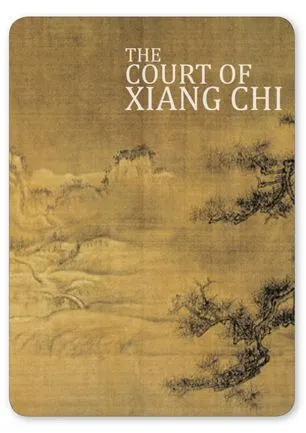
The Court of Xiang Chi es un juego de mesa publicado en 2015 para 1 jugador, con partidas de 15 a 20 minutos y a partir de 10 años. Fue diseñado por Todd Sanders y sus mecánicas principales son Hand Management, Area Majority / Influence y Open Drafting.






En inglés
As ruler of the three clans - Sun, Moon and Earth - it is your task to rule over your court of ministers, tax collectors, generals, poets and courtesans who will bring prosperity to land and protect the people from the Daemon Princes of the Fire Clan. A Solitaire Game lasting 15-20 minutes Setup: Shuffle the 54 cards and place them face down as a draw pile. Four cards are dealt face up to form Society Row. The player chooses 3 of these cards to place below in their Royal Court as starting cards. The cards may be placed in any of the 4 spaces in either of the 2 rows forming the Royal Court. If any Daemon Prince cards are drawn, they are set aside and will be shuffled back into the deck after the player chooses the three they want (dealing out replacement cards to Society Row). The player also begins the game with 10 copper pieces (CP). These starting cards will not have their powers activated during the Game Setup. Play: A game turn consists of three phases: Phase 1A. The player may purchase 1 card from Society Row and place in the Royal Court OR they may skip this phase and go to Phase 1B. If the player purchases a card, any cards to the left of the gap slide to the right and a new card is drawn and placed in Society Row. Cards will be purchased during the game from this row in an auction format. Phase 1B. If the player does not wish to purchase any cards, the rightmost, non-Daemon Prince card is discarded and all remaining cards slide to the right and a new card is drawn and placed in Society Row. The player then receives 1CP and an additional 1CP for each Tax Collector in the Royal Court. Phase 2. The player may now use the combined strength of their Generals to combat one Daemon Prince. If the player has 3 or more Generals in the Royal Court representing each of the three clan icons, the player adds +2 to the total strength to the Generals. To defeat one Daemon Prince during this phase, the total of all Generals’ strengths must be equal to or greater than the Daemon Prince’s strength (as shown by the black number). The player may additionally pay CP to add 1CP/1 Strength to this total. The defeated Daemon Prince is placed to the left of the draw deck, any cards to the left of the gap slide to the right and a new card is drawn and placed in Society Row. The player gains VP as listed on the Daemon Prince card. Phase 3. If Daemon Princes remain in Society Row, the rightmost non-Daemon Prince card is removed from the Society Row and placed in the Court of the Daemon Princes. All remaining cards slide to the right and a new card is drawn and placed in Society Row. Game End: The game will end after Phase 3 if either: 4 Daemon Princes are in the Society Row or all 9 Daemon Princes have been drawn. The player then adds up the total VP gained during the game and additionally gains 1VP for every 3CP they have left. Each card in the Daemon Prince pile subtracts its listed VP from the player’s VP score.
Según el catálogo, The Court of Xiang Chi admite 1 jugador. Es el número de jugadores indicado por la editorial, así que el juego está diseñado exactamente para esa cantidad de participantes. Las variantes para otros tamaños de grupo, si existen, se describen en el reglamento de tu edición; consúltalo antes de preparar otra configuración.
La duración indicada para The Court of Xiang Chi es de 15 a 20 minutos, la estimación de la editorial para una partida completa. El tiempo real depende del grupo, del número de jugadores y del conocimiento de las reglas: las primeras partidas suelen alargarse y los grupos con experiencia terminan antes. La preparación y la explicación de las reglas no están incluidas.
El catálogo indica The Court of Xiang Chi a partir de 10 años. Es la recomendación de la editorial y refleja la lectura necesaria, la complejidad de las reglas y las piezas pequeñas, no solo el tema. Los más pequeños a menudo pueden jugar con ayuda de un adulto: comprueba la edad recomendada en tu edición y la experiencia de tu grupo.
The Court of Xiang Chi tiene una puntuación de complejidad de 2,0 sobre 5 según los jugadores de BoardGameGeek, lo que lo convierte en un juego algo ligero. La puntuación refleja cuánto conocimiento de reglas, planificación y toma de decisiones exige una partida típica. Los juegos exigentes requieren una explicación inicial más larga, así que conviene usar una guía de preparación.
The Court of Xiang Chi pertenece a estas categorías: Fantasy y Print & Play. Sus mecánicas principales son Hand Management, Area Majority / Influence y Open Drafting. Las categorías describen el tema y la ambientación de un juego, mientras que las mecánicas describen lo que los jugadores hacen realmente en su turno. Cada mecánica lleva a una página del catálogo con juegos similares.
Los autores acreditados de The Court of Xiang Chi son: Todd Sanders. Estos créditos proceden de los datos publicados del juego y nombran a las personas responsables de su diseño, no a ilustradores ni editoriales. Las páginas de autor de MeepleRules reúnen otros títulos de los mismos autores, algo útil cuando un juego te gusta y buscas otros parecidos.
El catálogo clasifica The Court of Xiang Chi como juego base. Se juega por sí solo con los componentes de la caja y no requiere ningún otro título. Las expansiones, si existen, añaden contenido o reglas nuevas y aparecen por separado en el catálogo con un enlace a este juego base.