
- Rang BGG
- BGG #3 342
- Note BGG
- 7,8
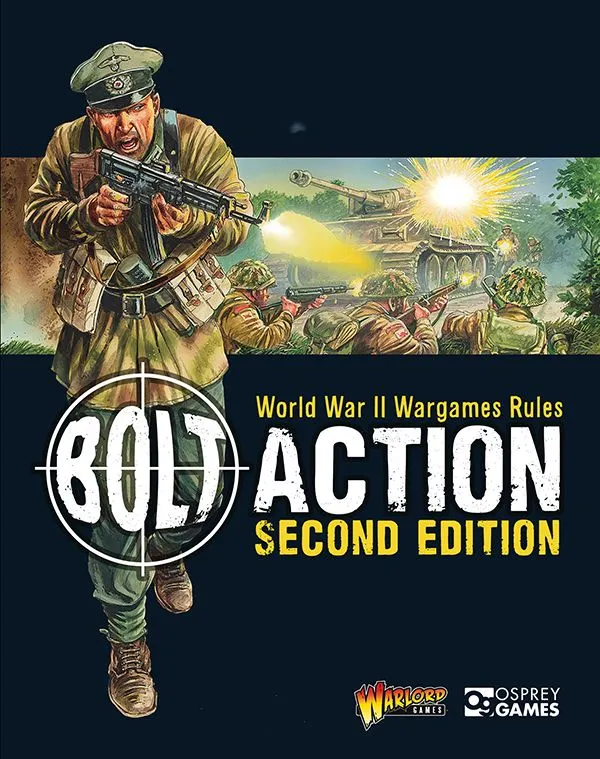
Bolt Action
- 2–6 joueurs
- 120 min
- Complexité 2,7/5
- 2012

2018
Aide aux règles de Barbarossa: Kicking in the Door... – Germany Invades the Soviet Union
Des explications claires des tours, effets de cartes et situations litigieuses, avec des références aux sources officielles et un historique des questions sauvegardé.
Que voulez-vous savoir ?
Les réponses viennent du livret officiel, avec la page à vérifier.
Barbarossa: Kicking in the Door... – Germany Invades the Soviet Union est une extension de jeu de société sortie en 2018 pour 4 à 12 joueurs et à partir de 12 ans. Il a été conçu par Andrew Rolph et ses principales mécaniques sont Simulation et Scenario / Mission / Campaign Game.




En anglais
Barbarossa – Kicking in the Door… is a wargames campaign covering the German invasion of the Soviet Union between June and September 1941. It is designed for games in which a stand represents a platoon, such as Blitzkrieg Commander, Command Decision: TOB, A Fistful of Tows, Rapid Fire and others, including those which wargamers may have written themselves. The system generates 150+ hours of gaming spread over 50+ individual battles which are fought over fifteen weekly campaign turns. Bookkeeping is kept to a minimum as players take command of four of the German panzer divisions spearheading the invasion or the Soviet tank and infantry forces opposing them. Straightforward German attacks will be interspersed with Soviet counterattacks, storming city outskirts, holding bridgeheads or trying to break through the fortifications of the Stalin Line. Each type of battle has its own terrain specifications, victory conditions, set up restrictions and likely opposition. Individual battles are reinforced regimental/brigade sized, with some battalions of each division selected to fight whilst others are rested. In addition to managing the individual battles, however, the German player also needs to manage the campaign. Ever increasing Soviet resistance needs to be curtailed by encircling their forces. Such encirclements reduce the availability of ‘mobilisation points’ which the Soviet players use as currency to ‘buy’ greater or better equipped forces and fortifications with which the slow the German advance. A rapid, deep advance, however, will exact a heavy toll in attrition. Supply will also become a problem for the German players, limiting the numbers they can commit to battle and their artillery/air support. The book also includes a brief history of the campaign background information (such as time and groundscale) useful in adapting the system to different sets of rules and some suggestions for additional optional rules a system for generating table layouts for individual battles a comprehensive set of Appendices covering the Tables of Organisation and Equipment to both platoon and company level for all divisions and regiments involved 42 colour terrain squares to assist in creating the terrain for individual battles a worked example of the terrain generation system a Campaign Quick Reference Sheet an example Campaign Turn a complete set of very quick play rules a full colour A4 Campaign Map Barbarossa – Kicking in the Door… is an ideal campaign for a club (with eight of more players for twelve or more three hour sessions) or one to be organised remotely, by e-mail, with shorter options available for fewer players or those with less time available. For those who have purchased the author’s previous book of eastern front scenarios (Grey Steel, Red Storm – available on Wargame Vault) please note that around seven pages of history and background from that book are reproduced largely unchanged in Part One of this volume. —description from the publisher
Selon le catalogue, Barbarossa: Kicking in the Door... – Germany Invades the Soviet Union se joue de 4 à 12 personnes. Cette fourchette correspond au nombre de joueurs indiqué par l’éditeur : le jeu s’installe donc pour toute taille de groupe dans cette limite. La mise en place, certaines règles et le décompte peuvent varier selon l’effectif ; vérifiez la configuration exacte dans la règle de votre édition.
Le catalogue indique Barbarossa: Kicking in the Door... – Germany Invades the Soviet Union à partir de 12 ans. C’est la recommandation de l’éditeur ; elle tient compte de la lecture nécessaire, de la complexité des règles et des petits composants, pas seulement du thème. Les plus jeunes peuvent souvent participer avec l’aide d’un adulte : vérifiez l’âge indiqué sur votre édition et tenez compte de l’expérience de votre groupe.
Barbarossa: Kicking in the Door... – Germany Invades the Soviet Union appartient à ces catégories : Wargame, World War II et Expansion for Base-game. Ses principales mécaniques sont Simulation et Scenario / Mission / Campaign Game. Les catégories décrivent le thème et l’univers d’un jeu, tandis que les mécaniques décrivent ce que les joueurs font réellement pendant leur tour. Chaque mécanique mène à une page du catalogue avec des jeux similaires.
Les auteurs crédités pour Barbarossa: Kicking in the Door... – Germany Invades the Soviet Union sont : Andrew Rolph. Ces crédits proviennent des données publiées du jeu et désignent les personnes responsables de sa conception, et non les illustrateurs ou les éditeurs. Les pages d’auteurs sur MeepleRules regroupent les autres titres des mêmes auteurs, ce qui est utile lorsqu’un jeu vous plaît et que vous en cherchez de similaires.
Le catalogue présente Barbarossa: Kicking in the Door... – Germany Invades the Soviet Union comme une extension. Les extensions ajoutent du contenu, des règles ou des scénarios à un jeu de base existant et ne se jouent généralement pas seules. Vérifiez sur la boîte ou dans la description de l’éditeur quel jeu de base est requis, et assurez-vous que votre édition de ce jeu est compatible avec cette extension.