

- Note BGG
- 5,9
Cheesonomics: Extra Sharp Expansion
- 2–5 joueurs
- 20 min
- 2014
2014
Aide aux règles de Cheesonomics
Des explications claires des tours, effets de cartes et situations litigieuses, avec des références aux sources officielles et un historique des questions sauvegardé.
Pour 2 joueurs
Que voulez-vous savoir ?
Les réponses viennent du livret officiel, avec la page à vérifier.
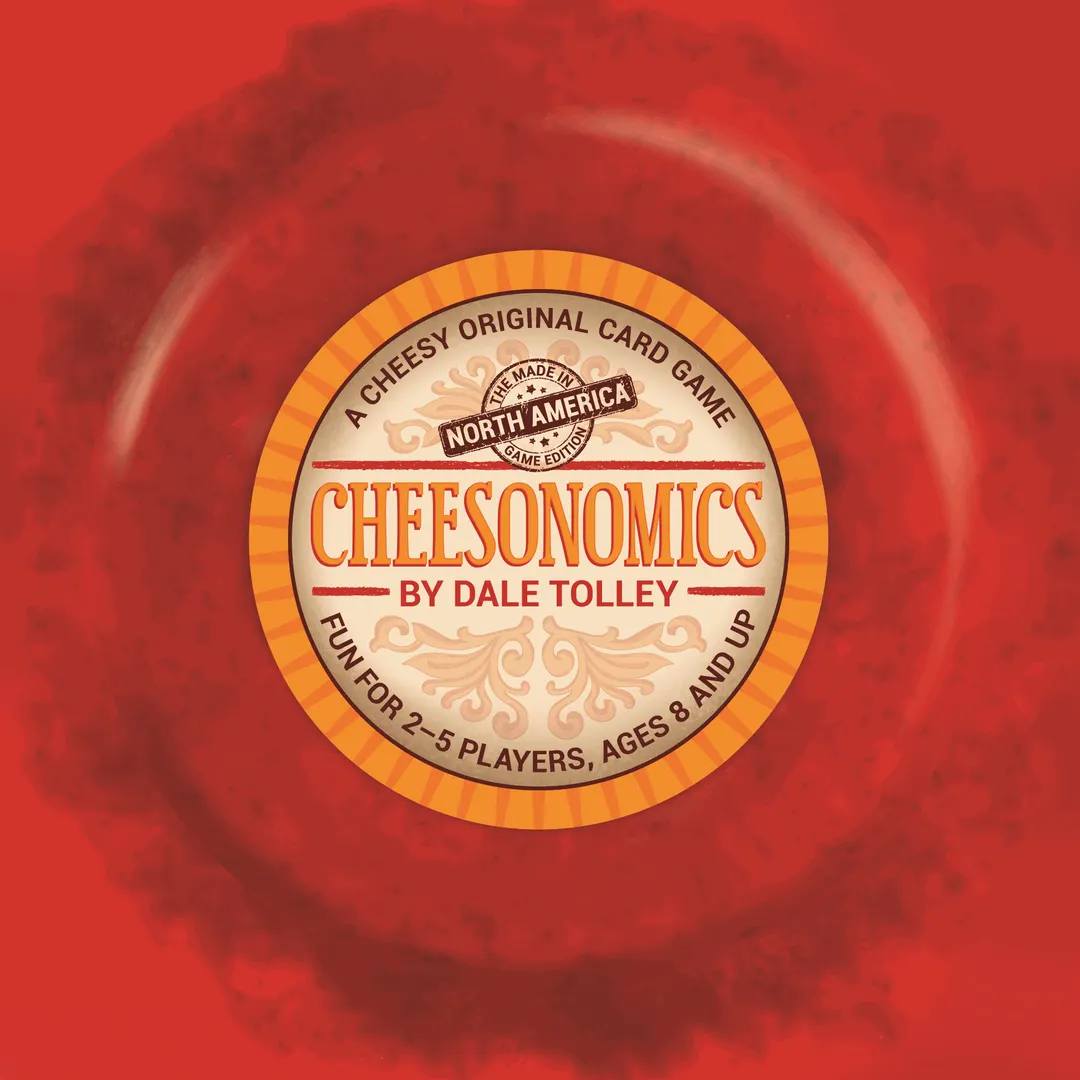
Cheesonomics est un jeu de société sorti en 2014 pour 2 à 5 joueurs, avec des parties de 20 minutes et à partir de 8 ans. Il a été conçu par Dale Tolley et ses principales mécaniques sont Hand Management, Take That et Set Collection.


En anglais
Cheesonomics is a cheesy original card game for 2-5 players ages 8 and up that takes about 20-30 minutes to play. It is a strategic set collecting, memory-based, hand management card game based on controlling and manipulating the supply and demand of various types of cheese from cheese markets throughout North America or Europe. The European edition of Cheesonomics features cheese from France, Germany, Italy, The Netherlands and Scandinavia. The North American edition of Cheesonomics features cheese from Wisconsin, California, New York, Oregon and Canada. The overall goal of Cheesonomics is to manage your cheese supply, churn the right colors or animal types from your opponents' hands, produce the market's most demanded colors of cheese to milk the most profit, and earn the most curd cash by selling different colors of cheese at high market prices. Cheesonomics can be played at three different skill levels - mild, sharp and extra sharp - allowing gamers to adjust the game according to their own playing palate. Each game starts with three market wheels made up of 5 market wedges, and each player receives five cheese wedges and a cheese knife marked with either cheddar, edam, feta, gouda or parmesan. On each turn, the active player begins by retrieving his cheese knife from the serving tray - if it was placed there on a previous turn - and then chooses one of three different culinary actions: Churn Cheese, Produce Cheese or Sell Cheese. Churning cheese allows a player to collect cheese wedges from opponents. When churning, the active player asks for one color or animal type. The colors are red, orange, yellow, green or blue, and animals are cow, sheep, goat, yak, and reindeer. If an opponent has that type of cheese card, he must give the active player one card of that type. If he does not have that card type, the opponent must show his hand and give the active player one wedge of the active player's choice. The active player then protects his product by placing his cheese knife over that color or animal type on the provided serving tray. No other player can churn for that type of cheese until the knife is removed on that player's next turn. Instead of Churning, a player could Produce cheese. To do this, the active player simply plays all cheese wedges of one color or animal type from his hand face up onto the table into a cheese wheel. These wedges will be available for sale in future turns. The player then draws cheese wedges until he has five total wedges in his hand. Instead of Churning or Producing cheese, the active player could Sell Cheese. To sell, a player chooses up to three wedges of one color or animal type from previously-formed cheese and gains curd cash depending on the market, which is the sum of face-up, matching color market wedges. After selling cheese, the active player now "Mooves" the market, choosing one market wedge representing the color of the cheese sold in the transaction and flipping that wedge to the opposite side. The game ends when the cheese wedge draw pile is exhausted during a player's turn. The cheesemonger who has the most curd cash is the cheesy champion! Cheesonomics has even more to offer players who wish to try out the Sharp and Extra Sharp flavors of the game. In the Sharp game, players can now further manipulate the market. Whenever a Sell Cheese action is taken, that player now also chooses a wedge in the market to completely replace with one from his personal supply of market wedges. There are also certain cheese wedges with market symbols that may be activated during a Sell Cheese action that can allow a player to discard one of their market wedges and gain another or give a market wedge to one of the other players and take one of theirs. The Extra Sharp game is for the truly adventurous Cheeseheads! As an expansion to Cheesonomics, players can add in the Extra Sharp cheese wedge cards that introduce growth hormone, organic and smelly cheese wedges. Each of these new cheese wedge types have special rules that affect a Sell Cheese action, allowing players the choice to boost their production with growth hormones, earn more curds at game end with quality organic cheeses, or use pungent aromas to prevent players from flipping or removing market wedges.
Selon le catalogue, Cheesonomics se joue de 2 à 5 personnes. Cette fourchette correspond au nombre de joueurs indiqué par l’éditeur : le jeu s’installe donc pour toute taille de groupe dans cette limite. La mise en place, certaines règles et le décompte peuvent varier selon l’effectif ; vérifiez la configuration exacte dans la règle de votre édition.
La durée indiquée pour Cheesonomics est de 20 minutes, selon l’estimation de l’éditeur pour une partie complète. La durée réelle dépend du groupe, de l’effectif et de la connaissance des règles : les premières parties sont plus longues, les groupes expérimentés terminent plus vite. Mise en place et explication des règles ne sont pas comprises.
Le catalogue indique Cheesonomics à partir de 8 ans. C’est la recommandation de l’éditeur ; elle tient compte de la lecture nécessaire, de la complexité des règles et des petits composants, pas seulement du thème. Les plus jeunes peuvent souvent participer avec l’aide d’un adulte : vérifiez l’âge indiqué sur votre édition et tenez compte de l’expérience de votre groupe.
Cheesonomics obtient une note de complexité de 1,7 sur 5 auprès des joueurs de BoardGameGeek, ce qui en fait un jeu léger. Cette note reflète la quantité de règles, de planification et de décisions qu’exige une partie typique. Prévoyez une explication plus longue pour les jeux exigeants et utilisez un guide de préparation avant la soirée.
Cheesonomics appartient à ces catégories : Card Game, Economic et Memory. Ses principales mécaniques sont Hand Management, Take That et Set Collection. Les catégories décrivent le thème et l’univers d’un jeu, tandis que les mécaniques décrivent ce que les joueurs font réellement pendant leur tour. Chaque mécanique mène à une page du catalogue avec des jeux similaires.
Les auteurs crédités pour Cheesonomics sont : Dale Tolley. Ces crédits proviennent des données publiées du jeu et désignent les personnes responsables de sa conception, et non les illustrateurs ou les éditeurs. Les pages d’auteurs sur MeepleRules regroupent les autres titres des mêmes auteurs, ce qui est utile lorsqu’un jeu vous plaît et que vous en cherchez de similaires.
Le catalogue présente Cheesonomics comme un jeu de base. Il se joue seul avec le matériel contenu dans la boîte et ne nécessite aucun autre titre. Les extensions, s’il en existe, y ajoutent du contenu ou des règles et sont répertoriées séparément dans le catalogue, avec un lien vers ce jeu de base.