
- Rang BGG
- BGG #6 090
- Note BGG
- 8,4
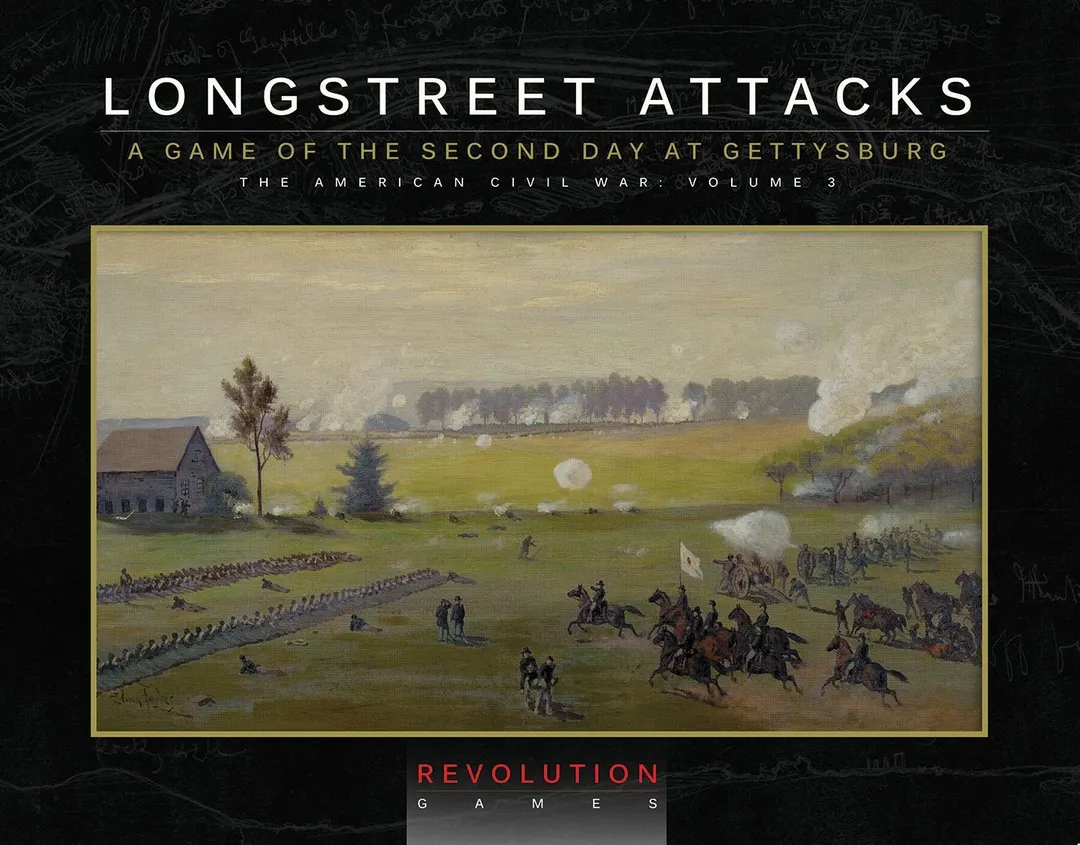
Longstreet Attacks: The Second Day at Gettysburg
- 1–4 joueurs
- 90–720 min
- Complexité 3,5/5
- 2018
2019
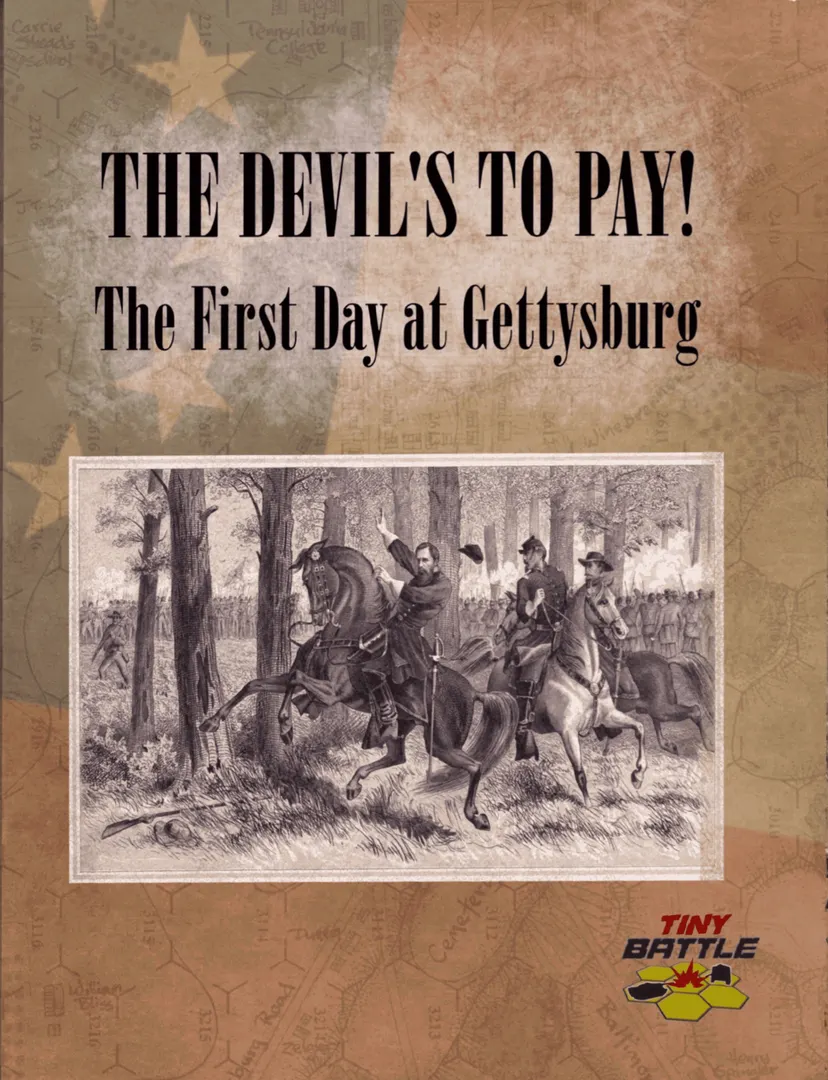
Aide aux règles de The Devil's to Pay!: The First Day at Gettysburg
Des explications claires des tours, effets de cartes et situations litigieuses, avec des références aux sources officielles et un historique des questions sauvegardé.
Pour 1 joueur
Que voulez-vous savoir ?
Les réponses viennent du livret officiel, avec la page à vérifier.
The Devil's to Pay!: The First Day at Gettysburg est un jeu de société sorti en 2019 pour 1 à 2 joueurs, avec des parties de 120 à 240 minutes et à partir de 9 ans. Il a été conçu par Hermann Luttmann et ses principales mécaniques sont Dice Rolling, Hexagon Grid et Simulation.




En anglais
On the morning of July 1st, 1863 a column of Rebel soldiers from Brig. Gen. James Archer’s brigade of the Army of Northern Virginia headed down the Chambersburg Pike from Cashtown, PA towards the town of Gettysburg in search of provisions. Since JEB Stuart’s cavalry was nowhere to be found, the Confederate column was actually being led by the cannons of Pegram’s Artillery Brigade in a rare 19th century deployment of “recon by fire”. Archer’s Division commander, Maj. Gen. Henry Heth, was not worried however – he had it on firm authority that only militia was in the area and that “they would run as soon as we appeared”. Upon their approach up to Herr’s Ridge to the west of Gettysburg, the dismounted Union cavalry pickets of Buford’s 1st Cavalry Division began harassing the approaching butternut columns. As they were driven off and the Rebs crested the ridge, they were confronted with a far larger cavalry force than they had anticipated and they were now hotly engaged in an unexpected encounter. Archer’s men, along with the quick-marching soldiers of Brig. Gen. Robert Davis’ brigade, began a coordinated advance on Buford’s horse soldiers. The blue-clad troopers were hard pressed but their carbines allowed them to fire rapidly and from cover. Relief finally appeared at about 9:30 am when Maj. Gen. John Reynolds of Ist Corps rode up to Buford at the Lutheran Seminary. He then famously asked Buford, “What’s the matter, John?” Buford’s reply was “The Devil’s to pay!” And from such inauspicious beginnings started one of the greatest battles of history. This first day was to set the tone of the entire three-day Battle of Gettysburg …. a first day in which ultimate victory or defeat for either side could be traced to the decisions, maneuverings and fighting performances of each army’s soldiers and leaders during these initial critical hours. The Devil’s to Pay! is a game depicting not only the actual events of July 1st at the Battle of Gettysburg, but also what could have happened on that fateful first day. Two players will each command either the Confederate forces of Lt. Gen A.P. Hill and Lt. Gen. Richard Ewell or the Union forces of Maj. Gen. John Reynolds and Maj. Gen. Oliver Howard. The game is played on a gorgeous map of the battle area designed and drawn by Rick Barber, with each hex equaling 250 yards. Formations are multi-counter brigades, with each Strength Point representing about 100 men, with each unit counter representing a group of regiments, apportioned as they were deployed at the battle. The system is a new version of the Blind Swords system, with this implementation emphasizing ease-of-play and accessibility while maintaining the popular spirit of “historical chaos” represented by the other games in the Blind Swords family. The system utilizes a unique chit-pull mechanic that will keep players on their toes and engaged throughout the entire game. —description from designer
Selon le catalogue, The Devil's to Pay!: The First Day at Gettysburg se joue de 1 à 2 personnes. Cette fourchette correspond au nombre de joueurs indiqué par l’éditeur : le jeu s’installe donc pour toute taille de groupe dans cette limite. La mise en place, certaines règles et le décompte peuvent varier selon l’effectif ; vérifiez la configuration exacte dans la règle de votre édition.
La durée indiquée pour The Devil's to Pay!: The First Day at Gettysburg est de 120 à 240 minutes, selon l’estimation de l’éditeur pour une partie complète. La durée réelle dépend du groupe, de l’effectif et de la connaissance des règles : les premières parties sont plus longues, les groupes expérimentés terminent plus vite. Mise en place et explication des règles ne sont pas comprises.
Le catalogue indique The Devil's to Pay!: The First Day at Gettysburg à partir de 9 ans. C’est la recommandation de l’éditeur ; elle tient compte de la lecture nécessaire, de la complexité des règles et des petits composants, pas seulement du thème. Les plus jeunes peuvent souvent participer avec l’aide d’un adulte : vérifiez l’âge indiqué sur votre édition et tenez compte de l’expérience de votre groupe.
The Devil's to Pay!: The First Day at Gettysburg obtient une note de complexité de 2,6 sur 5 auprès des joueurs de BoardGameGeek, ce qui en fait un jeu plutôt léger. Cette note reflète la quantité de règles, de planification et de décisions qu’exige une partie typique. Prévoyez une explication plus longue pour les jeux exigeants et utilisez un guide de préparation avant la soirée.
The Devil's to Pay!: The First Day at Gettysburg appartient à ces catégories : Wargame, Civil War et Post-Napoleonic. Ses principales mécaniques sont Dice Rolling, Hexagon Grid et Simulation. Les catégories décrivent le thème et l’univers d’un jeu, tandis que les mécaniques décrivent ce que les joueurs font réellement pendant leur tour. Chaque mécanique mène à une page du catalogue avec des jeux similaires.
Les auteurs crédités pour The Devil's to Pay!: The First Day at Gettysburg sont : Hermann Luttmann. Ces crédits proviennent des données publiées du jeu et désignent les personnes responsables de sa conception, et non les illustrateurs ou les éditeurs. Les pages d’auteurs sur MeepleRules regroupent les autres titres des mêmes auteurs, ce qui est utile lorsqu’un jeu vous plaît et que vous en cherchez de similaires.
Le catalogue présente The Devil's to Pay!: The First Day at Gettysburg comme un jeu de base. Il se joue seul avec le matériel contenu dans la boîte et ne nécessite aucun autre titre. Les extensions, s’il en existe, y ajoutent du contenu ou des règles et sont répertoriées séparément dans le catalogue, avec un lien vers ce jeu de base.