
- Rang BGG
- BGG #7 104
- Note BGG
- 7,9
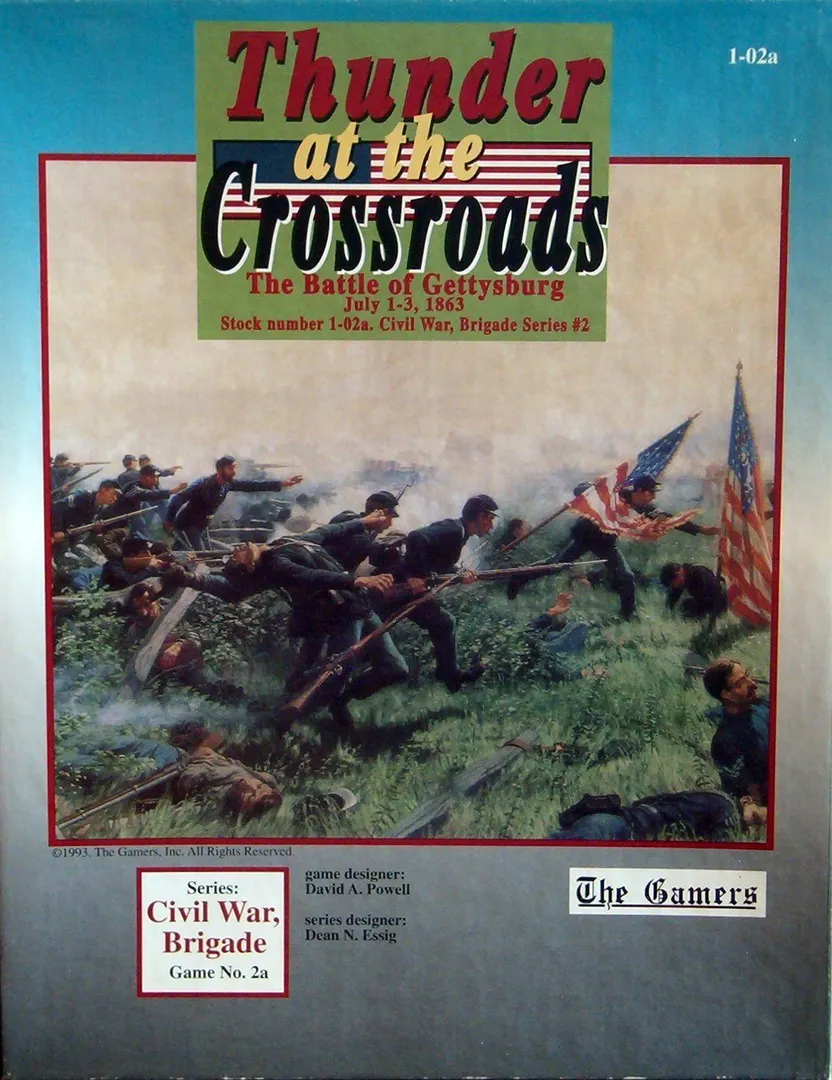
Thunder at the Crossroads: The Battle of Gettysburg, July 1-3, 1863 (Second Edition)
- 2 joueurs
- 360 min
- Complexité 3,4/5
- 1993
2002
Aide aux règles de War of the States: Gettysburg, 1863
Des explications claires des tours, effets de cartes et situations litigieuses, avec des références aux sources officielles et un historique des questions sauvegardé.
Pour 2 joueurs
Que voulez-vous savoir ?
Les réponses viennent du livret officiel, avec la page à vérifier.
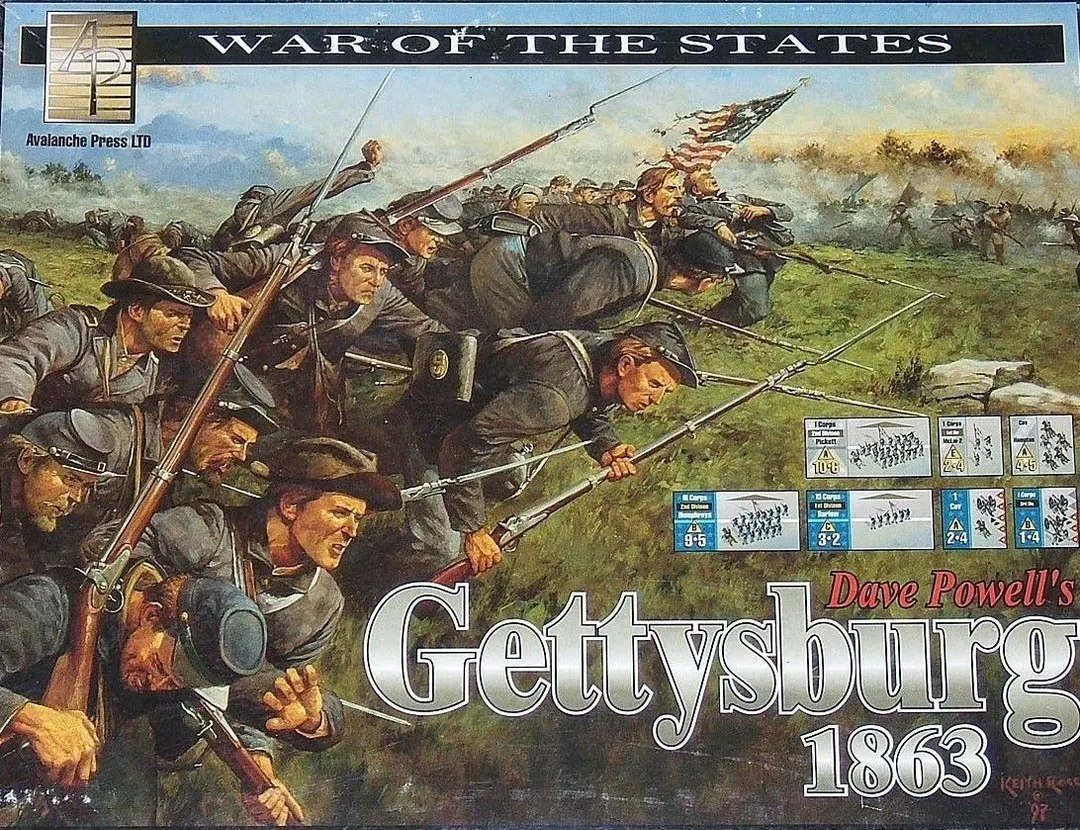
War of the States: Gettysburg, 1863 est un jeu de société sorti en 2002 pour 2 joueurs et avec des parties de 120 à 480 minutes. Il a été conçu par David A. Powell et ses principales mécaniques sont Dice Rolling, Hexagon Grid et Simulation.




En anglais
On a quiet Pennsylvania summer morning, Confederate General Robert E. Lee gambled his new nation's hopes on a climactic battle at a crossroads town no one really wanted to capture. His troops stood at their peak: battle-tested, used to victory, and eager to end the war. Opposing him, Union General George Meade knew that he could save American unity with a victory. After two years of war, Meade understood that simply avoiding defeat would not satisfy the American people. The Origins Award winning designers of Rome At War, and Eagles Of The Empire bring you the ultimate struggle & sacrifice to preserve a nation. Renowned wargame designer Dave Powell makes his Avalanche Press debut with this exciting game of the battle that decided America's destiny. A smooth-playing game with large, beautiful counters and a stunning map in the tradition of our popular Rome At War series. No combat charts, no markers - just an evening's gaming fun!
Selon le catalogue, War of the States: Gettysburg, 1863 se joue à 2 personnes. C’est le nombre de joueurs indiqué par l’éditeur : le jeu est donc conçu pour exactement ce nombre de participants. Les variantes pour d’autres tailles de groupe, s’il en existe, sont décrites dans la règle de votre édition ; consultez-la avant d’installer une autre configuration.
La durée indiquée pour War of the States: Gettysburg, 1863 est de 120 à 480 minutes, selon l’estimation de l’éditeur pour une partie complète. La durée réelle dépend du groupe, de l’effectif et de la connaissance des règles : les premières parties sont plus longues, les groupes expérimentés terminent plus vite. Mise en place et explication des règles ne sont pas comprises.
War of the States: Gettysburg, 1863 obtient une note de complexité de 2,7 sur 5 auprès des joueurs de BoardGameGeek, ce qui en fait un jeu plutôt léger. Cette note reflète la quantité de règles, de planification et de décisions qu’exige une partie typique. Prévoyez une explication plus longue pour les jeux exigeants et utilisez un guide de préparation avant la soirée.
War of the States: Gettysburg, 1863 appartient à ces catégories : Wargame et American Civil War. Ses principales mécaniques sont Dice Rolling, Hexagon Grid et Simulation. Les catégories décrivent le thème et l’univers d’un jeu, tandis que les mécaniques décrivent ce que les joueurs font réellement pendant leur tour. Chaque mécanique mène à une page du catalogue avec des jeux similaires.
Les auteurs crédités pour War of the States: Gettysburg, 1863 sont : David A. Powell. Ces crédits proviennent des données publiées du jeu et désignent les personnes responsables de sa conception, et non les illustrateurs ou les éditeurs. Les pages d’auteurs sur MeepleRules regroupent les autres titres des mêmes auteurs, ce qui est utile lorsqu’un jeu vous plaît et que vous en cherchez de similaires.
Le catalogue présente War of the States: Gettysburg, 1863 comme un jeu de base. Il se joue seul avec le matériel contenu dans la boîte et ne nécessite aucun autre titre. Les extensions, s’il en existe, y ajoutent du contenu ou des règles et sont répertoriées séparément dans le catalogue, avec un lien vers ce jeu de base.