

- Pozycja w BGG
- BGG #27 689
- Ocena BGG
- 5,4
Blackbeard's Lost Fleet
- 2–4 graczy
- 60–120 min
- Złożoność 3,0/5
- 2024
2009
Pomoc w zasadach gry Alchemicus
Zrozumiałe wyjaśnienia tur, efektów kart i spornych sytuacji z odnośnikami do oficjalnych źródeł i zapisaną historią pytań.
Dla 2 graczy
Co chcesz wiedzieć?
Odpowiedzi pochodzą z oficjalnej instrukcji, ze stroną do sprawdzenia.
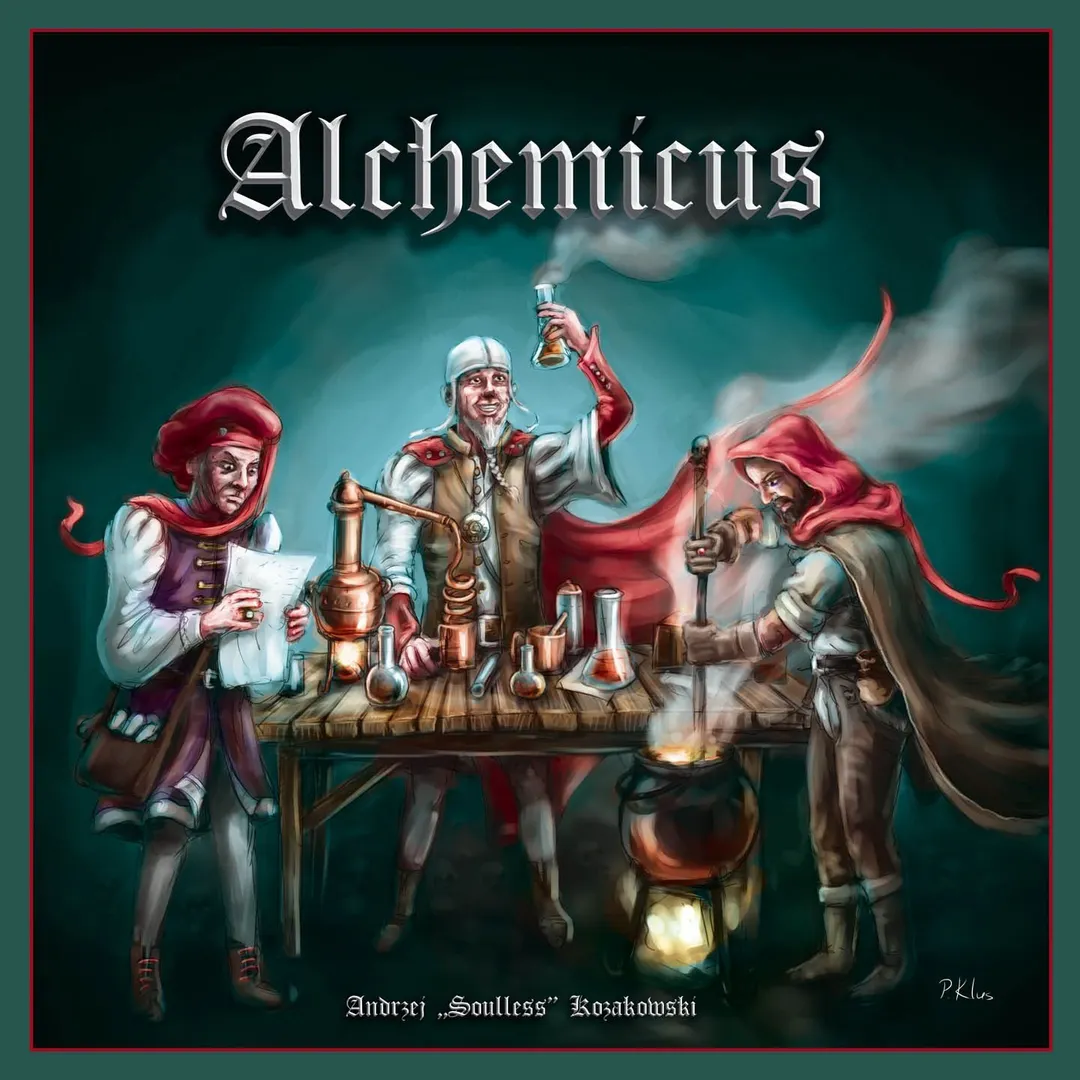
Alchemicus to gra planszowa wydana w 2009 roku dla 2–4 graczy, z rozgrywką trwającą 60 minut i dla osób od 12 lat. Projekt gry: Andrzej Kozakowski. Główne mechaniki: Hand Management, Trading i Area Movement.

Po angielsku
Transformation of metals into gold? It’s possible – any physicist will say nowadays. In the 16th century, alchemists made attempts to do that in their laboratories, aspiring to gain wealth and never-ending fame. Some, as Edward Kelley, thanks to royal sponsors, achieved all that, nevertheless they never succeeded in transmutation of metals… In this magical game that you are holding it’s very simple. Build a laboratory and collect the necessary components. And transformation of metals? If you manage to adjust to the changing moods of the Spirit of Transmutation, then it’s really not complicated at all. So, what is the game about? You have competition in your town – other alchemists who also know the right technology. Only the one of you who is the most efficient will win recognition and fame. It will surely last until the next game, or, who knows, perhaps eternally… Players will try to be the most effective alchemist. To achieve that they will need to build buildings, represented by cards. In these buildings, they will acquire resources, transform them into gold and finally sell them for victory points or cards. Selling gold isn't only way to win the game. Game is using Rondel mechanic to pick an action by players and hand management, where cards represent buildings, currency and resources. Alchemicus was designed as a family game with little negative interaction. Requests planning but also concentrating on other players movements and predicting them. Many beginners forget it, being focused on their own technology structure, so very often they fall behind. We think that this game style can be useful for teaching young players to think beyond their own needs. Anyway, the game is not for kids. The youngest of our testers who was able to win the play against his father was 12 years old (consider that his father is lawyer, so probably he is quite smart ;))) hahaha one of them. Father or son. we are not sure which one :D). Because the factor of negative interaction is not very strong the play goes ahead in a nice atmosphere which is fun for family play. Older players can play a bit differently, by using the position of The Transmutation Ghost to foil your opponents' plans. This strategy can be counteracted by defending yourself with buildings and goods in circulation which are resistant to your opponents' actions.
Według katalogu Alchemicus obsługuje od 2 do 4 graczy. Ten zakres odpowiada liczbie graczy podanej przez wydawcę, więc grę można przygotować dla dowolnej grupy w jego granicach. Przygotowanie, niektóre zasady i punktacja mogą jednak różnić się w zależności od liczby graczy; dokładną konfigurację sprawdź w instrukcji swojego wydania.
Podany czas rozgrywki w Alchemicus wynosi 60 minut. To szacunek wydawcy dla pełnej partii. Rzeczywisty czas zależy od grupy, liczby graczy i znajomości zasad: pierwsze partie zwykle trwają dłużej, a doświadczone grupy kończą szybciej. Przygotowanie gry i tłumaczenie zasad nie są wliczone w ten szacunek.
Katalog podaje dla Alchemicus wiek od 12 lat. To zalecenie wydawcy, które uwzględnia wymagania dotyczące czytania, złożoność zasad i drobne elementy, a nie tylko tematykę. Młodsi gracze często mogą dołączyć z pomocą dorosłego; sprawdź zalecenie wiekowe swojego wydania i weź pod uwagę doświadczenie grupy z grami planszowymi.
Alchemicus ma ocenę złożoności 2,2 na 5 według graczy BoardGameGeek, co czyni ją grą raczej lekką. Ocena pokazuje, ile znajomości zasad, planowania i podejmowania decyzji wymaga typowa rozgrywka. Cięższe gry wymagają dłuższego pierwszego tłumaczenia, dlatego przed wieczorem z grami warto skorzystać z przewodnika przygotowania.
Alchemicus należy do tych kategorii: Card Game, Economic i Industry / Manufacturing. Główne mechaniki to Hand Management, Trading i Area Movement. Kategorie opisują temat i świat gry, a mechaniki to, co gracze faktycznie robią w swojej turze. Każda mechanika prowadzi do strony katalogu z podobnymi grami, co pomaga znaleźć coś porównywalnego na kolejny wieczór.
Autorzy wymienieni przy Alchemicus to: Andrzej Kozakowski. Te informacje pochodzą z opublikowanych danych gry i wskazują osoby odpowiedzialne za jej projekt, a nie ilustratorów czy wydawców. Strony autorów w MeepleRules zbierają inne tytuły tych samych twórców, co pomaga, gdy gra ci się podoba i szukasz podobnych.
W katalogu Alchemicus figuruje jako gra podstawowa. Można w nią grać samodzielnie, korzystając z elementów z pudełka, bez żadnego innego tytułu. Dodatki, jeśli istnieją, dokładają nową zawartość lub zasady i są wymienione w katalogu osobno, z odnośnikiem do tej gry podstawowej.