

- Pozycja w BGG
- BGG #5135
- Ocena BGG
- 7,3
Stalingrad Pocket: 2nd Edition – The Wehrmacht's Greatest Disaster
- 1–2 graczy
- 180–900 min
- Złożoność 2,6/5
- 1996
2012
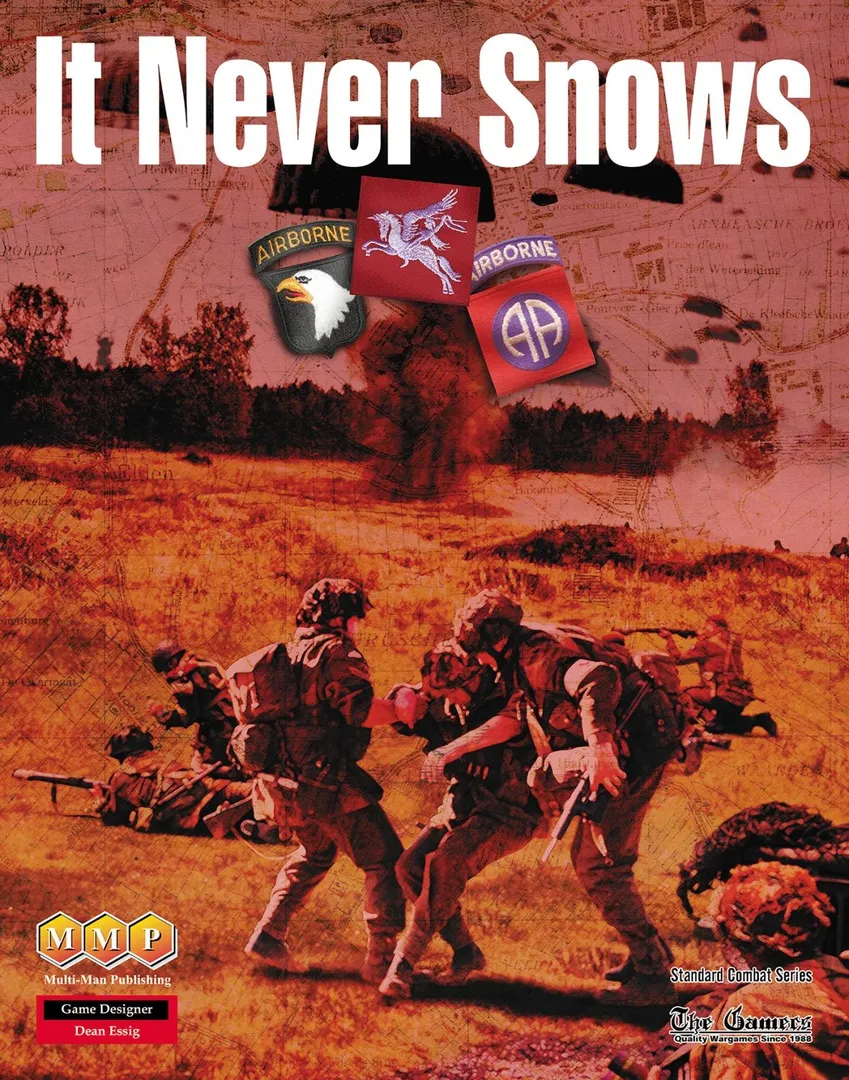
Pomoc w zasadach gry It Never Snows
Zrozumiałe wyjaśnienia tur, efektów kart i spornych sytuacji z odnośnikami do oficjalnych źródeł i zapisaną historią pytań.
Dla 1 gracza
Co chcesz wiedzieć?
Odpowiedzi pochodzą z oficjalnej instrukcji, ze stroną do sprawdzenia.
It Never Snows to gra planszowa wydana w 2012 roku dla 1–6 graczy, z rozgrywką trwającą 540–1500 minut i dla osób od 14 lat. Projekt gry: Dean Essig. Główne mechaniki: Dice Rolling, Hexagon Grid i Simulation.





Po angielsku
It Never Snows is a Standard Combat Series (SCS) game covering the pivotal Market Garden offensive in September, 1944. Using a system based on the well-received SCS Game Bastogne, It Never Snows covers the landings and ground offensive endeavoring to link up with them at 600m per hex with units generally companies. Each turn is half a day making for a 17 turn campaign game (uniquely playable among Market Garden games). The expansive five map area allows each of the airborne division fights to be geographically isolated and separate, as was the case historically. What this does is that it allows each situation to be gamed as its own little tactical puzzle—making it such that a player might be “winning” in one region while “losing” in another, at the same time. Both players are always “in the game.” While the Allied player is busy dropping paratroopers, establishing bridgeheads and running a ground offensive to link up with them, the German player must devastate the airborne forces clinging to Arnhem, defend the various river crossings and counterattack to sever the Allied supply lines. Both players are attacking and defending at the same time, every turn. Following on the heels of Bastogne, It Never Snows uses a tactical model with a minimal amount of rules overhead which shows both set-piece as well as “on the fly” attacks and the effects of indirect fires and air support. A fantastically detailed OOB shows the insane array of German units being scratched together to defeat the Allied offensive—from displaced sailors to the deaf, from elite armor to barely trained school units, from highly motivated SS to penal units being pushed into battle at gunpoint. Against the elite airborne troops of the Allies, this menagerie is hardly the German army many wargamers envision when they think of World War II. Scenarios: Campaign. All five maps, all 17 turns. The full meal with players selecting their own landing sites. Historical Drop Zones Campaign. Almost the same as the above, only with the actual drop sites listed so that players can see the real thing and not have to do that planning themselves. Sept 18: Foothold. Here the initial drops have already happened and the battle is underway. By passing on the first turn air drops, this is a much quicker version of the campaign. Sept 20: High Water Mark. This 12 turn game places the player in the shoes of the Allies at the very moment the success (or failure) of the campaign is determined. The Witches Cauldron. A small map area scenario covering the defense of Oosterbeek. Hold Until Relieved. The battle for Arnhem in a small map area and only 6 turns. Hail Mary, Full of Grace. A small area, 6 turn scenario covering the 82 Abn Division’s crossing of the Waal river and the effort of the Gds Armored Division to link up with them through Nijmegen. Hell’s Highway. A small map area, 8 turn game covering the German attempts to cut the XXX Corps supply line. It Never Snows... Components: SCS Series Rulebook Game Specific Rulebook Five Full Color 22" x 34" Game Maps Four Full Color 11" x 17" Play Aides (Air Drop Planning, Allied Reinforcement, and two German Reinforcement) 840 Counters (Take a look!) Box and Dice Scale *units: companies (except artillery: battalions) *map: *turn: half a day (from MMP website and user's description))
Według katalogu It Never Snows obsługuje od 1 do 6 graczy. Ten zakres odpowiada liczbie graczy podanej przez wydawcę, więc grę można przygotować dla dowolnej grupy w jego granicach. Przygotowanie, niektóre zasady i punktacja mogą jednak różnić się w zależności od liczby graczy; dokładną konfigurację sprawdź w instrukcji swojego wydania.
Podany czas rozgrywki w It Never Snows wynosi 540–1500 minut. To szacunek wydawcy dla pełnej partii. Rzeczywisty czas zależy od grupy, liczby graczy i znajomości zasad: pierwsze partie zwykle trwają dłużej, a doświadczone grupy kończą szybciej. Przygotowanie gry i tłumaczenie zasad nie są wliczone w ten szacunek.
Katalog podaje dla It Never Snows wiek od 14 lat. To zalecenie wydawcy, które uwzględnia wymagania dotyczące czytania, złożoność zasad i drobne elementy, a nie tylko tematykę. Młodsi gracze często mogą dołączyć z pomocą dorosłego; sprawdź zalecenie wiekowe swojego wydania i weź pod uwagę doświadczenie grupy z grami planszowymi.
It Never Snows ma ocenę złożoności 2,5 na 5 według graczy BoardGameGeek, co czyni ją grą raczej lekką. Ocena pokazuje, ile znajomości zasad, planowania i podejmowania decyzji wymaga typowa rozgrywka. Cięższe gry wymagają dłuższego pierwszego tłumaczenia, dlatego przed wieczorem z grami warto skorzystać z przewodnika przygotowania.
It Never Snows należy do tych kategorii: Wargame i World War II. Główne mechaniki to Dice Rolling, Hexagon Grid i Simulation. Kategorie opisują temat i świat gry, a mechaniki to, co gracze faktycznie robią w swojej turze. Każda mechanika prowadzi do strony katalogu z podobnymi grami, co pomaga znaleźć coś porównywalnego na kolejny wieczór.
Autorzy wymienieni przy It Never Snows to: Dean Essig. Te informacje pochodzą z opublikowanych danych gry i wskazują osoby odpowiedzialne za jej projekt, a nie ilustratorów czy wydawców. Strony autorów w MeepleRules zbierają inne tytuły tych samych twórców, co pomaga, gdy gra ci się podoba i szukasz podobnych.
W katalogu It Never Snows figuruje jako gra podstawowa. Można w nią grać samodzielnie, korzystając z elementów z pudełka, bez żadnego innego tytułu. Dodatki, jeśli istnieją, dokładają nową zawartość lub zasady i są wymienione w katalogu osobno, z odnośnikiem do tej gry podstawowej.