
- Pozycja w BGG
- BGG #17 123
- Ocena BGG
- 7,3
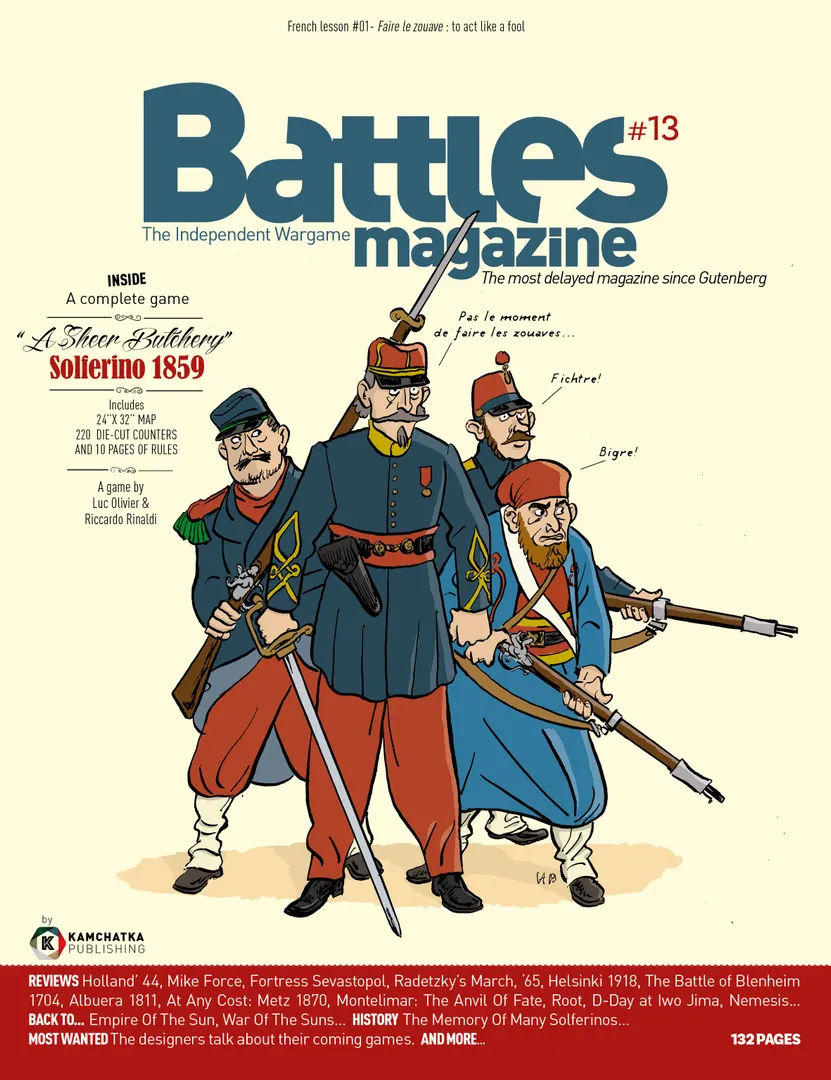
A Sheer Butchery: Solferino 1859
- 2 graczy
- 180–300 min
- Złożoność 2,9/5
- 2019
2004
Pomoc w zasadach gry Solferino 1859
Zrozumiałe wyjaśnienia tur, efektów kart i spornych sytuacji z odnośnikami do oficjalnych źródeł i zapisaną historią pytań.
Dla 2 graczy
Co chcesz wiedzieć?
Odpowiedzi pochodzą z oficjalnej instrukcji, ze stroną do sprawdzenia.
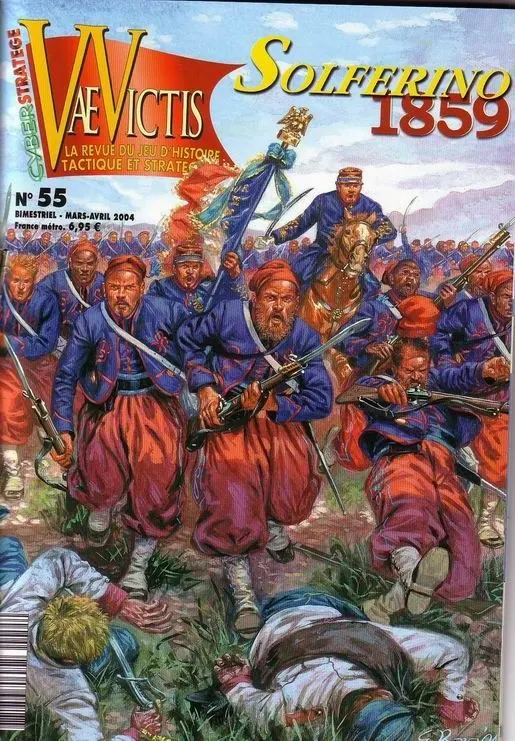
Solferino 1859 to gra planszowa wydana w 2004 roku dla 2 graczy, z rozgrywką trwającą 120 minut i dla osób od 12 lat. Projekt gry: Luc Olivier i Riccardo Rinaldi. Główne mechaniki: Dice Rolling i Hexagon Grid.

Po angielsku
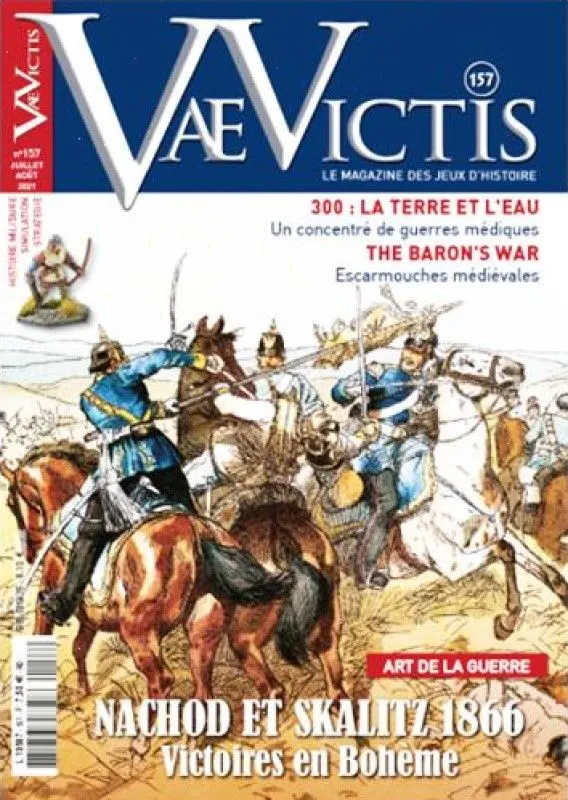
Solferino portrays the final battle of the Second Italian War of Independence, a nominal French victory that persuaded Napoleon III to make peace without much attention to the aims of his Italian allies. It was the last battle in Europe (maybe in the world) in which three monarchs commanded armies: the little Napoleon for the French, Victor Emmanuel for the Sardinians and Franz Joseph I for the Austrians. The scale is 600 meters per hex, 1 hour per turn. Units are infantry and cavalry brigades and corps-level artillery batteries. Units are rated for attack strength, movement factor and cohesion, which represents both morale and the number of losses that the unit can take before dissolving (2 for most infantry and cavalry, 3 for a few, 1 for artillery). Stacking is limited to one unit of any type plus one additional artillery unit per hex. Facing is of no importance for movement but does affect combat: Units may attack only through their 3 front hexes and are penalized if attacked from the flank or rear. Command and control are of great importance. Most units are attached to higher level formations (corps for the French and Austrians, divisions for the Italians). A unit is in command only if it is within range of its corps/division headquarters and the HQ either is within range of its monarch or passes an initiative test. Out-of-command units aren't helpless but are barred from entering hexes adjacent to enemy units' fronts. The royal and imperial personages, particularly Victor Emmanuel and Franz Joseph, are not very mobile, thus limiting forward movement in what is essentially a huge meeting engagement. The movement sequence uses the "chit pull" mechanism. Activation chits for each formation (plus a chit for each side representing all of its unattached units) are placed into a cup and drawn to determine which corps's or division's units may move next. The player who wins the initiative (usually the French) has the slight advantage of being able to select the first formation that will move each turn, without having to draw. Combat is somewhat unusual, employing a system that makes attacks hard and bloody. The attacker's strength is compared to the defense value of the terrain occupied by the defender (1 for clear hexes, 2 for woods, villages and upper slopes, 3 for towns); the defender's strength doesn't matter. At first glance, the combat results table looks very favorable. There are two catches: First, unless an HQ stacks with one of the attackers and passes an initiative test, attacks cannot be combined. The brigades go in one by one. Second, the defender gets to use its own strength for defensive fire against each successive attack before the attacker may fire. A not untypical result of an uncoordinated attack is that each attacker in turn suffers disorder and is forced to fall back without doing any damage. Coordinated attacks work much better - the defender must divide its strength among the attacking units, while they get to add theirs - but, as noted, require the presence of an HQ, which risks the loss of its commander in the process. (He will be replaced, but by a less effective subordinate.) Artillery can help by softening up the target, but there aren't a lot of batteries. (Most of the guns present are abstractly incorporated in the infantry brigade strengths.). Worse yet, they move slowly, have trouble obtaining good lines of sight and are easily eliminated if they get too near the enemy. As the battle goes on, formations will become demoralized through the loss of more than half of their initial steps. Once demoralized, they can do little except retreat off the field. Players gain a Victory Point for occupying each of 7 towns and one for every two enemy corps or divisions demoralized. A side can also win instantly by eliminating the enemy Emperor (Napoleon or Franz Joseph), though only a rather careless player will expose his monarch to attack. The battle starts at dawn (5:00 am) and will usually end abruptly in the late afternoon when a thunderstorm sweeps the field. If the storm holds off, the last turn is 6:00 pm. Whether or not it arrives, oppressive heat almost certainly will, slowing units and lowering their morale. This game was announced as the first of the series, and a later issue of Vae Victis had a pair of sequels, covering the battles of Magenta (1859, the other big battle of the same war) and Reichshoffen (1870, Franco-Prussian War). There were, however, no more, either because the difficulties of attack frustrated aggressive players or simply owing to a lack of widespread interest in mid-19th Century European wars. Solferino gives us a glimpse of what the American Civil War might have been like if every general had been a McClellan.
Według katalogu Solferino 1859 obsługuje 2 graczy. To liczba graczy podana przez wydawcę, więc gra jest zaprojektowana dokładnie dla takiej liczby uczestników. Warianty dla grup innej wielkości, jeśli w ogóle istnieją, opisano w instrukcji twojego wydania; sprawdź ją uważnie, zanim przygotujesz inną konfigurację stołu.
Podany czas rozgrywki w Solferino 1859 wynosi 120 minut. To szacunek wydawcy dla pełnej partii. Rzeczywisty czas zależy od grupy, liczby graczy i znajomości zasad: pierwsze partie zwykle trwają dłużej, a doświadczone grupy kończą szybciej. Przygotowanie gry i tłumaczenie zasad nie są wliczone w ten szacunek.
Katalog podaje dla Solferino 1859 wiek od 12 lat. To zalecenie wydawcy, które uwzględnia wymagania dotyczące czytania, złożoność zasad i drobne elementy, a nie tylko tematykę. Młodsi gracze często mogą dołączyć z pomocą dorosłego; sprawdź zalecenie wiekowe swojego wydania i weź pod uwagę doświadczenie grupy z grami planszowymi.
Solferino 1859 ma ocenę złożoności 2,8 na 5 według graczy BoardGameGeek, co czyni ją grą raczej lekką. Ocena pokazuje, ile znajomości zasad, planowania i podejmowania decyzji wymaga typowa rozgrywka. Cięższe gry wymagają dłuższego pierwszego tłumaczenia, dlatego przed wieczorem z grami warto skorzystać z przewodnika przygotowania.
Solferino 1859 należy do tych kategorii: Wargame i Post-Napoleonic. Główne mechaniki to Dice Rolling i Hexagon Grid. Kategorie opisują temat i świat gry, a mechaniki to, co gracze faktycznie robią w swojej turze. Każda mechanika prowadzi do strony katalogu z podobnymi grami, co pomaga znaleźć coś porównywalnego na kolejny wieczór.
Autorzy wymienieni przy Solferino 1859 to: Luc Olivier i Riccardo Rinaldi. Te informacje pochodzą z opublikowanych danych gry i wskazują osoby odpowiedzialne za jej projekt, a nie ilustratorów czy wydawców. Strony autorów w MeepleRules zbierają inne tytuły tych samych twórców, co pomaga, gdy gra ci się podoba i szukasz podobnych.
W katalogu Solferino 1859 figuruje jako gra podstawowa. Można w nią grać samodzielnie, korzystając z elementów z pudełka, bez żadnego innego tytułu. Dodatki, jeśli istnieją, dokładają nową zawartość lub zasady i są wymienione w katalogu osobno, z odnośnikiem do tej gry podstawowej.