
- BGG rank
- BGG #11,431
- BGG rating
- 7.7
A Pragmatic War: The War of the Austrian Succession 1741 – 1748
- 2 players
- 180–300 min
- Complexity 2.5/5
- 2019
2016
Rules assistance for 1866: The Struggle for Supremacy in Germany
Plain-language explanations of turns, card effects and disputed situations, with official source references and saved question history.
For 2 players
What would you like to know?
Answers come from the official rulebook, with the page to check.
1866: The Struggle for Supremacy in Germany is a board game released in 2016 for 2 players, 180–300 minutes per game, and ages 14 and up. It was designed by John B. Firer and its main mechanics are Dice Rolling, Point to Point Movement, and Simulation.
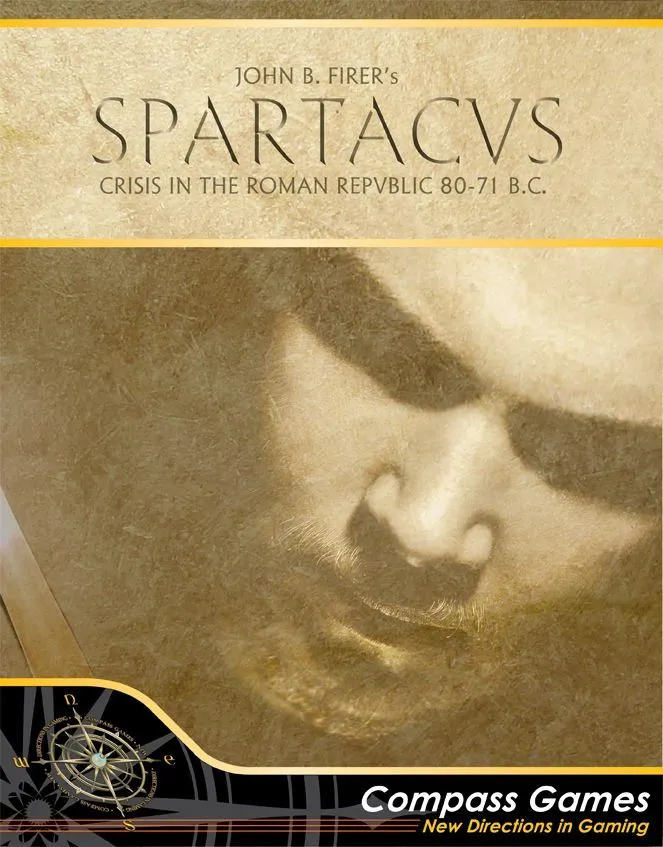


"1866: The Struggle for Supremacy in Germany" is a two-player simulation dealing with the Austro-Prussian War of 1866 in Central Europe. One player controls the forces of Prussia and its allies, to include the young Kingdom of Italy and the other player controls the forces of Austria and its German Confederation allies. Using a shared deck of 55 Operations Cards, each player makes decisions concerning the deployment, combat and political-military operations in support of his forces and his general strategy. Orders of battle include all the historic corps/divisions (with some brigade counters) and all major generals involved in the conflict. The mapboard covers an area from Hamburg to Florence and Metz to Cracow. The system includes unique mobilization rules that reflect the difficulties of mobilizing for war while attempting to garner as many victory points before war is actually declared. Once war is declared, you must fight with the forces mobilized, so shrewd judgement is required as to what to mobilize, where those forces will operate and who commands them. Always waiting in the wings is the French 2nd Empire under Napoleon III, prepared to intervene if neither side appears able to clinch a quick and decisive victory. Other features include cavalry superiority, railroads, Prussia’s mobilization advantage and coordinated attacks. 1866 includes two scenarios, the Mobilization to War scenario (the Campaign scenario) and the Seven Weeks War scenario (covering the post mobilization situation). The cards are sub-divided into Mobilization and War decks, which are combined after war is declared. "1866" is designed by John B. Firer (designer of "Spartacus"). In addition to the basic game components, "1866" includes a comprehensive Playbook, which includes an extended Example of Play, Designer’s Notes, Optional Rules, a select Bibliography and complete and extensive Card Explanations. Complexity: Medium Solitaire Suitability: Average Time Scale: Weekly turns Map Scale: Point-to-Point depiction of Central Europe from Denmark to Northern Italy and East Prussia to Eastern France Unit Scale: Corps/division Players: 2 players Playing time: 4 – 6 hours for the Campaign Scenario
1866: The Struggle for Supremacy in Germany supports 2 players according to the catalogue. This is the publisher’s listed player count, so the game is designed for exactly that number of participants. Variants for other group sizes, if any, are described in the rulebook of your edition, so check it before setting up a different configuration.
The listed playing time for 1866: The Struggle for Supremacy in Germany is 180–300 minutes. This is the publisher’s estimate for a full game. The actual duration depends on the group, the player count and familiarity with the rules: first sessions usually run longer, while experienced groups often finish faster. Setup and teaching time are not included in this estimate.
The catalogue lists 1866: The Struggle for Supremacy in Germany for ages 14 and up. This is the publisher’s recommendation and reflects reading demands, rule complexity and small components rather than theme alone. Younger players can often join with help from an adult, so check the age guidance on your edition and consider your group’s experience with board games.
1866: The Struggle for Supremacy in Germany has a complexity rating of 3.3 out of 5 from BoardGameGeek players, which makes it a medium-weight game. The rating reflects how much rules knowledge, planning and decision-making a typical game demands. Expect a longer first teach for heavier games, and use a preparation guide before game night.
1866: The Struggle for Supremacy in Germany belongs to these categories: Wargame and Post-Napoleonic. Its main mechanics are Dice Rolling, Point to Point Movement, and Simulation. Categories describe the theme and setting of a game, while mechanics describe what players actually do on their turns. Each mechanic links to a catalogue hub with similar games, which helps when you want something comparable.
The credited designers of 1866: The Struggle for Supremacy in Germany are: John B. Firer. These credits come from the published game data and name the people responsible for the game’s design, not its illustrators or publishers. Designer pages on MeepleRules collect other titles by the same designers, which helps when you enjoy a game and want to find similar ones.
The catalogue lists 1866: The Struggle for Supremacy in Germany as a base game. It can be played on its own with the components in the box and does not require any other title. Expansions, if any exist, add new content or rules on top of it and are listed separately in the catalogue with a link back to this base game.