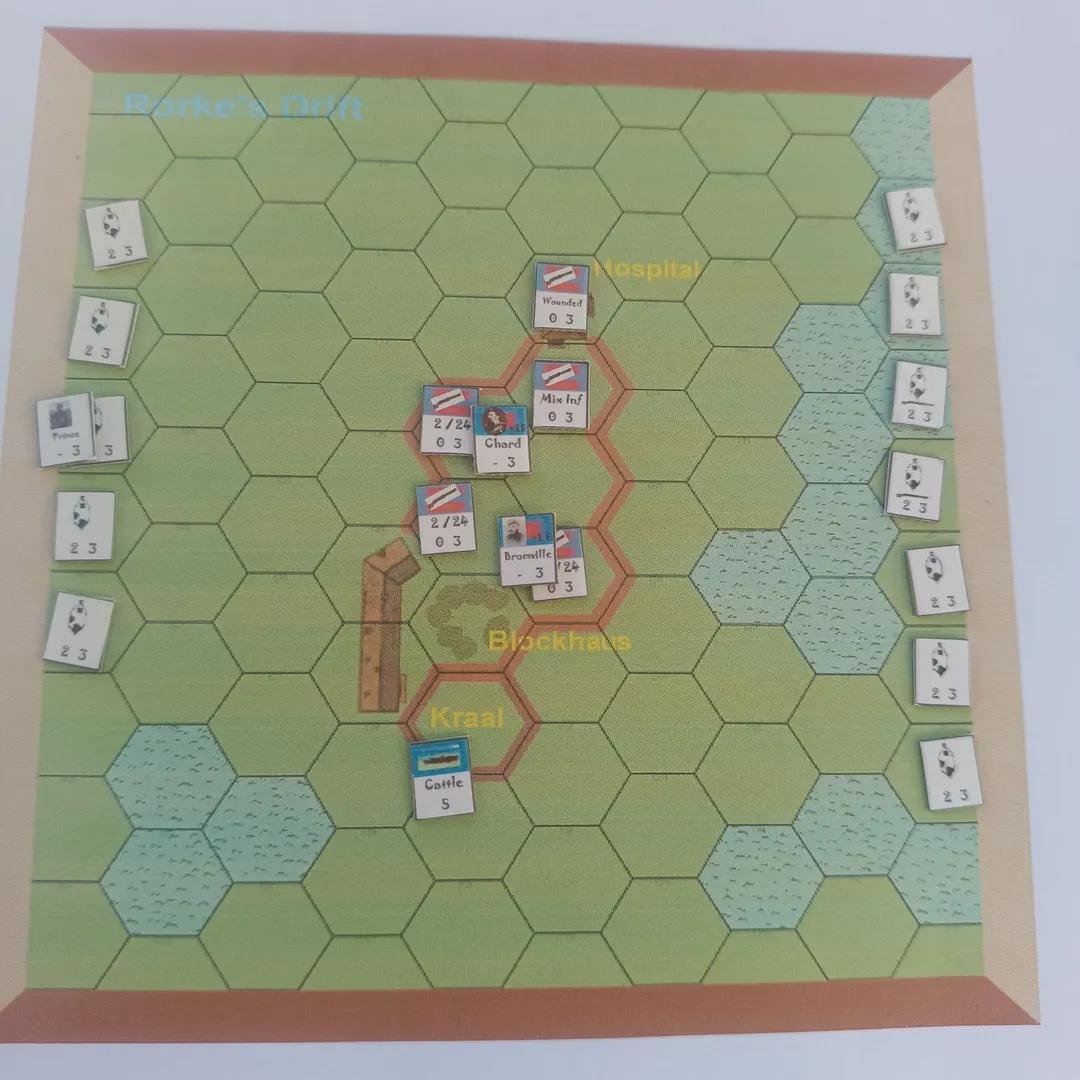
Rorke's Drift: 22nd January 1879
- 1–2 players
- 10–30 min
- 2017
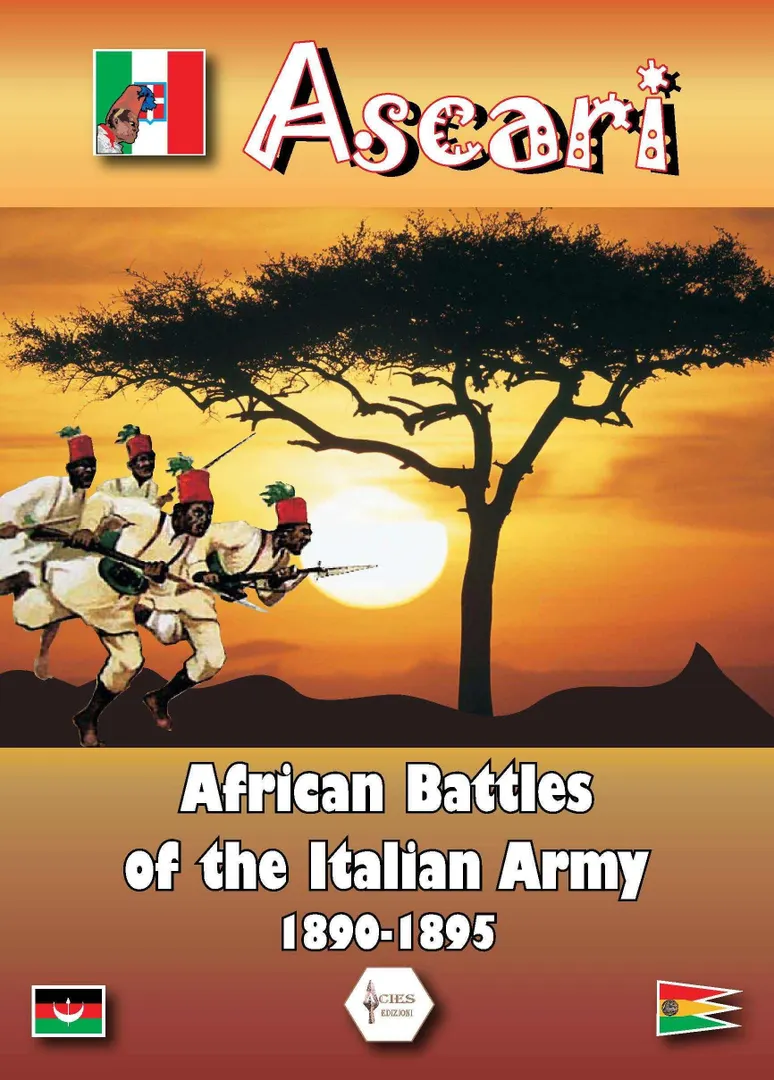
2012
Rules assistance for Ascari: African Battles of the Italian Army 1890-1895
Plain-language explanations of turns, card effects and disputed situations, with official source references and saved question history.
For 2 players
What would you like to know?
Answers come from the official rulebook, with the page to check.
Ascari: African Battles of the Italian Army 1890-1895 is a board game released in 2012 for 2 players, 60 minutes per game, and ages 10 and up. It was designed by Marco Campari and its main mechanics are Dice Rolling, Variable Set-up, and Grid Movement.





"Ascari" is a company-level wargame based on the stories of loyal solders who fought for Italy in Eritrea, the first Italian colony. The game depicts four battles in which the Italians were the protagonists: the two battles of Agordat against the Dervishes, Amba Alagi, and Coatit against the Ethiopians. A bonus scenario depicting the battle of Metemma between the Dervishes and the Ethiopian Emperor Johannes IV is also included. Here are the description of the Scenarios: S1 First Agordat: A raiding party of Dervishes are caught by the Ascari troops commanded by Captain Gustavo Fara in the plain of Agordat. S2 Agordat: 2200 native Askari and some Italian national soldiers, led by Lt. Colonel Arimondi, encounters in the plain of Agordat around 12,000 Mahdists, led by the Amir of Ghedaref, attempting to invade the Italian Colony of Eritrea. An astonishing Italian victory and the very first one of the young nation. S3 Coatit: The Italian Army in Eritrea, led by General Baratieri, wins its last victory before Adowa, attacking the overhelming Ras Mangasha’s Army at Coatit, fighting two days and performing a perfect redeployment under enemy fire. Tactically a draw, but stra-tegically a victory. S4 Amba Alagi The political quarrel between Gen. Arimondi and Eritrea Governor Baratieri led the IV Native Battalion to be put in the advanced position of Amba Alagi, just in front of the full Negus Menelik Ethiopian Army. Arimondi wanted to repeat Agordat, when with few troops managed to win the day, and therefore, despite Baratieri’s order to withdraw the Battalion, he didn’t forward it to Lt. Toselli, condemning him and his men to sure death… it will be the prelude to Adowa! S5 Metemma After the sack of the historic capital city of Gondar in 1888, Negus Neghesti Johannes IV gathered an army to repel the Mahdists from the city of Metemma. While on the way to victory, the Ethiopians melt away demoralized by the killing of their Emperor during the final assault.
Ascari: African Battles of the Italian Army 1890-1895 supports 2 players according to the catalogue. This is the publisher’s listed player count, so the game is designed for exactly that number of participants. Variants for other group sizes, if any, are described in the rulebook of your edition, so check it before setting up a different configuration.
The listed playing time for Ascari: African Battles of the Italian Army 1890-1895 is 60 minutes. This is the publisher’s estimate for a full game. The actual duration depends on the group, the player count and familiarity with the rules: first sessions usually run longer, while experienced groups often finish faster. Setup and teaching time are not included in this estimate.
The catalogue lists Ascari: African Battles of the Italian Army 1890-1895 for ages 10 and up. This is the publisher’s recommendation and reflects reading demands, rule complexity and small components rather than theme alone. Younger players can often join with help from an adult, so check the age guidance on your edition and consider your group’s experience with board games.
Ascari: African Battles of the Italian Army 1890-1895 has a complexity rating of 2.3 out of 5 from BoardGameGeek players, which makes it a medium-light game. The rating reflects how much rules knowledge, planning and decision-making a typical game demands. Expect a longer first teach for heavier games, and use a preparation guide before game night.
Ascari: African Battles of the Italian Army 1890-1895 belongs to these categories: Wargame and Post-Napoleonic. Its main mechanics are Dice Rolling, Variable Set-up, and Grid Movement. Categories describe the theme and setting of a game, while mechanics describe what players actually do on their turns. Each mechanic links to a catalogue hub with similar games, which helps when you want something comparable.
The credited designers of Ascari: African Battles of the Italian Army 1890-1895 are: Marco Campari. These credits come from the published game data and name the people responsible for the game’s design, not its illustrators or publishers. Designer pages on MeepleRules collect other titles by the same designers, which helps when you enjoy a game and want to find similar ones.
The catalogue lists Ascari: African Battles of the Italian Army 1890-1895 as a base game. It can be played on its own with the components in the box and does not require any other title. Expansions, if any exist, add new content or rules on top of it and are listed separately in the catalogue with a link back to this base game.