
- BGG rank
- BGG #20,420
- BGG rating
- 6.5
Battle of the Atlantic
- 1 player
- 60 min
- Complexity 1.9/5
- 2000

2020
Rules assistance for Atlantic Wolves
Plain-language explanations of turns, card effects and disputed situations, with official source references and saved question history.
For 1 player
What would you like to know?
Answers come from the official rulebook, with the page to check.
Atlantic Wolves is a board game released in 2020 for 1 player. It was designed by Gary Graber and its main mechanics are Area Movement, Dice Rolling, and Simulation.






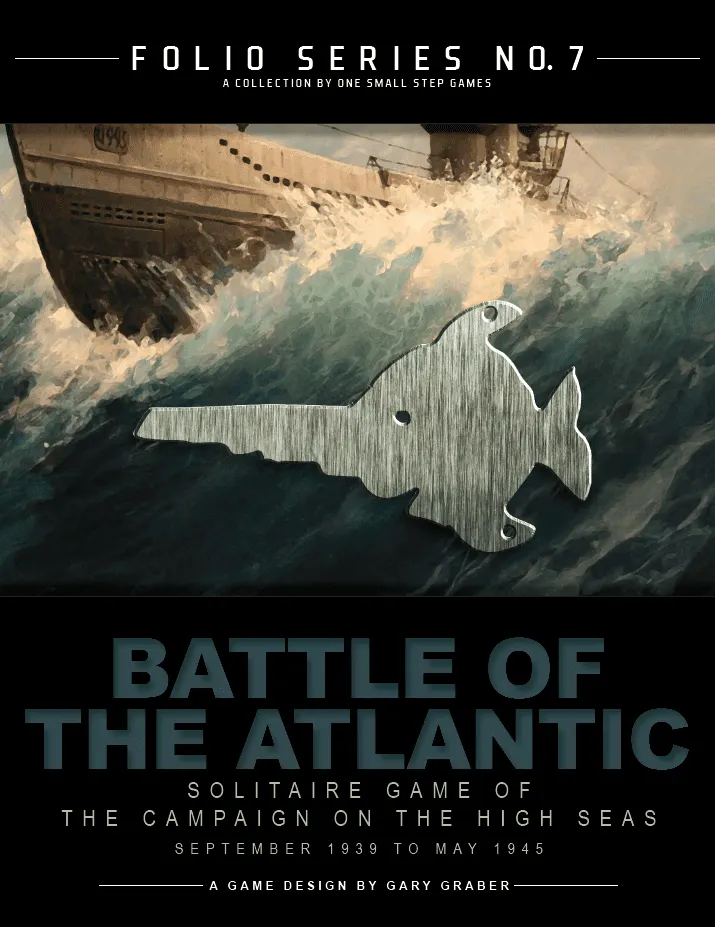
Some have called it the most crucial campaign of the Second World War. It was not fought on the ground with tanks and artillery; it was the Battle of the Atlantic, pitting the German Wolfpacks versus the allied convoy system. Upon the result of the campaign hung the fate of Great Britain, and, by extension, the Allied cause in Europe. "Atlantic Wolves" is a solitaire wargame based on this important World War II naval campaign. It covers the decisive part of the campaign, August 1942 to May 1943. The player, assuming the role of Admiral Karl Doenitz, controls the German Kriegsmarine and tries to achieve success against the Allies, played by the game system. The game is a deluxe re-implementation of Gary Graber's classic wargame Battle of the Atlantic, now out of print. The map is a representation of the general locations where the Battle of the Atlantic was fought. There are seven named Areas on the board (e.g. Eastern Seaboard, Newfoundland, North Atlantic, Mid- Atlantic, Iceland, Bay of Biscay, and African Coast). Counters in the game represent German U-Boats, “Milch Cow” (Milk Cow) submarine tankers, ACE, Condor bombers, Surface Raiders, and Admirals Doenitz and Raeder. Also represented are Allied Escorts, Air Patrols, Convoys, and various markers. Each U-Boat counter (in the rules, simply termed “U-Boat”) represents 4–6 operational U-Boats. Victory is won by the German player sinking Allied ships and avoiding the establishment of a secure “lifeline” to Britain. The more tonnage sunk, the better for the Germans. The German wins the game by fulfilling three requirements: Preserving the fleet. If, during any turn, one-half or more of the U-Boat counters that started the turn are sunk, Kriegsmarine morale is broken, the game ends, and the Allies win. Example: During the first turn, if three or more U-Boats are sunk the Allies win. Preventing a “lifeline” to Britain from being established. If there are four Convoy markers on the board at the end of any turn, a permanent lifeline to Britain has been established, Kriegsmarine morale is broken, the game ends, and the Allies win. Sinking Allied ships. The German must sink 600,000 tons for three consecutive turns AND average: 400,000+ tons for the entire game if there are no Convoy markers on the board at the end of the game; OR 450,000+ tons if there is one Convoy marker on the board at the end of the game; OR 500,000+ tons if there are two or more Convoy markers on the board at the end of the game. —Description from the publisher
Atlantic Wolves supports 1 player according to the catalogue. This is the publisher’s listed player count, so the game is designed for exactly that number of participants. Variants for other group sizes, if any, are described in the rulebook of your edition, so check it before setting up a different configuration.
Atlantic Wolves has a complexity rating of 2.3 out of 5 from BoardGameGeek players, which makes it a medium-light game. The rating reflects how much rules knowledge, planning and decision-making a typical game demands. Expect a longer first teach for heavier games, and use a preparation guide before game night.
Atlantic Wolves belongs to these categories: Wargame, Nautical, and World War II. Its main mechanics are Area Movement, Dice Rolling, and Simulation. Categories describe the theme and setting of a game, while mechanics describe what players actually do on their turns. Each mechanic links to a catalogue hub with similar games, which helps when you want something comparable.
The credited designers of Atlantic Wolves are: Gary Graber. These credits come from the published game data and name the people responsible for the game’s design, not its illustrators or publishers. Designer pages on MeepleRules collect other titles by the same designers, which helps when you enjoy a game and want to find similar ones.
The catalogue lists Atlantic Wolves as a base game. It can be played on its own with the components in the box and does not require any other title. Expansions, if any exist, add new content or rules on top of it and are listed separately in the catalogue with a link back to this base game.