

- BGG rank
- BGG #4,008
- BGG rating
- 8.1
Men of Iron Battles Tri-Pack: Men of Iron, Infidel, Blood & Roses
- 1–2 players
- 60–180 min
- Complexity 3.2/5
- 2020
2014
Rules assistance for Blood & Roses
Plain-language explanations of turns, card effects and disputed situations, with official source references and saved question history.
For 2 players
What would you like to know?
Answers come from the official rulebook, with the page to check.
Blood & Roses is a board game released in 2014 for 2 players and 120–300 minutes per game. It was designed by Richard H. Berg and its main mechanics are Dice Rolling and Hexagon Grid.

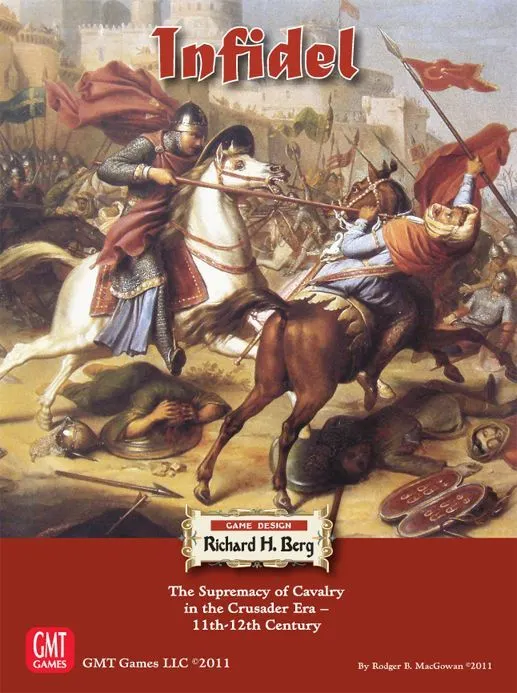

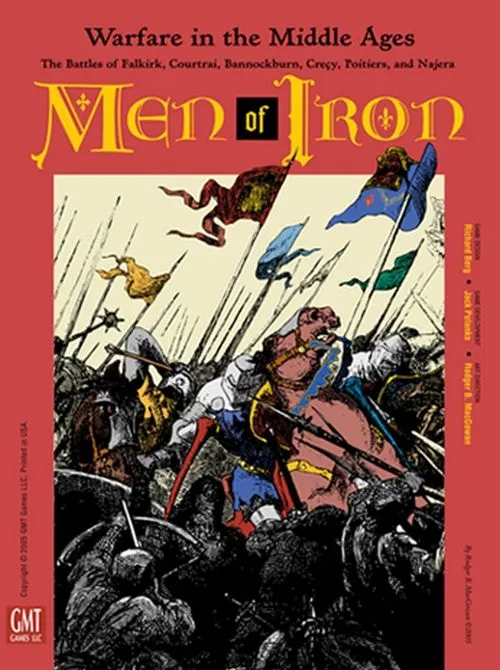






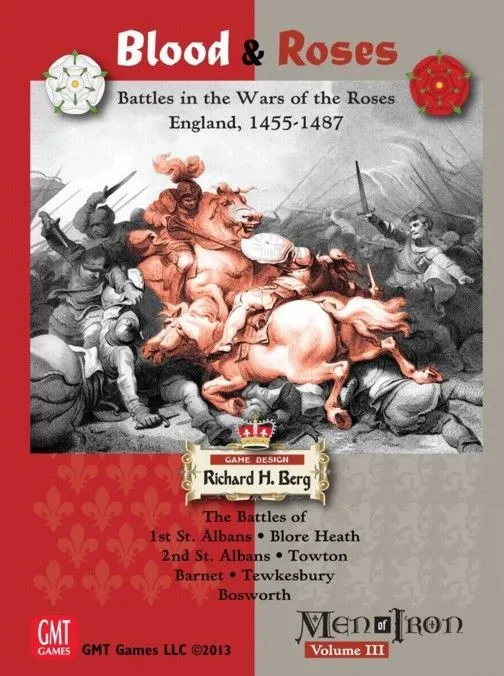
(from GMT website:) Blood & Roses focuses on the battles of the Wars of the Roses in England, between 1455 and 1487. This was warfare in which most men were truly "of iron", heavily and totally armored to such a point that their mobility was suspect. It was also the introduction of gunpowder – mostly field artillery – in noticeable numbers. And while many English men-at-arms were mounted, they did so almost entirely for transport. Most fighting was on foot … and it was quite vicious. Historical Note: The game’s title refers to the heavy casualty rates and the names given to many of the fields after the battles: Bloody Meadow, Bloody Field, et al. Blood & Roses is designed for quick learning and easy play. Game rules are short, there are no "turns" - play is Continual, with ample opportunities to steal play from your opponent - and combat resolution is a single dieroll. Playing time is about 1-2 hours, per battle. Battles: 1st St. Albans (22 May 1455) marks the first major engagement in the Wars of the Roses. Richard, Duke of York and his ally, Richard Neville, Earl of Warwick, defeated the Lancastrians under Edmund, Duke of Somerset, who was killed during the battle. York also captured Henry VI and forced Henry to appoint him Constable of England. Blore Heath (23 September, 1459) where greatly outnumbered Yorkist infantry used the longbow and a defensive position to drive off the Lancastrian Men-at-Arms. 2nd St. Albans (17 February, 1461) where the Lancastrians drove the Yorkists out of the town and then destroyed Warwick’s strangely deployed army, even when sturdily defended by hedges, caltrops and spiked netting. Towton (29 March, 1461) is easily biggest battle in the box and the biggest in the entire series. It uses over 200 combat units and, much like the actual battle, will probably take a long time to play. It is mostly crash and bash, with little room for maneuver, all fought in a blinding snowstorm!! Barnet (14 April, 1471) a classic battle of planned deployments, but overlapping wings, cries of treason in the lines, fog of war (actual fog), and the excellent use of reserves. Tewksbury (4 May, 1471) a battle that shows one of the key terrain features of the battles in this era, extensive hedges and thick underbrush in otherwise clear fields. Bosworth(22 August, 1485) the best-known battle of the wars and the tragic (I think) death of King Richard III in a battle he should have won. Using the latest information as to where the battle took place, let’s see if you can cancel out the Tudor dynasty. Each game includes: Two double-sided 22" x 32"game-maps 2.5 sheets of counters Rules Booklet Battle Book Charts and Play Aids 2 ten-sided dice Designer: RICHARD H. BERG Developer: Ralph Shelton MAP SCALE: 50 yards per hex. UNIT SCALE: 250 Infantry and Cavalry, 150 Handgunners, and several Cannons per counter.
Blood & Roses supports 2 players according to the catalogue. This is the publisher’s listed player count, so the game is designed for exactly that number of participants. Variants for other group sizes, if any, are described in the rulebook of your edition, so check it before setting up a different configuration.
The listed playing time for Blood & Roses is 120–300 minutes. This is the publisher’s estimate for a full game. The actual duration depends on the group, the player count and familiarity with the rules: first sessions usually run longer, while experienced groups often finish faster. Setup and teaching time are not included in this estimate.
Blood & Roses has a complexity rating of 2.9 out of 5 from BoardGameGeek players, which makes it a medium-light game. The rating reflects how much rules knowledge, planning and decision-making a typical game demands. Expect a longer first teach for heavier games, and use a preparation guide before game night.
Blood & Roses belongs to these categories: Wargame and Medieval. Its main mechanics are Dice Rolling and Hexagon Grid. Categories describe the theme and setting of a game, while mechanics describe what players actually do on their turns. Each mechanic links to a catalogue hub with similar games, which helps when you want something comparable.
The credited designers of Blood & Roses are: Richard H. Berg. These credits come from the published game data and name the people responsible for the game’s design, not its illustrators or publishers. Designer pages on MeepleRules collect other titles by the same designers, which helps when you enjoy a game and want to find similar ones.
The catalogue lists Blood & Roses as a base game. It can be played on its own with the components in the box and does not require any other title. Expansions, if any exist, add new content or rules on top of it and are listed separately in the catalogue with a link back to this base game.