
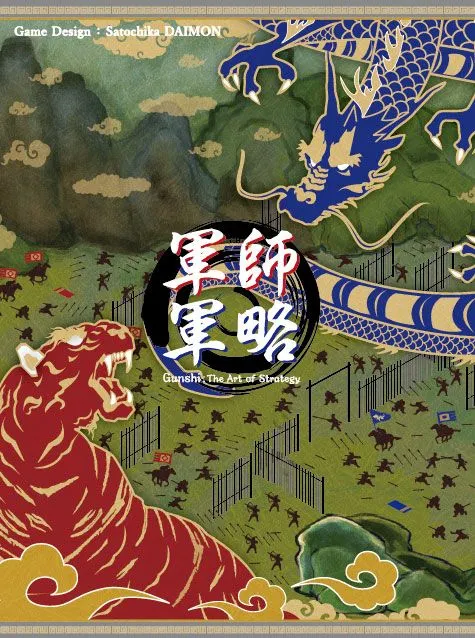
- BGG rank
- BGG #17,301
- BGG rating
- 7.8
Gunshi: The Art of Strategy
- 2 players
- 30–60 min
- Complexity 2.0/5
- 2021
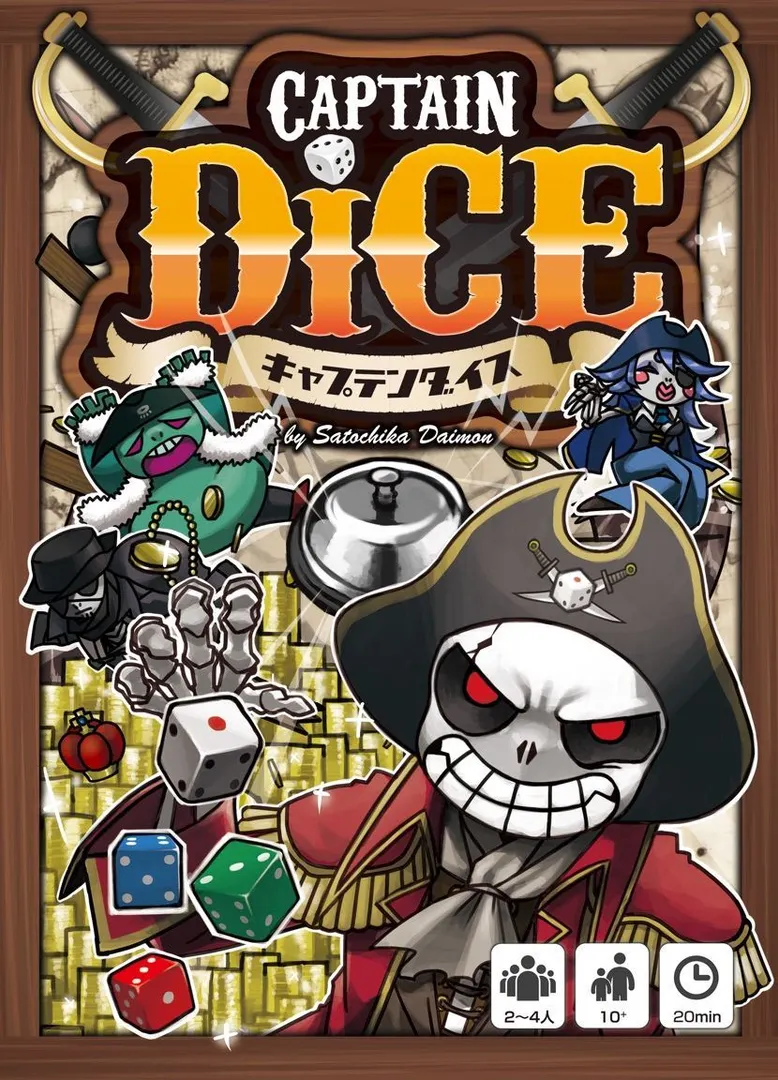
2016
Rules assistance for Captain Dice (キャプテンダイス)
Plain-language explanations of turns, card effects and disputed situations, with official source references and saved question history.
What would you like to know?
Answers come from the official rulebook, with the page to check.
Captain Dice (キャプテンダイス) is a board game released in 2016 for 2–4 players, 20–30 minutes per game, and ages 10 and up. It was designed by Satochika Daimon and its main mechanics are Hand Management, Dice Rolling, and Area Majority / Influence.







User summary Captain Dice (キャプテンダイス) is a dice and action card game, combining speed and cunning. Swiftly place dice to secure treasure cards. Then replace your dice with action cards to attack the other players. Then collect treasure if your cards survive the attacks. The playing area is a grid of treasure cards and a bell in the centre. The bell is rung, and each player rolls and rerolls their own six dice entirely at will, trying to make combos to place on treasure cards. As soon as there are any three pairs in any line, any player may ring the bell to force a stop (and becomes the start player). It helps to secure treasure cards in sections; if you succeed, you collect all treasures you have linked up. Each player has nine cards, numbered 0 to 5 (four 5 cards each). Each card attacks neighbouring locations in different directions, except the 0 card which is a shield, and the 5 cards on which you are becalmed. Depending on which locations you grabbed, you take turns placing cards face down, taking back your dice. The actions are revealed and resolved, going from 0 to 5 (tied numbers are won closest to the start player). Here the tactical element appears. The cards 1 to 4 attack each other in set patterns, and in rank order from low to high. Since you cannot pick up cards spent in previous rounds until you clear your hand, you must choose carefully which cards you place where. If you think a spot is safe from any attack, you can safely spend a 5 card and help clear your hand. If you think a spot is certain to be attacked, place your 0 and it survives. If you have claimed places on straight lines, you'll collect all the empty treasure cards lying between them, so often you want to be secure. If you know what cards the others have spent, you might get your attack in first with a low numbered attack. After a couple of rounds, the tactical choices become very clear and frustrating. Using the wrong action cards is a costly waste. Failing to get dice down means you get fewer chances to collect treasure and it takes longer to clear your hand and pick up your discard. Once the action cards have been resolved, any left standing take the treasure cards below them or linked in straight lines, and the action cards go to a personal discard face-down. Empty treasure spots are refilled, and the bell is rung! The game ends when there is not enough treasure on the table. At the finish, most treasure cards wins. The game is fast and the theme fits the game play. The game is language free. The second edition simply revised the artwork on the box and cards to a more cartoon/manga style and added a strategic variant. Otherwise, components and gameplay are identical between the first and second editions. Publisher's summary Roll the dice to your heart’s content! Ring up a storm with the bells! Speed and strategies are both important for this analog game, which offers real-time domination + mind games, appealing to all 5 senses. Secure territories pre-emptively by placing a pair of dice on the treasure cards as fast as possible, then take time to think about how to protect the territories with attack cards, so that other players cannot foil your plans. If you are successful in holding your territory on the treasure cards, then SUCCESS! The treasure cards are rewarded to you and the process is repeated again. In the end, the player with the most treasure cards wins. サイコロ振りまくり!ベル鳴らしまくり! スピードも心理戦も両方大事な、リアルタイム陣取り×心理戦を五感で楽しめるアナログゲームです。 ひとことで言うとどんなゲーム? 場にある財宝カードをダイスの早置き勝負で自分の陣地として仮確保し、その後はじっくり考えながら攻撃カードを使って他プレイヤーに邪魔されないように陣地を守ります。 守りきった陣地の財宝カードをGET!という流れを繰り返します。 最終的に、財宝カードを一番多く獲得したプレイヤーの勝利というゲームです。
Captain Dice (キャプテンダイス) supports 2–4 players according to the catalogue. This range comes from the publisher’s listed player count, so the game can be set up for any group size within it. Some setups, rules and scoring details may still vary by player count, so check your edition’s rulebook for the exact configuration.
The listed playing time for Captain Dice (キャプテンダイス) is 20–30 minutes. This is the publisher’s estimate for a full game. The actual duration depends on the group, the player count and familiarity with the rules: first sessions usually run longer, while experienced groups often finish faster. Setup and teaching time are not included in this estimate.
The catalogue lists Captain Dice (キャプテンダイス) for ages 10 and up. This is the publisher’s recommendation and reflects reading demands, rule complexity and small components rather than theme alone. Younger players can often join with help from an adult, so check the age guidance on your edition and consider your group’s experience with board games.
Captain Dice (キャプテンダイス) has a complexity rating of 1.3 out of 5 from BoardGameGeek players, which makes it a light game. The rating reflects how much rules knowledge, planning and decision-making a typical game demands. Expect a longer first teach for heavier games, and use a preparation guide before game night.
Captain Dice (キャプテンダイス) belongs to these categories: Dice, Action / Dexterity, and Real-time. Its main mechanics are Hand Management, Dice Rolling, and Area Majority / Influence. Categories describe the theme and setting of a game, while mechanics describe what players actually do on their turns. Each mechanic links to a catalogue hub with similar games, which helps when you want something comparable.
The credited designers of Captain Dice (キャプテンダイス) are: Satochika Daimon. These credits come from the published game data and name the people responsible for the game’s design, not its illustrators or publishers. Designer pages on MeepleRules collect other titles by the same designers, which helps when you enjoy a game and want to find similar ones.
The catalogue lists Captain Dice (キャプテンダイス) as a base game. It can be played on its own with the components in the box and does not require any other title. Expansions, if any exist, add new content or rules on top of it and are listed separately in the catalogue with a link back to this base game.