

- BGG rank
- BGG #17,499
- BGG rating
- 6.5
Tri-Tactics
- 2 players
- 240 min
- Complexity 2.5/5
- 1932
1919
Rules assistance for Dover Patrol
Plain-language explanations of turns, card effects and disputed situations, with official source references and saved question history.
For 2 players
What would you like to know?
Answers come from the official rulebook, with the page to check.
Dover Patrol is a board game released in 1919 for 2 players, 180 minutes per game, and ages 12 and up. It was designed by Harry Gibson and its main mechanics are Square Grid, Memory, and Grid Movement.

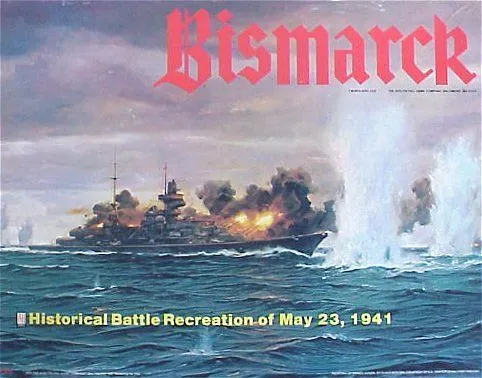


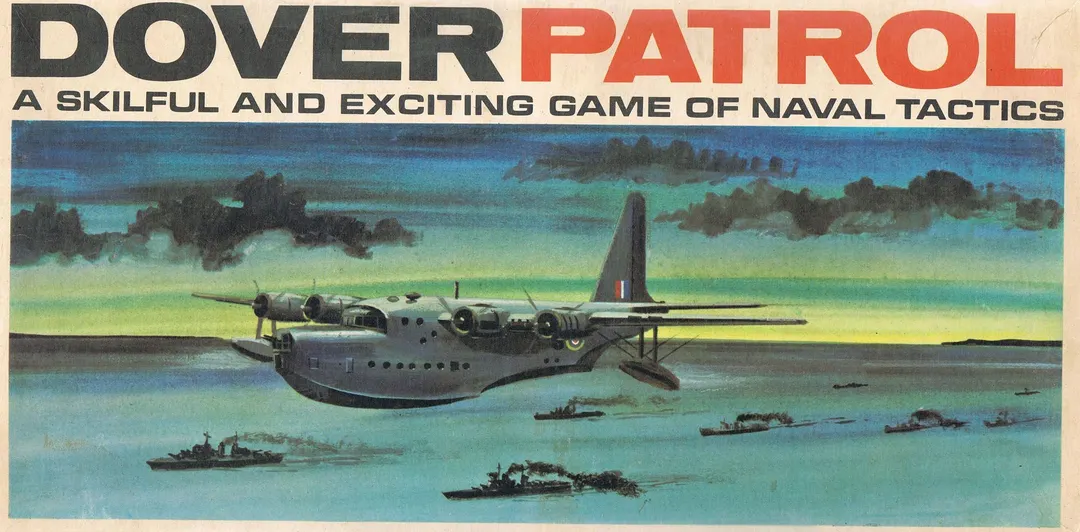
This game DOVER PATROL by Harry Gibson is a wonderful Naval themed and early version of a type of hidden tactics game of skill. It was sold alongside the similar L'Attaque and Aviation: The Aerial Tactics Game of Attack and Defence and a more complicated game called Tri-Tactics designed as an incorporation of all three, by Gibsons and marketed together at the time as Series: The Big Four (Gibsons). Note: L'Attaque was patented in 1909 in France by Mademoiselle Hermance Edan, the U.K. distribution rights for which were acquired in 1925 by Gibsons. Dover Patrol was launched in 1911, whereas the original H. P. Gibson & Sons company was registered in 1919. Prior to that, The International Card Company operated between 1903 and 1919, when Harry Percy Gibson purchased ICC to form his company. Whether Harry Gibson designed the game is therefore open to some doubt. The game play of Dover Patrol is very much like L'Attaque, which forms the basis of the near-identical game Stratego by Jumbo, published in 1946 after World War II when the patent would have expired. Gibsons themselves had to effectively ‘start again’ around that time having had their premises destroyed in the Blitz. The board, which supposedly represents an area of sea, is superimposed with a rectangular grid. A Base is shown on two of the opposite edges of the board. The area round each base is protected by a harbour wall. Each player has a fleet of forty playing pieces. These pieces are rectangles of cardboard which stand upon plastic supports. The two sides are distinguished by the colour on the back of each card, red and blue in this case. The fronts of the cards depict various ships, mines and a flying boat. Each piece has a printed value from 1 for a Patrol Vessel to 10 for the Flagship. These values represent the relative strength of each ship and also indicate the type of ship; battle cruisers, light cruisers, etc.. The ships are also named, H.M.S. Lion, H.M.S. Glasgow and so on. The object of the game is to capture the enemy Flag and transport it back to one's own base while still retaining possession of one's own Flag. To start the game, the players place their Flag on their Base and then set up their pieces, one per rectangle, on their own side of the board and with the backs of the cards facing the opponent. In turn the players move a piece one space orthogonally until two opposing pieces are back-to-back. The moving player may then call 'Attack', the two relevant pieces are then revealed and the one with the lower value is sunk and removed from the board. In addition to the fighting ships, the players have a number of auxiliary pieces. Mines will automatically blow up virtually all ships that are moved into an attacking position, regardless of whether the owner of the moving ship attacks or not. Once placed, mines may not be moved. Only the mine sweepers can destroy mines. The mine layers act as floating mines. They can be moved but may not attack, but have the same effect upon enemy shipping as a mine. Only the destroyers can sink them. Submarines have a marauding role and can sink all ships except mine layers and MTB's. The good old flying boat has a very important role as it is principally used to capture the enemy flag because it can fly over the harbour walls. Only MTB's and destroyers can shoot it down. When the opposing flag is captured, it is clipped to the top of the capturing piece and thus its whereabouts are known to all. The Flag can be transferred to any other piece standing orthogonally adjacent to the piece which is transporting it. It is a fairly straightforward game to play, though tactics can well be employed, particularly in the setting up phase. Similar to: L'Attaque Aviation: The Aerial Tactics Game of Attack and Defence Tri-Tactics Stratego
Dover Patrol supports 2 players according to the catalogue. This is the publisher’s listed player count, so the game is designed for exactly that number of participants. Variants for other group sizes, if any, are described in the rulebook of your edition, so check it before setting up a different configuration.
The listed playing time for Dover Patrol is 180 minutes. This is the publisher’s estimate for a full game. The actual duration depends on the group, the player count and familiarity with the rules: first sessions usually run longer, while experienced groups often finish faster. Setup and teaching time are not included in this estimate.
The catalogue lists Dover Patrol for ages 12 and up. This is the publisher’s recommendation and reflects reading demands, rule complexity and small components rather than theme alone. Younger players can often join with help from an adult, so check the age guidance on your edition and consider your group’s experience with board games.
Dover Patrol has a complexity rating of 2.1 out of 5 from BoardGameGeek players, which makes it a medium-light game. The rating reflects how much rules knowledge, planning and decision-making a typical game demands. Expect a longer first teach for heavier games, and use a preparation guide before game night.
Dover Patrol belongs to these categories: Wargame, Nautical, and World War II. Its main mechanics are Square Grid, Memory, and Grid Movement. Categories describe the theme and setting of a game, while mechanics describe what players actually do on their turns. Each mechanic links to a catalogue hub with similar games, which helps when you want something comparable.
The credited designers of Dover Patrol are: Harry Gibson. These credits come from the published game data and name the people responsible for the game’s design, not its illustrators or publishers. Designer pages on MeepleRules collect other titles by the same designers, which helps when you enjoy a game and want to find similar ones.
The catalogue lists Dover Patrol as a base game. It can be played on its own with the components in the box and does not require any other title. Expansions, if any exist, add new content or rules on top of it and are listed separately in the catalogue with a link back to this base game.