
- BGG rank
- BGG #6,462
- BGG rating
- 8.8
Last Chance for Victory: The Battle of Gettysburg
- 2 players
- 60 min
- Complexity 4.1/5
- 2014
1992
Rules assistance for Embrace an Angry Wind: The Battles of Spring Hill & Franklin, 29-30 November 1864
Plain-language explanations of turns, card effects and disputed situations, with official source references and saved question history.
For 1 player
What would you like to know?
Answers come from the official rulebook, with the page to check.
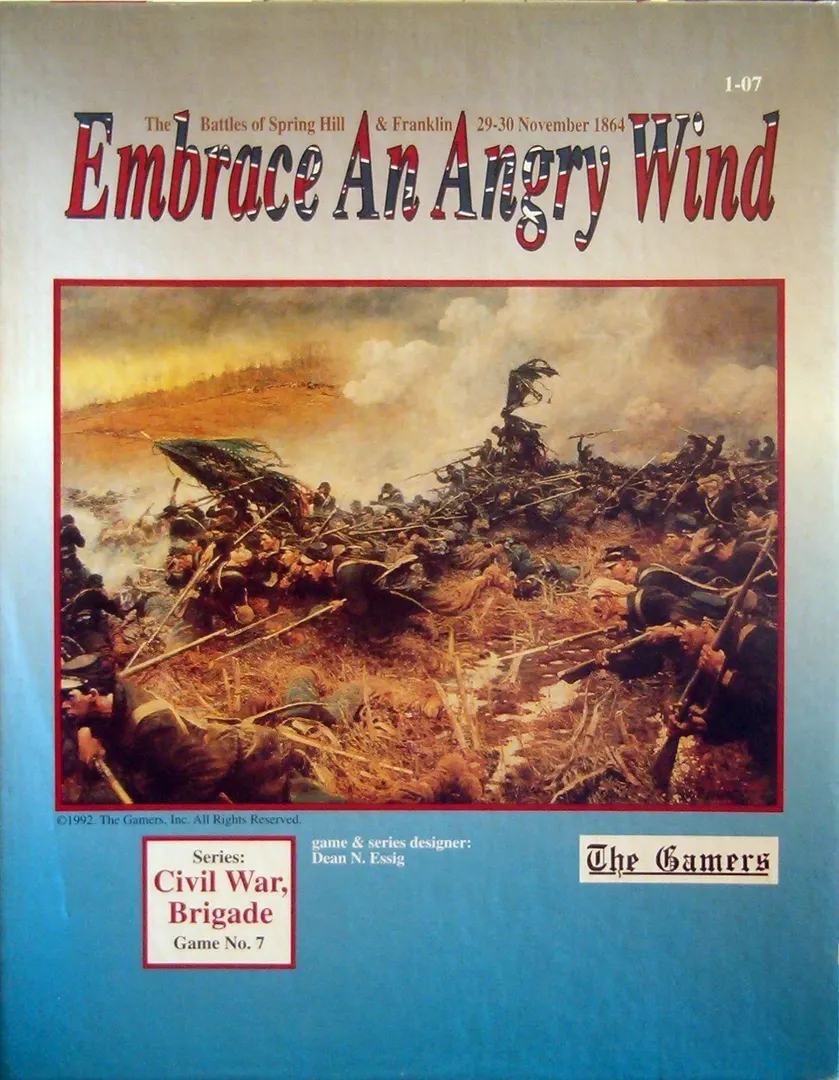
Embrace an Angry Wind: The Battles of Spring Hill & Franklin, 29-30 November 1864 is a board game released in 1992 for 1–4 players and 240–960 minutes per game. It was designed by Dean Essig and its main mechanics are Dice Rolling, Hexagon Grid, and Simulation.
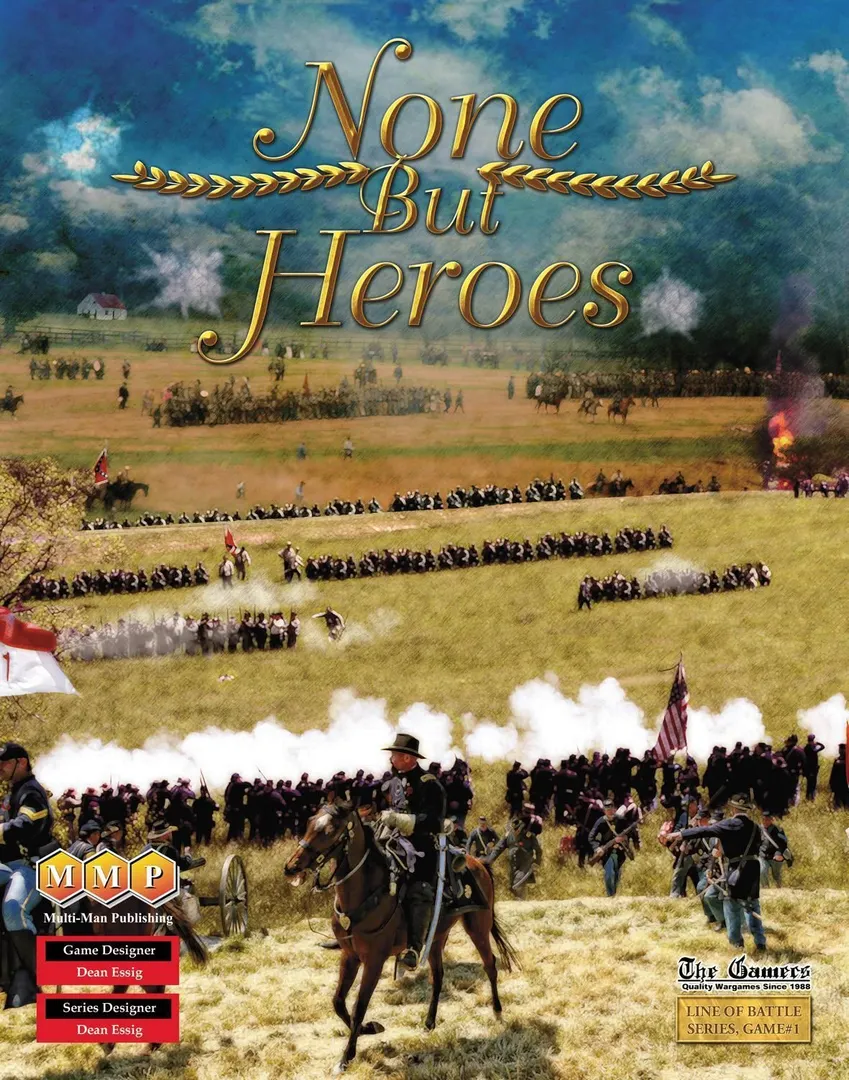
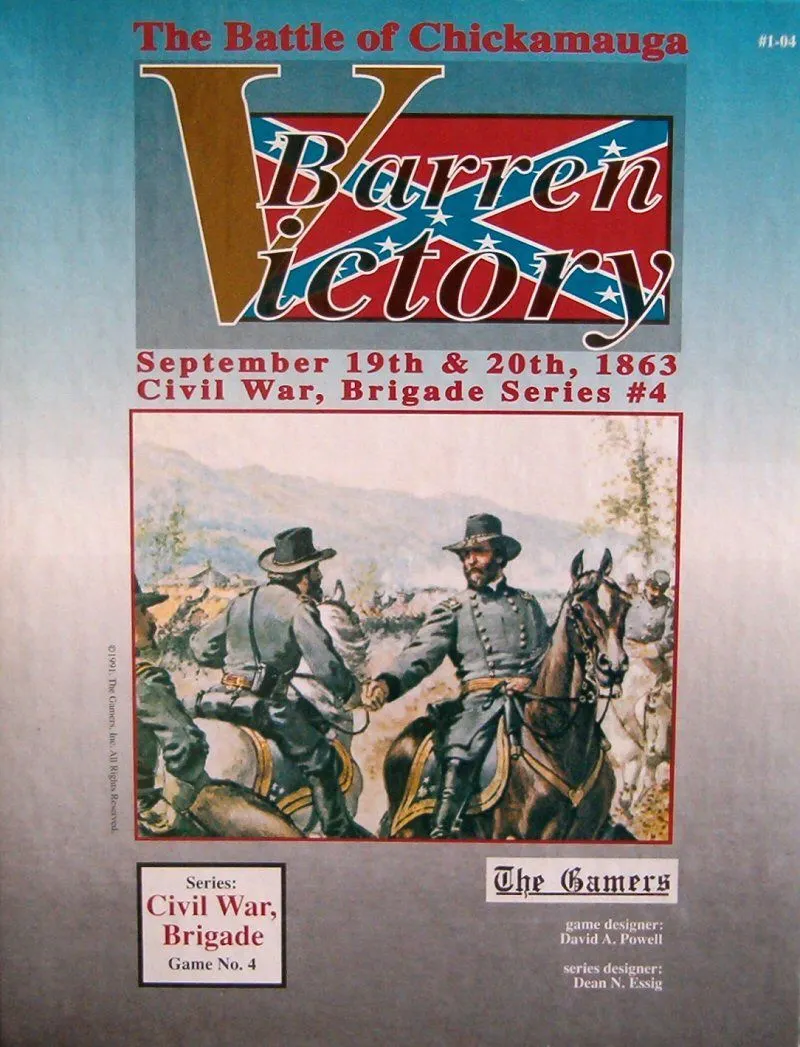
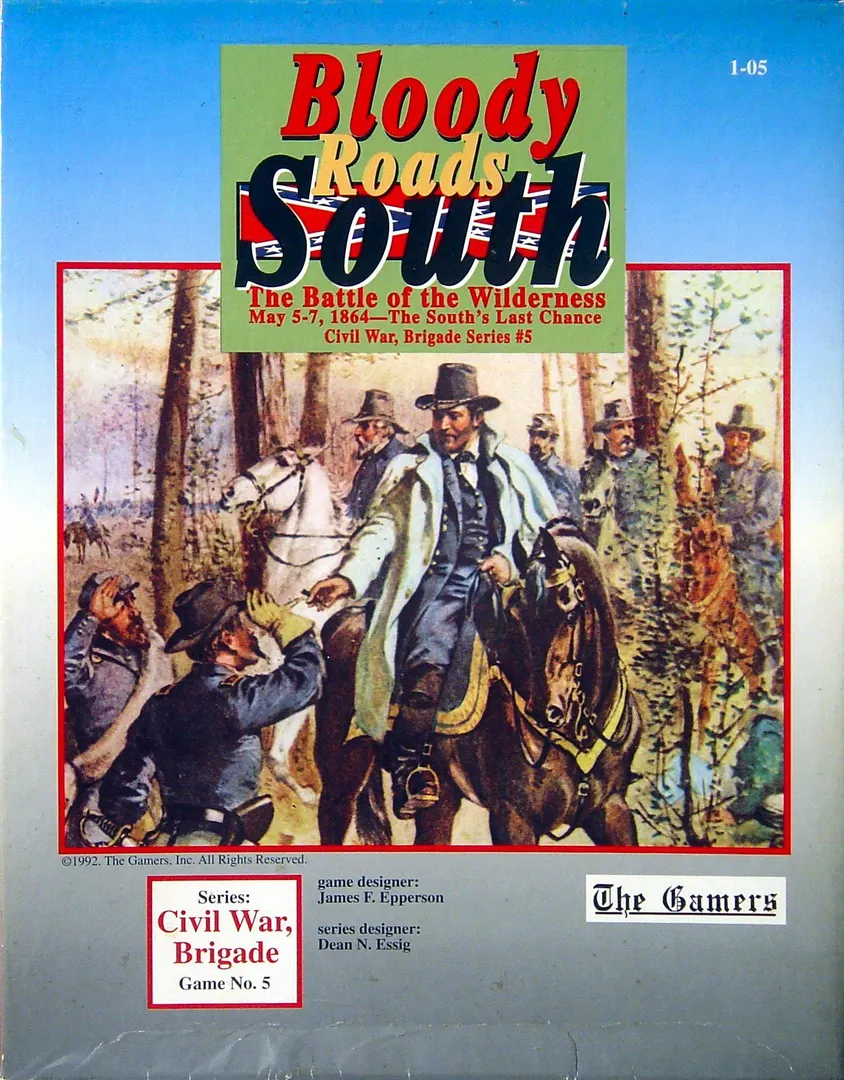
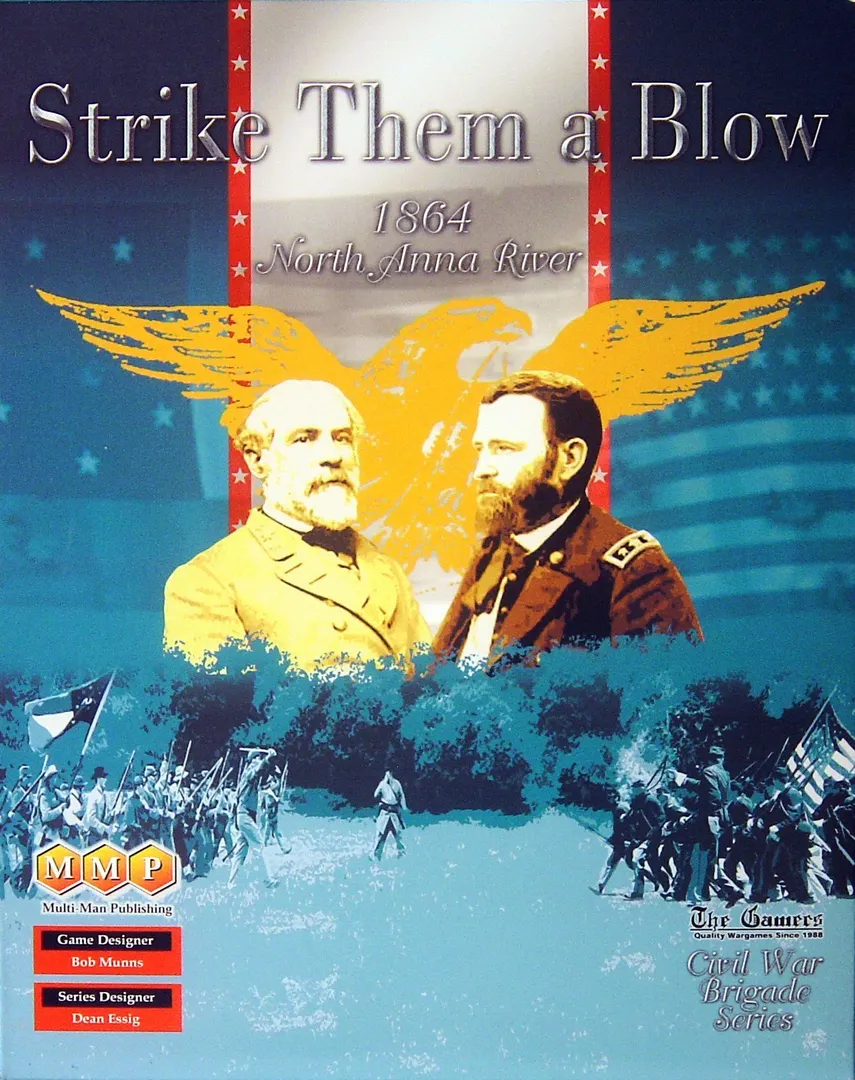
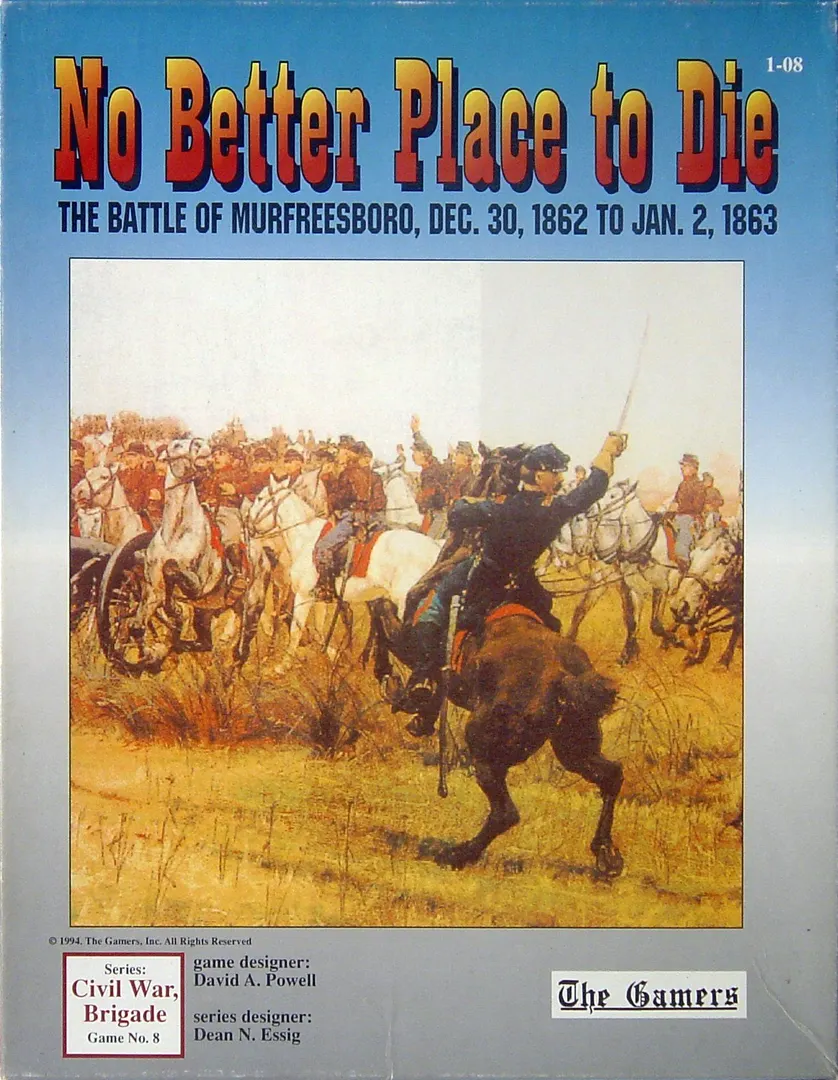
Embrace an Angry Wind - The Battles of Spring Hill & Franklin, 29-30 November 1864, covers the Confederate Army of the Tennessee's campaign from Spring Hill to Franklin. The game also allows players to fight the entire campaign from Spring Hill through Franklin—a campaign which will be dictated by the decisions of the Union and Confederate players—both battles might be fought, or just one. Lastly, the game allows the player to examine the futile courage of the actual assault on Franklin.The two maps are not physically joined, and this leaves the players opportunity to maneuver somewhat differently and are not strictly tied to the mistakes of the original campaign. EaAW is #7 in the popular Civil War Brigade (CWB) Series from The Gamers. It is one of the faster playing games of the series, and also serves as a good introductory game to that system. There are (4) Scenarios included in the rules. Game Scale: Game Turn: 30 minutes Hex: 200 yards Units: Brigades Game Inventory: Two 22 x 34" full color maps One dual-side printed countersheet (280 1/2" counters) One 32-page CWBS system rulebook One 8-page Embrace an Angry Wind specific rulebook Two 6-sided dice Solitaire Playability: High Complexity Level: Medium Players: 2 or more Playing Time: 4-16 hours
Embrace an Angry Wind: The Battles of Spring Hill & Franklin, 29-30 November 1864 supports 1–4 players according to the catalogue. This range comes from the publisher’s listed player count, so the game can be set up for any group size within it. Some setups, rules and scoring details may still vary by player count, so check your edition’s rulebook for the exact configuration.
The listed playing time for Embrace an Angry Wind: The Battles of Spring Hill & Franklin, 29-30 November 1864 is 240–960 minutes. This is the publisher’s estimate for a full game. The actual duration depends on the group, the player count and familiarity with the rules: first sessions usually run longer, while experienced groups often finish faster. Setup and teaching time are not included in this estimate.
Embrace an Angry Wind: The Battles of Spring Hill & Franklin, 29-30 November 1864 has a complexity rating of 2.9 out of 5 from BoardGameGeek players, which makes it a medium-light game. The rating reflects how much rules knowledge, planning and decision-making a typical game demands. Expect a longer first teach for heavier games, and use a preparation guide before game night.
Embrace an Angry Wind: The Battles of Spring Hill & Franklin, 29-30 November 1864 belongs to these categories: Wargame and American Civil War. Its main mechanics are Dice Rolling, Hexagon Grid, and Simulation. Categories describe the theme and setting of a game, while mechanics describe what players actually do on their turns. Each mechanic links to a catalogue hub with similar games, which helps when you want something comparable.
The credited designers of Embrace an Angry Wind: The Battles of Spring Hill & Franklin, 29-30 November 1864 are: Dean Essig. These credits come from the published game data and name the people responsible for the game’s design, not its illustrators or publishers. Designer pages on MeepleRules collect other titles by the same designers, which helps when you enjoy a game and want to find similar ones.
The catalogue lists Embrace an Angry Wind: The Battles of Spring Hill & Franklin, 29-30 November 1864 as a base game. It can be played on its own with the components in the box and does not require any other title. Expansions, if any exist, add new content or rules on top of it and are listed separately in the catalogue with a link back to this base game.