

- BGG rating
- 7.0
End of Empire: Lord Dunmore's War, 1774
- 2 players
- Complexity 2.0/5
- 2014
2014
Rules assistance for End of Empire: 1744-1782
Plain-language explanations of turns, card effects and disputed situations, with official source references and saved question history.
What would you like to know?
Answers come from the official rulebook, with the page to check.
End of Empire: 1744-1782 is a board game released in 2014 for 1–99 players and 360–1080 minutes per game. It was designed by William Marsh and its main mechanics are Hexagon Grid and Movement Points.
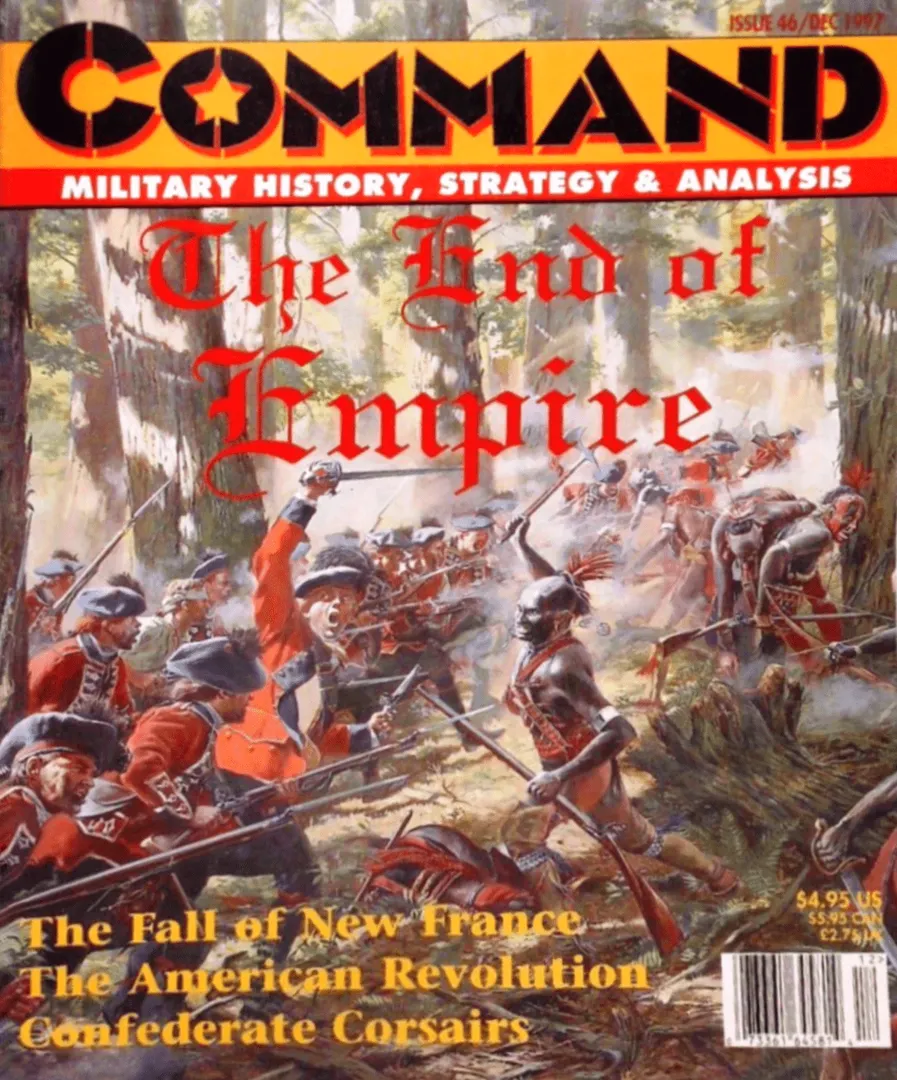






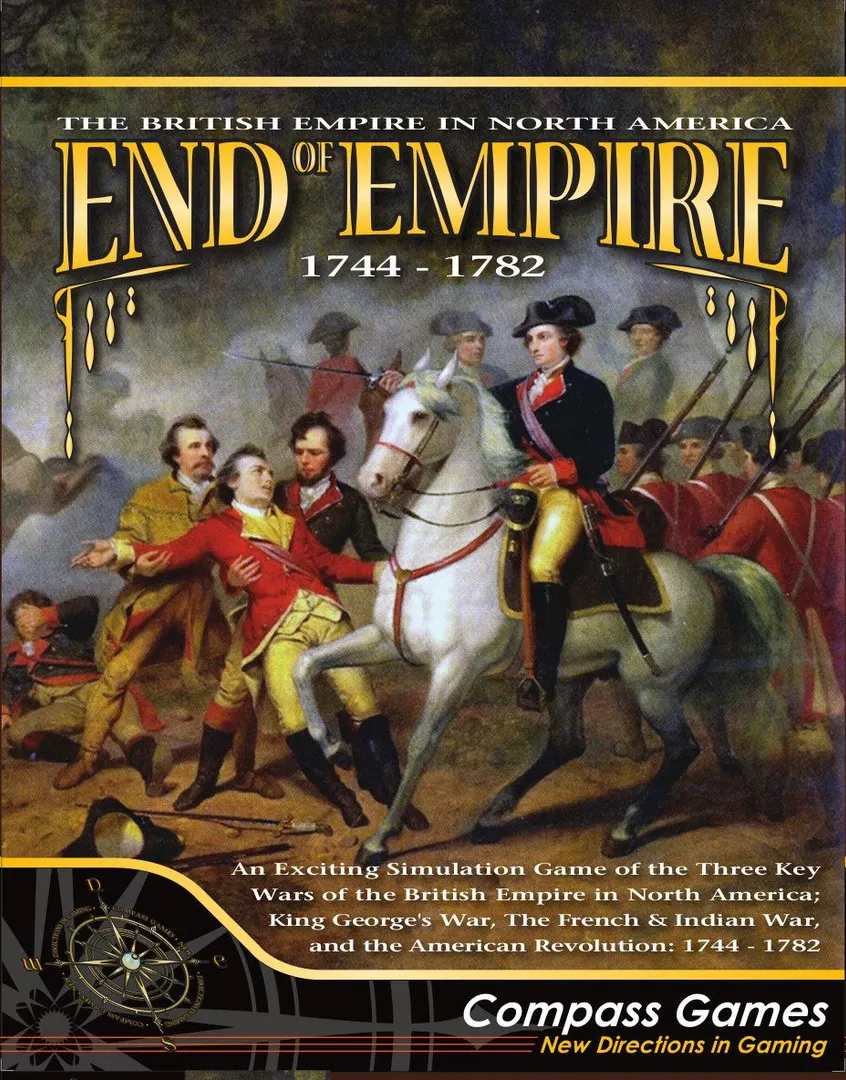
End of Empire: 1744-1782 is a two player game covering the three great conflicts fought on the North American continent between 1744 and 1783: King George’s War, sometimes known as the Old French War, which was part of the War of the Austrian Succession), the French and Indian War, part of the Seven Years War (known in England as the Great War for Empire), and the American Revolutionary War. The French and Indian War ended the French Empire in Canada; the American Revolution ended the British Empire in the 13 American colonies. An additional bonus scenario covers the War of Jenkin's Ear between Spanish Florida and British Georgia. Freely available post publication scenarios cover Lord Dunmore's War, the Chickasaw Wars, Queen Anne's War, King William's War as well as variant starts and political situations for the three wars in the published game. Each End of Empire game turn represents two months time. Each year consists of one spring turn, two summer turns, one fall turn, and two winter turns. Each hex is approximately 20 miles across. Units are mostly regiments but a few represent other sizes, each step represents approximately 250 men. End of Empire features two maps showing eastern North America. Each hex or town contains natural and/or man-made features that can effect the movement of units and the combat between units. End of Empire is an Epic game and perhaps the most detailed coverage of the critical period that saw the Empires of England, France, and Spain exit North America and the rise of the United States of America. With fifteen scenarios, and another thirteen available here on boardgamegeek, End of Empire represents plenty of value for your gaming dollar. Components: Two 22 X 34 inch maps Four and 1/2 countersheets (5/8” size) One rulebook One scenario book Multiple reference cards Time Scale: 2 months per turn Map Scale: 20 miles per hex Unit Scale: Various sizes – mostly regiments and fleets Players: Two Playing Time: Three to eighteen hours depending on scenario Designer: William M. Marsh Developer: Don Johnson Artist: Brien Miller
End of Empire: 1744-1782 supports 1–99 players according to the catalogue. This range comes from the publisher’s listed player count, so the game can be set up for any group size within it. Some setups, rules and scoring details may still vary by player count, so check your edition’s rulebook for the exact configuration.
The listed playing time for End of Empire: 1744-1782 is 360–1080 minutes. This is the publisher’s estimate for a full game. The actual duration depends on the group, the player count and familiarity with the rules: first sessions usually run longer, while experienced groups often finish faster. Setup and teaching time are not included in this estimate.
End of Empire: 1744-1782 has a complexity rating of 2.8 out of 5 from BoardGameGeek players, which makes it a medium-light game. The rating reflects how much rules knowledge, planning and decision-making a typical game demands. Expect a longer first teach for heavier games, and use a preparation guide before game night.
End of Empire: 1744-1782 belongs to these categories: Wargame, Age of Reason, and American Revolutionary War. Its main mechanics are Hexagon Grid and Movement Points. Categories describe the theme and setting of a game, while mechanics describe what players actually do on their turns. Each mechanic links to a catalogue hub with similar games, which helps when you want something comparable.
The credited designers of End of Empire: 1744-1782 are: William Marsh. These credits come from the published game data and name the people responsible for the game’s design, not its illustrators or publishers. Designer pages on MeepleRules collect other titles by the same designers, which helps when you enjoy a game and want to find similar ones.
The catalogue lists End of Empire: 1744-1782 as a base game. It can be played on its own with the components in the box and does not require any other title. Expansions, if any exist, add new content or rules on top of it and are listed separately in the catalogue with a link back to this base game.