
- BGG rank
- BGG #4,538
- BGG rating
- 7.2
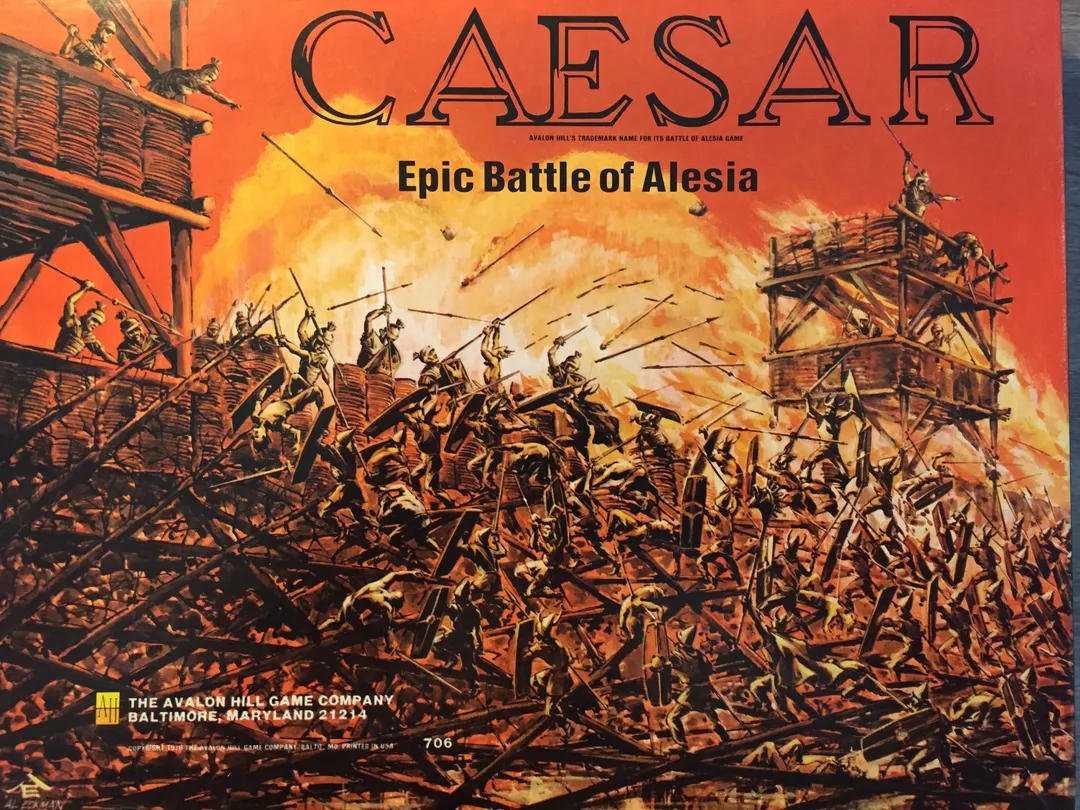
Caesar: Epic Battle of Alesia
- 2–4 players
- 360 min
- Complexity 3.0/5
- 1976

2006
Rules assistance for Epic of the Peloponnesian War: 431 B.C. - 404 B.C.
Plain-language explanations of turns, card effects and disputed situations, with official source references and saved question history.

What would you like to know?
Answers come from the official rulebook, with the page to check.
Epic of the Peloponnesian War: 431 B.C. - 404 B.C. is a board game released in 2006 for 2–4 players, 300 minutes per game, and ages 12 and up. It was designed by Kurt Kuhlmann and Jonathan Iwamasa and its main mechanics are Area Movement, Hexagon Grid, and Simulation.





In the year 431BC, the Greek world was dominated by the Athenian Empire, due to their naval supremacy of the Aegean. Only the Spartans dared to challenge their might through the strength of their unsurpassed Hoplite troops. The result was a 30-year conflict that ended in the destruction of Greek dominance in the ancient world. Two to four players use military force and political influence in their struggle to control the city-states of ancient Greece. Playing time ranges from 4-10 hours for short scenarios, to 20+ hours for the full campaign game, as players mobilize forces four times a year, and deploy them three times each season. As the leader of the Athenian Empire, can you save Athens' glory from the Spartan onslaught? As the leader of the Peloponnesian League, can you free Greece from Athenian tyranny without destroying it in the process? Players have a full range of strategic options, including sieges, constructing and destroying fortifications, razing enemy cities, foraging and raiding. Event Cards provide both random events (such as storms at sea, bad omens, the crippling plague at Athens, etc.) and strategic targets (city betrayals, rebellion of Athenian regions, Persian support, the Sicilian Expedition, among others). Fleet units represent 25 triremes, the light war galleys of the ancient Mediterranean, plus associated transport vessels. Hoplite units represent 1,000 heavily-armored Greek infantrymen. Each cavalry unit represents about 400 men and horses. Light infantry includes all types of lightly armored foot soldiers, including missile troops and barbarians, with each unit representing between 1,000 and 5,000 men. The rules allow for historically accurate periods of peace, where both sides caught their breath while preparing for a renewed struggle. The Epic of the Peloponnesian War is a complete simulation of this conflict. Scenarios include the introductory Argive League scenario, played on only a portion of the map; three scenarios each covering only a portion of the war; and the full Campaign Game for 2-4 players (adding Thebes and Corinth to the Peloponnesian side as the third and fourth players).
Epic of the Peloponnesian War: 431 B.C. - 404 B.C. supports 2–4 players according to the catalogue. This range comes from the publisher’s listed player count, so the game can be set up for any group size within it. Some setups, rules and scoring details may still vary by player count, so check your edition’s rulebook for the exact configuration.
The listed playing time for Epic of the Peloponnesian War: 431 B.C. - 404 B.C. is 300 minutes. This is the publisher’s estimate for a full game. The actual duration depends on the group, the player count and familiarity with the rules: first sessions usually run longer, while experienced groups often finish faster. Setup and teaching time are not included in this estimate.
The catalogue lists Epic of the Peloponnesian War: 431 B.C. - 404 B.C. for ages 12 and up. This is the publisher’s recommendation and reflects reading demands, rule complexity and small components rather than theme alone. Younger players can often join with help from an adult, so check the age guidance on your edition and consider your group’s experience with board games.
Epic of the Peloponnesian War: 431 B.C. - 404 B.C. has a complexity rating of 4.0 out of 5 from BoardGameGeek players, which makes it a heavy game. The rating reflects how much rules knowledge, planning and decision-making a typical game demands. Expect a longer first teach for heavier games, and use a preparation guide before game night.
Epic of the Peloponnesian War: 431 B.C. - 404 B.C. belongs to these categories: Wargame and Ancient. Its main mechanics are Area Movement, Hexagon Grid, and Simulation. Categories describe the theme and setting of a game, while mechanics describe what players actually do on their turns. Each mechanic links to a catalogue hub with similar games, which helps when you want something comparable.
The credited designers of Epic of the Peloponnesian War: 431 B.C. - 404 B.C. are: Kurt Kuhlmann and Jonathan Iwamasa. These credits come from the published game data and name the people responsible for the game’s design, not its illustrators or publishers. Designer pages on MeepleRules collect other titles by the same designers, which helps when you enjoy a game and want to find similar ones.
The catalogue lists Epic of the Peloponnesian War: 431 B.C. - 404 B.C. as a base game. It can be played on its own with the components in the box and does not require any other title. Expansions, if any exist, add new content or rules on top of it and are listed separately in the catalogue with a link back to this base game.