
- BGG rating
- 7.4
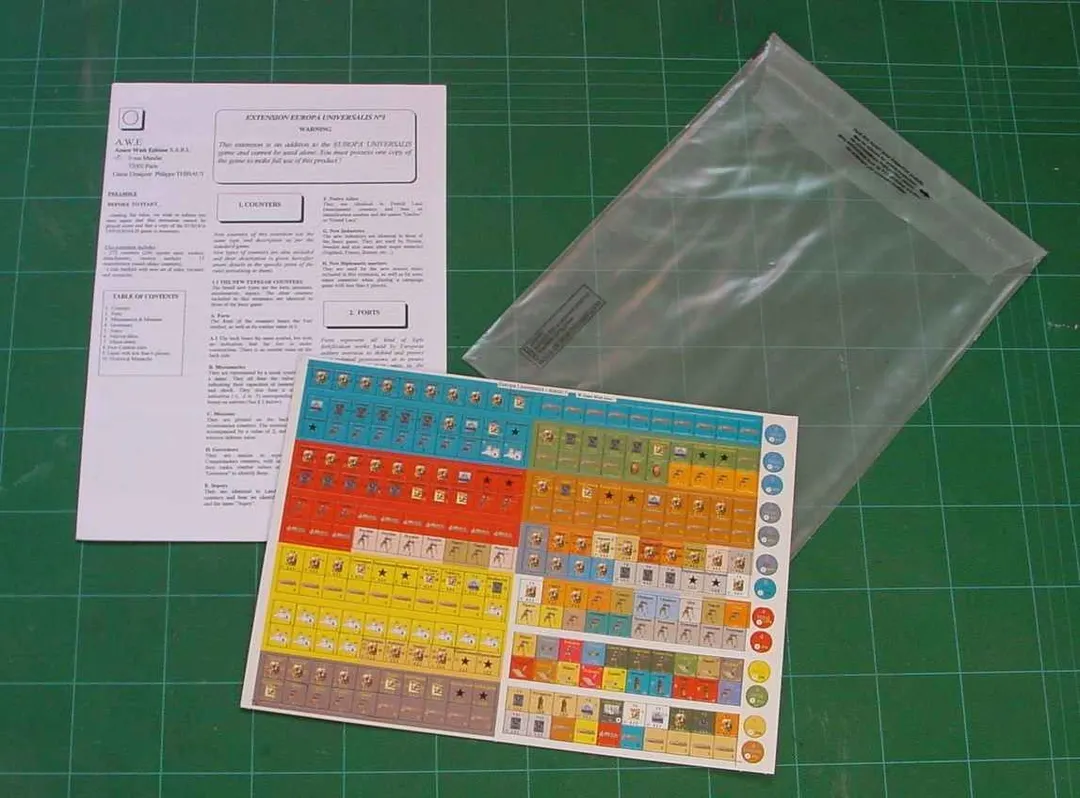
Europa Universalis: Extension No 1
- 1–8 players
- 360 min
- Complexity 4.4/5
- 1996
1993
Rules assistance for Europa Universalis
Plain-language explanations of turns, card effects and disputed situations, with official source references and saved question history.
For 1 player
What would you like to know?
Answers come from the official rulebook, with the page to check.
Europa Universalis is a board game released in 1993 for 1–6 players, 3,600 minutes per game, and ages 14 and up. It was designed by Philippe Thibaut and its main mechanics are Area Movement, Dice Rolling, and Variable Set-up.







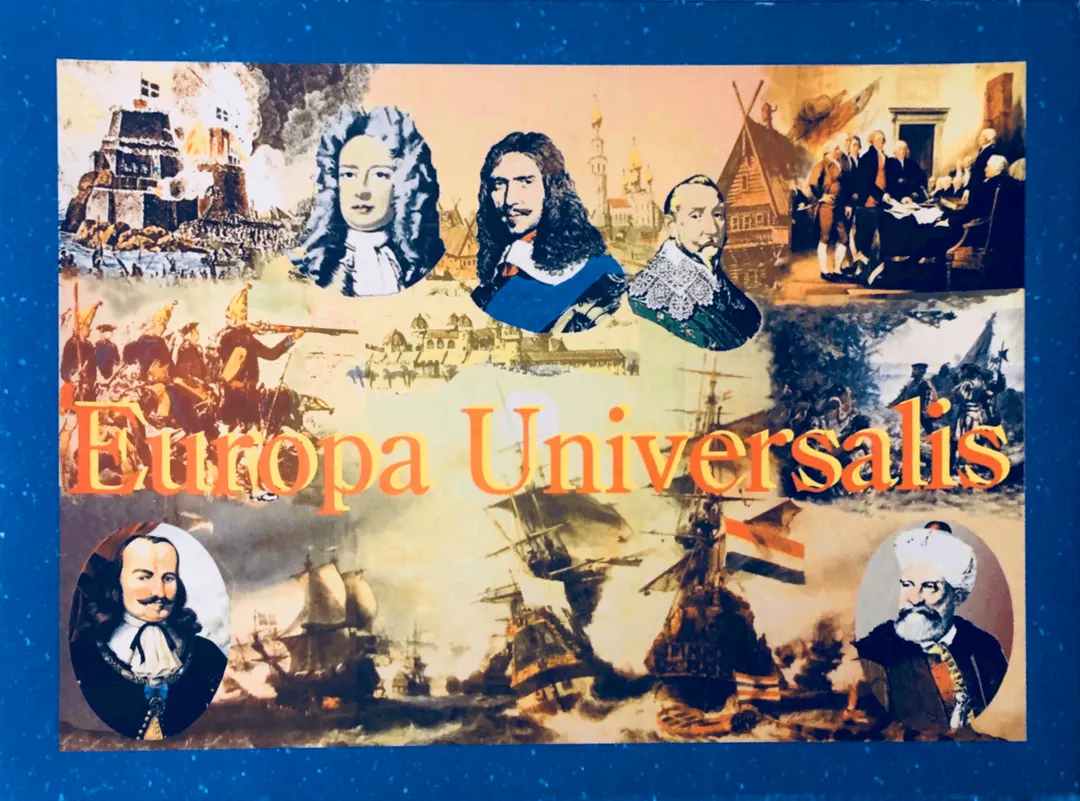
Europa Universalis is a monster wargame of diplomacy, territorial expansion, trade, military technology, economic development, and war where you play the part of kings as you relive 300 years of world history (1492-1792). The grand campaign game can keep 6 players occupied for a long, long time, but one of the beauties of this wargame is that you can play a shorter campaign game or a mini campaign that requires fewer player and less space and time and you can even re-fight one of 20 battle scenarios, or play a solitaire scenario. The game includes: 2 color maps (Europe & Rest of the World), 80cm x 60cm each 1412 counters (armies, fleets, leaders, detachments, colonies, trading posts, etc) - Countersheets #1 to #6 1 rulebook (72 pages) 1 scenarios book (52 pages) 1 annexes book (48 pages) 6 player's aids & record sheets 2 ten-sided dice 43 scenarios Solitaire scenarios: Cortes & Magellan - 1520-1614 Da Gama & Albuquerque - 1495-1559 Coen & Heyn - 1590-1664 Yermak - 1560-1664 Washington - 1775-1784 Battle scenarios: The Battle of the Boyne - 1690 The Battle of Lepanto - 1571 The Battle of Mohacs - 1526 The French & Spanish Campaigns in Italy - 1525 The Campaign of Zenta - 1697 Turenne's Franche-Comte & Alsace Campaigns - 1674 The Turkish Siege of Vienna - 1683 The Struggle for Azow - 1689 The Anglo-Dutch War - 1666-1667 The English Civil War - 1642-1653 The War of the Spanish Succession - 1702-1713 The Thirty Years War - 1618-1648 The Seven Years War - 1756-1763 The War of the League of Augsburg - 1688-1697 The War of the Austrian Succession - 1744-1748 The Great Northern War - 1700-1721 The Wars of Religion in France - 1562-1598 The Russo-Turkish War - 1770-1792 The Veneto-Turkish War - 1640-1667 The Campaigns of the Sun King - 1687-1699 Campaign scenarios: 1492-1519 1520-1559 1560-1614 1615-1664 1665-1699 1700-1759 1740-1792 Grand Campaign 1492-1792
Europa Universalis supports 1–6 players according to the catalogue. This range comes from the publisher’s listed player count, so the game can be set up for any group size within it. Some setups, rules and scoring details may still vary by player count, so check your edition’s rulebook for the exact configuration.
The listed playing time for Europa Universalis is 3,600 minutes. This is the publisher’s estimate for a full game. The actual duration depends on the group, the player count and familiarity with the rules: first sessions usually run longer, while experienced groups often finish faster. Setup and teaching time are not included in this estimate.
The catalogue lists Europa Universalis for ages 14 and up. This is the publisher’s recommendation and reflects reading demands, rule complexity and small components rather than theme alone. Younger players can often join with help from an adult, so check the age guidance on your edition and consider your group’s experience with board games.
Europa Universalis has a complexity rating of 4.7 out of 5 from BoardGameGeek players, which makes it a heavy game. The rating reflects how much rules knowledge, planning and decision-making a typical game demands. Expect a longer first teach for heavier games, and use a preparation guide before game night.
Europa Universalis belongs to these categories: Wargame, Political, and Age of Reason. Its main mechanics are Area Movement, Dice Rolling, and Variable Set-up. Categories describe the theme and setting of a game, while mechanics describe what players actually do on their turns. Each mechanic links to a catalogue hub with similar games, which helps when you want something comparable.
The credited designers of Europa Universalis are: Philippe Thibaut. These credits come from the published game data and name the people responsible for the game’s design, not its illustrators or publishers. Designer pages on MeepleRules collect other titles by the same designers, which helps when you enjoy a game and want to find similar ones.
The catalogue lists Europa Universalis as a base game. It can be played on its own with the components in the box and does not require any other title. Expansions, if any exist, add new content or rules on top of it and are listed separately in the catalogue with a link back to this base game.