
- BGG rank
- BGG #9,690
- BGG rating
- 7.1
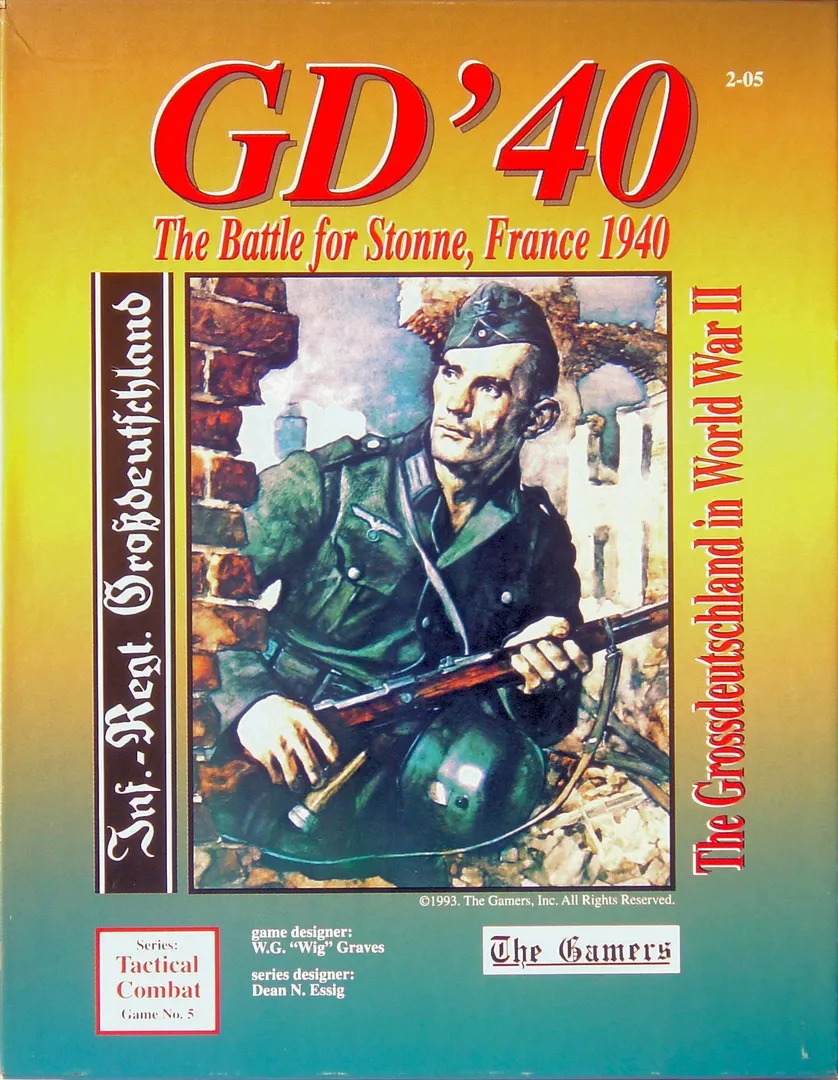
GD '40
- 2 players
- 360–1200 min
- Complexity 3.5/5
- 1993
1996
Rules assistance for GD '41
Plain-language explanations of turns, card effects and disputed situations, with official source references and saved question history.
For 1 player
What would you like to know?
Answers come from the official rulebook, with the page to check.
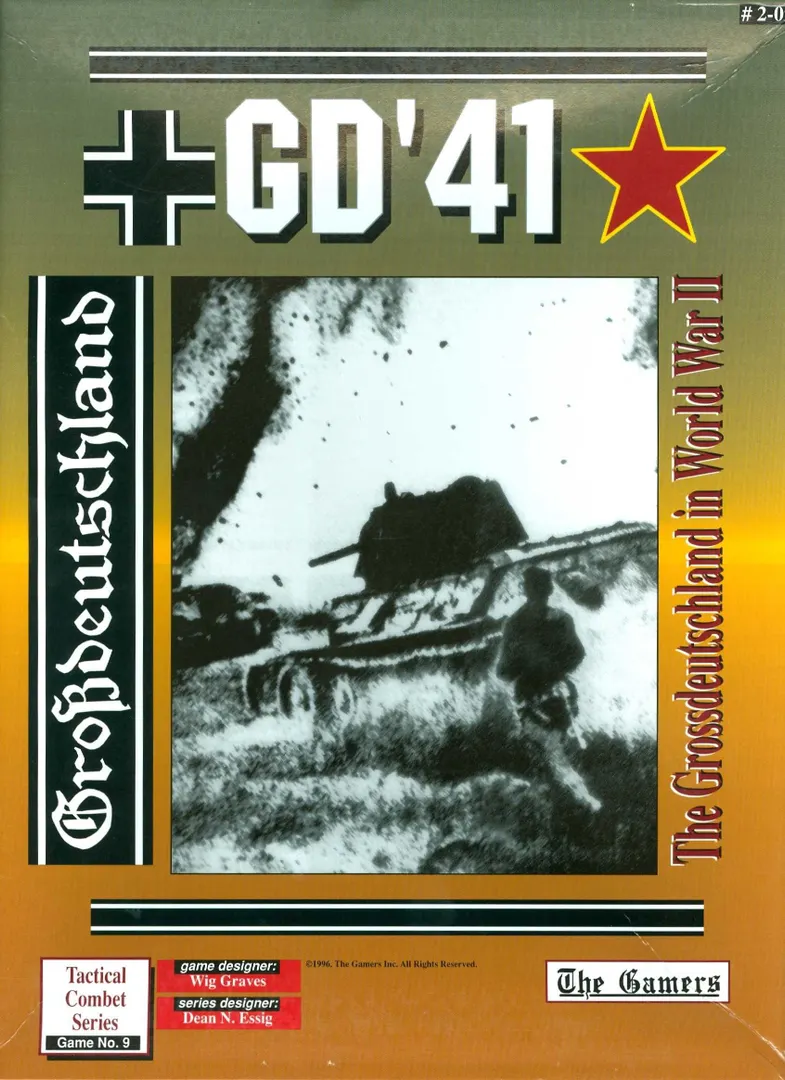
GD '41 is a board game released in 1996 for 1–2 players and 60–2400 minutes per game. It was designed by Dean Essig and Wig Graves and its main mechanics are Dice Rolling, Hexagon Grid, and Simulation.





GD '41: is Game number 9 in the Gamers Tactical Combat Series (TCS) by The Gamers and is the second in the series to cover the Infantry Regiment Grossdeutschland in World War II. This time the IRGD is driving toward Tula and Moscow. The final German attack on Moscow began on 30 September 1941 with the battles of encirclement at Bryansk and Vyazma. Further south, Guderian’s Second Panzer Group captured Orel on 3 October without fighting and pushed on to the Zusha River. While Mtzensk fell on 10 October, further advances would have to wait until the pocketed Russians could be eliminated. The Russian 4th Tank and 201st Parachute Brigades had been fighting rear guard actions as the Germans advanced beyond Orel. Mtzensk’s defense fell under the newly formed 26th Army composed of the 6th Guard Rifle Division, 4th and 11th Tank Brigades, 41st Cavalry Division, and the 5th Parachute Corps (three Parachute Brigades). The German drive on Tula resumed on 22 October in spite of the terrible German supply situation. Russian defenses proved too much for the frontal assault attempted by the 4th Panzer Division, so a combined attack by the 3rd and 4th Panzer Divisions along with Infantry Regiment Grossdeutschland was ordered for 23 October. Game Scale: Turn: 20 minutes Hex: 125 yards / 114 meters Units: Infantry platoons, individual vehicles Game Inventory: Two 22 x 34" full-color mapsheets Three dual-side printed countersheets (2 combat, 1 markers - 840 1/2" counters) One 28-page TCS version 3.1 system rulebook One 24-page GD '41 game specific rulebook Two 4-page TCS version 3.1 Charts & Tables folders Two Player Aid cards Two 6-sided dice Solitaire Playability: High Complexity Level: Medium-High Players: 1 or more Playing Time: 1-40 hours
GD '41 supports 1–2 players according to the catalogue. This range comes from the publisher’s listed player count, so the game can be set up for any group size within it. Some setups, rules and scoring details may still vary by player count, so check your edition’s rulebook for the exact configuration.
The listed playing time for GD '41 is 60–2400 minutes. This is the publisher’s estimate for a full game. The actual duration depends on the group, the player count and familiarity with the rules: first sessions usually run longer, while experienced groups often finish faster. Setup and teaching time are not included in this estimate.
GD '41 has a complexity rating of 3.4 out of 5 from BoardGameGeek players, which makes it a medium-weight game. The rating reflects how much rules knowledge, planning and decision-making a typical game demands. Expect a longer first teach for heavier games, and use a preparation guide before game night.
GD '41 belongs to these categories: Wargame and World War II. Its main mechanics are Dice Rolling, Hexagon Grid, and Simulation. Categories describe the theme and setting of a game, while mechanics describe what players actually do on their turns. Each mechanic links to a catalogue hub with similar games, which helps when you want something comparable.
The credited designers of GD '41 are: Dean Essig and Wig Graves. These credits come from the published game data and name the people responsible for the game’s design, not its illustrators or publishers. Designer pages on MeepleRules collect other titles by the same designers, which helps when you enjoy a game and want to find similar ones.
The catalogue lists GD '41 as a base game. It can be played on its own with the components in the box and does not require any other title. Expansions, if any exist, add new content or rules on top of it and are listed separately in the catalogue with a link back to this base game.