

- BGG rank
- BGG #5,907
- BGG rating
- 8.4
Death Valley: Battles for the Shenandoah
- 1–2 players
- 300–1200 min
- Complexity 4.3/5
- 2019
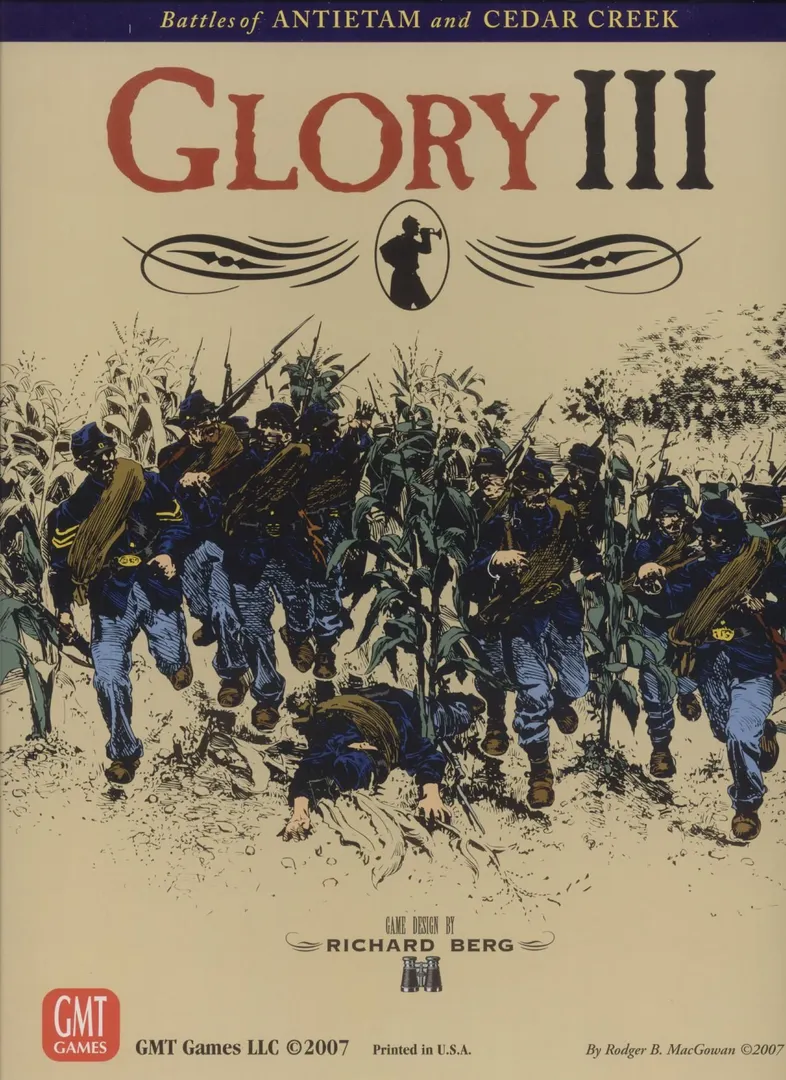
2007
Rules assistance for Glory III
Plain-language explanations of turns, card effects and disputed situations, with official source references and saved question history.
For 1 player
What would you like to know?
Answers come from the official rulebook, with the page to check.
Glory III is a board game released in 2007 for 1–2 players, 240 minutes per game, and ages 12 and up. It was designed by Richard H. Berg and its main mechanics are Hexagon Grid and Chit-Pull System.

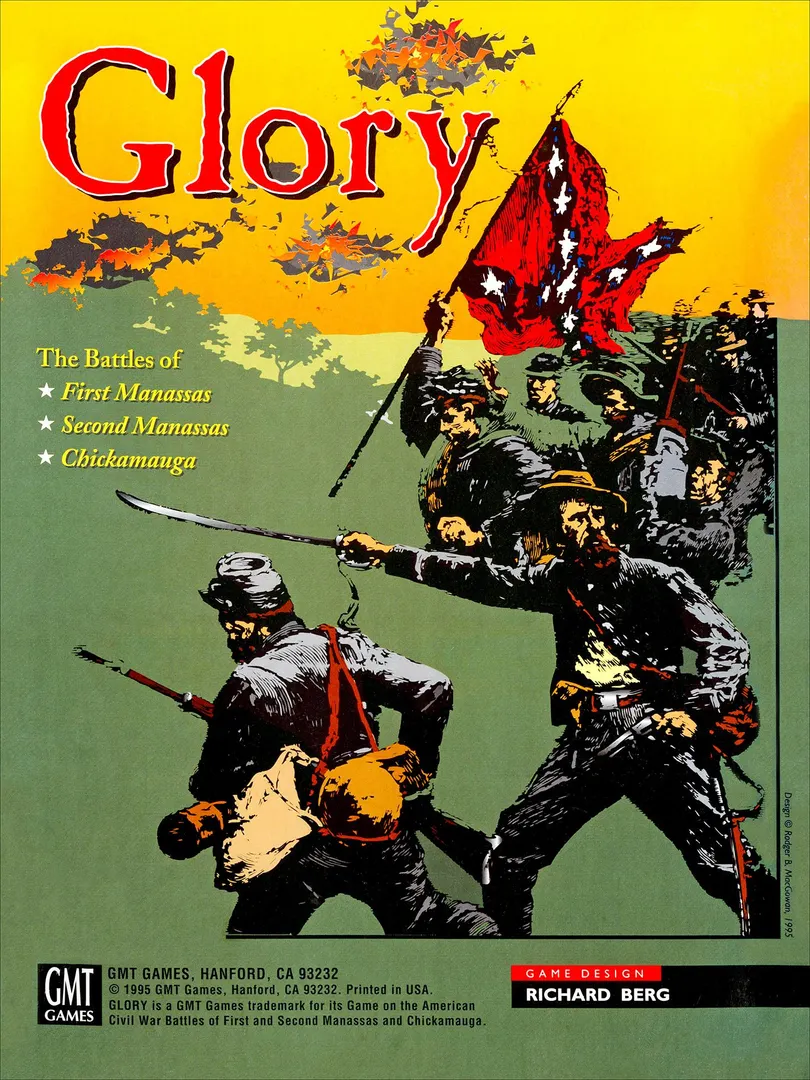


(from GMT web site :) Glory III is the third game in GMT's popular American Civil War series, Glory. This series presents a brigade-level system that highlights ease and speed of play combined with solid historical insight. Glory III follows the success of Glory II: Across the Rappahannock, and presents a polished system with ease of play, with two combat-intensive one-map battles. And it is still a game that can be played, and played well, by solitaire gamers. Glory III features GMT's unique chit activation mechanic, which provides a great deal of play tension, as the commanders never quite know what is going to happen next. However, new command and combat mechanics make the game even more fun. Both battles have special command problems and some new and interesting mechanics to allow the players to play within the framework of those conditions. Antietam, one of the major battles of the war, makes great use of the Glory activation system, linking the Union/McClellan command problems directly to its use. But it still allows the player to make choices, choices different from those Little Mac made, perhaps changing the course of the battle. Cedar Creek is a great momentum battle, with an initial, probably highly effective Confederate surprise attack followed by the return of General Phil Sheridan to the battlefield, the arrival of George Custer's repeater-armed cavalry, and, hopefully for the Union Player, enough of a counter-attack to snatch victory from Jubal Early's rapidly munching jaws. Has Jubal bitten off more than he can chew? Grab your wallet, roll the die and find out! Designed gloriously by Richard H Berg, Developed with consummate skill and dedication by a new star on the industry horizon, Jim Dauphinais, playtested to a fine edge, and featuring the usual eye-popping, drool-inducing GMT graphics, Glory III is the best game yet in the Glory series. Components: 1 22 x 34 backprinted map 2 counter sheets Rulebook 1 die Player Aid Cards Designer: Richard Berg Developer: Jim Dauphinais Game 3 in the GMT Glory: The Battles of First & Second Manassas and Chickamauga, 1861-63 Civil War game series. This series features battles recreated at the Brigade level with each game in the series featuring 2 battles from the Civil War. In this edition of the series the two battles are Antietam and Cedar Creek. The Glory system features a unique chit activation mechanic. This results in players unsure of when or if a certain field commander will carry out your orders. The game system is designed for playability over bookkeeping. The main rules are only 12 pages long. Scenarios run from 2 hours for Burnside's late afternoon attack at Antietam, up to 6 hours for Cedar Creek and up to 12 hours for the full battle of Antietam (if it needs to go the distance for a decision).
Glory III supports 1–2 players according to the catalogue. This range comes from the publisher’s listed player count, so the game can be set up for any group size within it. Some setups, rules and scoring details may still vary by player count, so check your edition’s rulebook for the exact configuration.
The listed playing time for Glory III is 240 minutes. This is the publisher’s estimate for a full game. The actual duration depends on the group, the player count and familiarity with the rules: first sessions usually run longer, while experienced groups often finish faster. Setup and teaching time are not included in this estimate.
The catalogue lists Glory III for ages 12 and up. This is the publisher’s recommendation and reflects reading demands, rule complexity and small components rather than theme alone. Younger players can often join with help from an adult, so check the age guidance on your edition and consider your group’s experience with board games.
Glory III has a complexity rating of 2.8 out of 5 from BoardGameGeek players, which makes it a medium-light game. The rating reflects how much rules knowledge, planning and decision-making a typical game demands. Expect a longer first teach for heavier games, and use a preparation guide before game night.
Glory III belongs to these categories: Wargame and American Civil War. Its main mechanics are Hexagon Grid and Chit-Pull System. Categories describe the theme and setting of a game, while mechanics describe what players actually do on their turns. Each mechanic links to a catalogue hub with similar games, which helps when you want something comparable.
The credited designers of Glory III are: Richard H. Berg. These credits come from the published game data and name the people responsible for the game’s design, not its illustrators or publishers. Designer pages on MeepleRules collect other titles by the same designers, which helps when you enjoy a game and want to find similar ones.
The catalogue lists Glory III as a base game. It can be played on its own with the components in the box and does not require any other title. Expansions, if any exist, add new content or rules on top of it and are listed separately in the catalogue with a link back to this base game.