
- BGG rating
- 6.9
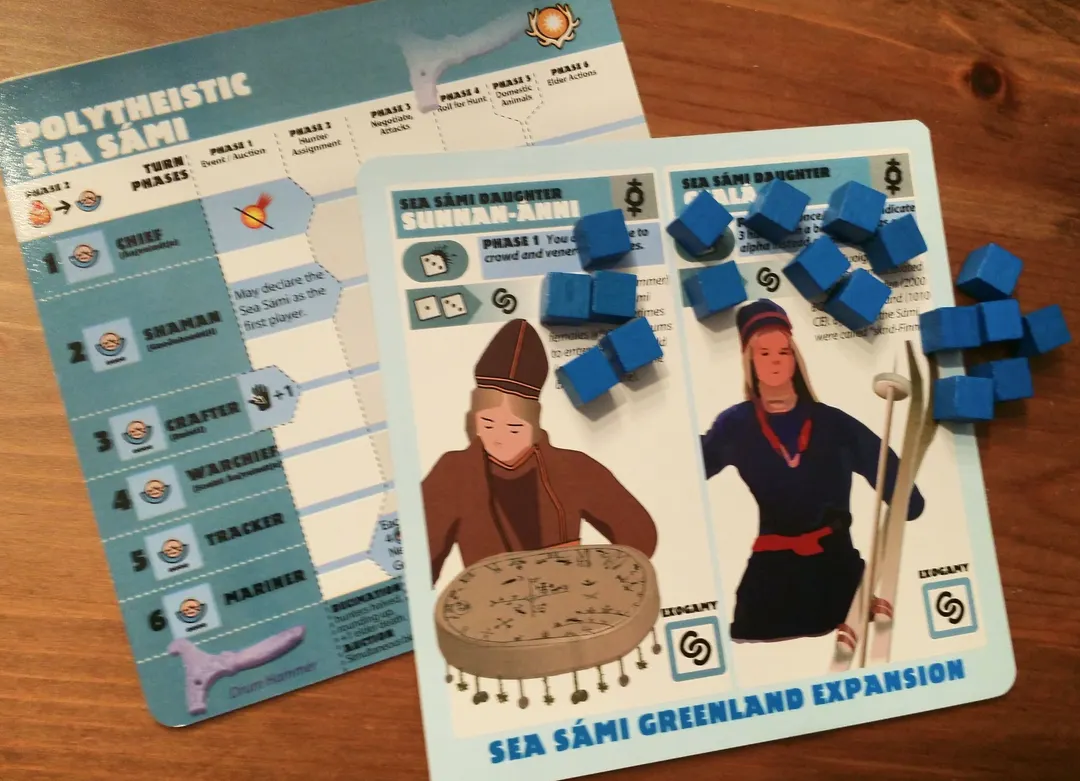
Greenland: Sea Sámi
- 1–4 players
- 60–120 min
- Complexity 2.7/5
- 2015
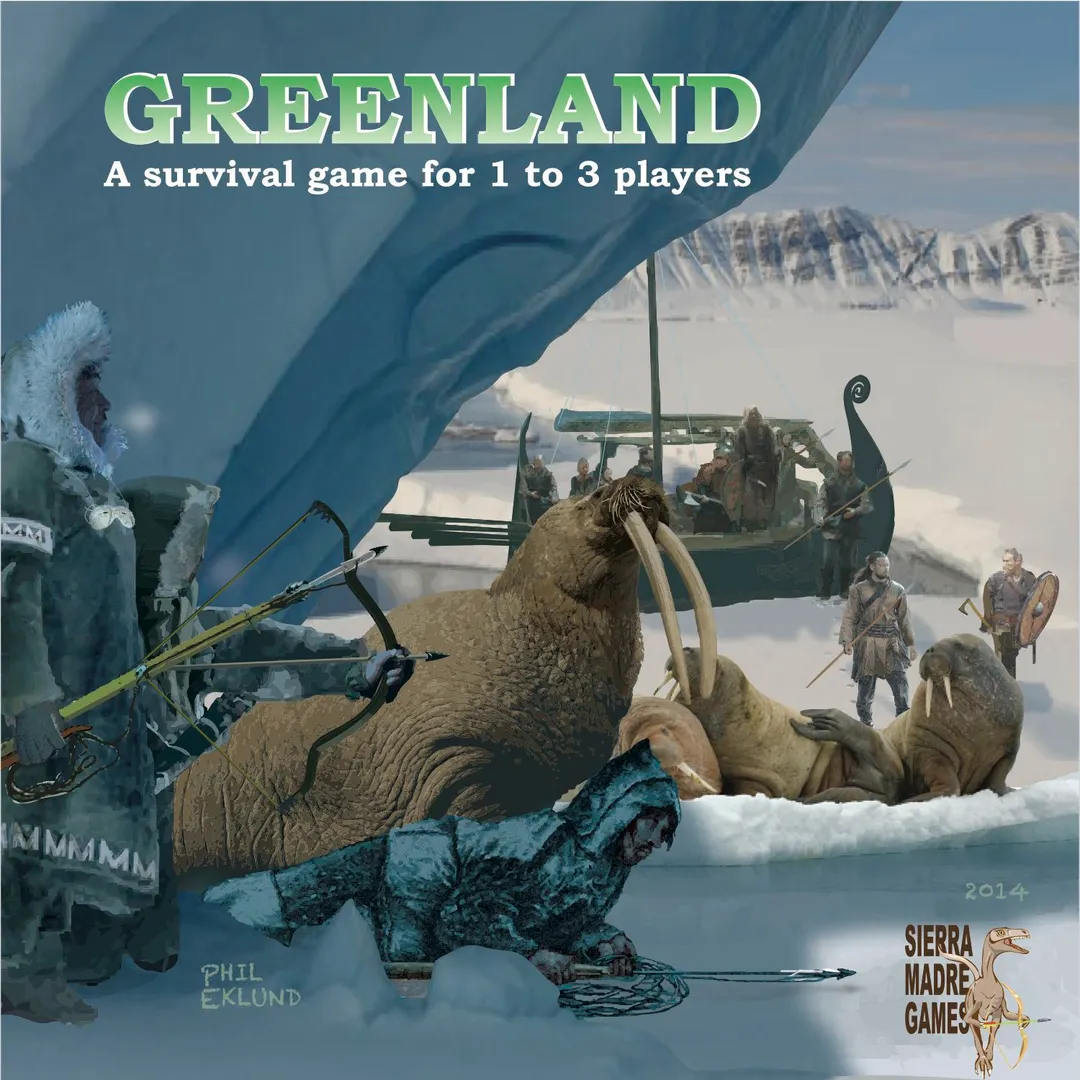
2014
Rules assistance for Greenland
Plain-language explanations of turns, card effects and disputed situations, with official source references and saved question history.
For 1 player
What would you like to know?
Answers come from the official rulebook, with the page to check.
Greenland is a board game released in 2014 for 1–3 players, 60–120 minutes per game, and ages 12 and up. It was designed by Phil Eklund and Philipp Klarmann and its main mechanics are Auction / Bidding, Dice Rolling, and Simulation.


The three players in Greenland represent the Tunit (green), Norse (red), and Thule (yellow) tribes inhabiting Greenland from the 11th to the 15th centuries. As a tribe, you attempt to secure food, resources, and technology to increase the size of your tribe and support children, elders, and livestock while also wiping out competing species or gathering resources to collect victory points. You must work around the weather and the extinction of natural resources as well as negotiate deals to protect your wives while you decide between monotheism or polytheism. In this tableau-building game, you'll send your population out to hunt native species of Greenland — but some might not come back. (Historically, the climate turned frigid and all but the Thule (Inuit) died out.) In the game, play takes place over six phases; all players complete each phase in turn order, then the next phase starts. Each turn is one generation. In order: Resolve events: Examples include elder deaths, animal migrations, feuds, or global cooling. If a trade ship arrives, an auction is held for its wares. Assign hunters: Hunters are assigned to hunting grounds, resource gathering, colonizing the New World, raiding other tribes for wives or animals, or promotion to an elder. Negotiate: Players can bribe others to peacefully withdraw hunters, including marrying them to their daughters. Players with a War Chief Elder can use hunters to attack others on the same card. The New World turns hostile if there are too many colonists. Resolve hunting: Roll a die for each hunter and modify it for technologies and marriages. Success can result in gaining new hunters, resources, hand cards, wives, and/or technologies. Beware, as some animals can be confused by the prey-predator relationship and your hunters might not return. Some successes let your take cards from the central play area into your hand if within hand limit. Maintain livestock: Pay to keep the animals you've already domesticated. Take elder actions: Examples include invention, domestication, proselytization, and witch-burning. If you have no elders, you can convert to monotheism. Depending on each player's ending theistic worldview, he has a variable scoring based on successful hunts (polytheism) or resource gathering (monotheism).
Greenland supports 1–3 players according to the catalogue. This range comes from the publisher’s listed player count, so the game can be set up for any group size within it. Some setups, rules and scoring details may still vary by player count, so check your edition’s rulebook for the exact configuration.
The listed playing time for Greenland is 60–120 minutes. This is the publisher’s estimate for a full game. The actual duration depends on the group, the player count and familiarity with the rules: first sessions usually run longer, while experienced groups often finish faster. Setup and teaching time are not included in this estimate.
The catalogue lists Greenland for ages 12 and up. This is the publisher’s recommendation and reflects reading demands, rule complexity and small components rather than theme alone. Younger players can often join with help from an adult, so check the age guidance on your edition and consider your group’s experience with board games.
Greenland has a complexity rating of 3.3 out of 5 from BoardGameGeek players, which makes it a medium-weight game. The rating reflects how much rules knowledge, planning and decision-making a typical game demands. Expect a longer first teach for heavier games, and use a preparation guide before game night.
Greenland belongs to these categories: Card Game, Economic, and Medieval. Its main mechanics are Auction / Bidding, Dice Rolling, and Simulation. Categories describe the theme and setting of a game, while mechanics describe what players actually do on their turns. Each mechanic links to a catalogue hub with similar games, which helps when you want something comparable.
The credited designers of Greenland are: Phil Eklund and Philipp Klarmann. These credits come from the published game data and name the people responsible for the game’s design, not its illustrators or publishers. Designer pages on MeepleRules collect other titles by the same designers, which helps when you enjoy a game and want to find similar ones.
The catalogue lists Greenland as a base game. It can be played on its own with the components in the box and does not require any other title. Expansions, if any exist, add new content or rules on top of it and are listed separately in the catalogue with a link back to this base game.