
- BGG rank
- BGG #5,688
- BGG rating
- 7.2
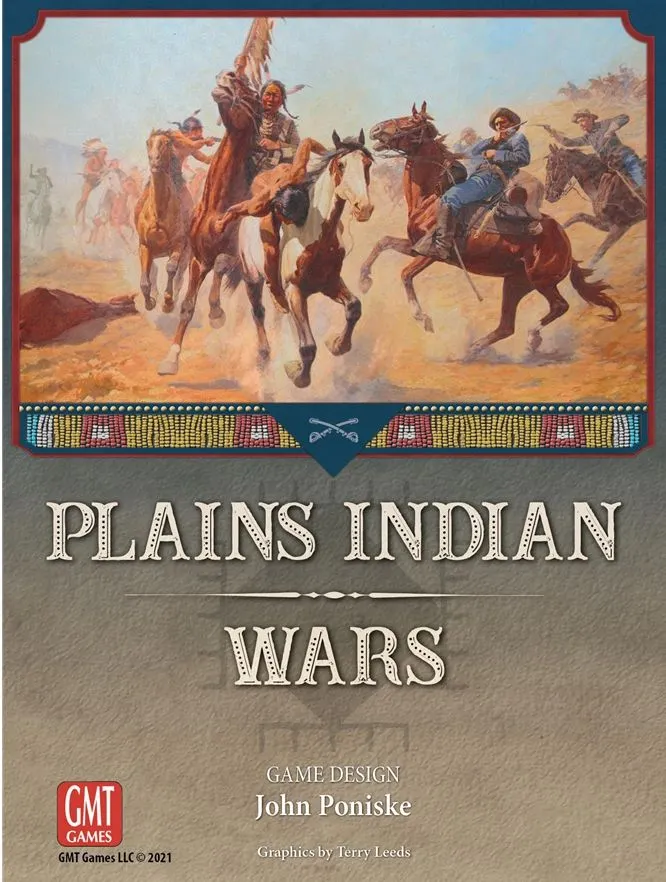
Plains Indian Wars
- 1–4 players
- 60–120 min
- Complexity 2.8/5
- 2022
2010
Rules assistance for King Philip's War
Plain-language explanations of turns, card effects and disputed situations, with official source references and saved question history.
For 2 players
What would you like to know?
Answers come from the official rulebook, with the page to check.
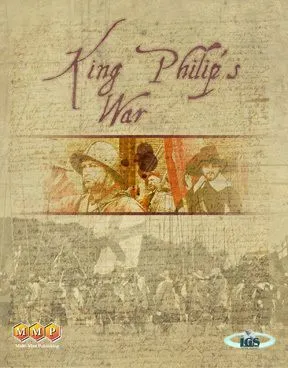
King Philip's War is a board game released in 2010 for 2 players and 120 minutes per game. It was designed by John Poniske and its main mechanics are Point to Point Movement.


King Philip’s War is about an all but forgotten New England Indian Uprising that nearly brought the Puritans to their knees. In the end, over 6000 Indians were slain or captured and sold into slavery. Over 2600 Colonials were captured or killed. In the end King Philip (The Wampanoag sachem, Metacomet) himself was ambushed, beheaded, and quartered. King Philip's hands were sent to the authorities in Plymouth as proof of his demise. Countless Indian villages had been burned; twelve Colonial settlements were completely destroyed and six more heavily damaged. Boston itself very nearly came under attack. In all, 1200 homes were burned, 8000 head of cattle lost, and vast stores of food destroyed. Some sources claim one soldier in ten on both sides was either injured or killed. The game's treatment of this broad conflict is simplified. Only a handful of key settlements are named for historical interest while rivers and settlements are placed not so much for geographic and historic accuracy but for ease of play. The forces involved are also necessarily reduced to infantry level create a simpler, quicker game. Game Scale: Game Turn: Approximately 2-3 months Map: Point-to-Point movement Solitaire Playability: High Complexity Level: Low
King Philip's War supports 2 players according to the catalogue. This is the publisher’s listed player count, so the game is designed for exactly that number of participants. Variants for other group sizes, if any, are described in the rulebook of your edition, so check it before setting up a different configuration.
The listed playing time for King Philip's War is 120 minutes. This is the publisher’s estimate for a full game. The actual duration depends on the group, the player count and familiarity with the rules: first sessions usually run longer, while experienced groups often finish faster. Setup and teaching time are not included in this estimate.
King Philip's War has a complexity rating of 2.3 out of 5 from BoardGameGeek players, which makes it a medium-light game. The rating reflects how much rules knowledge, planning and decision-making a typical game demands. Expect a longer first teach for heavier games, and use a preparation guide before game night.
King Philip's War belongs to these categories: Wargame, Pike and Shot, and American Indian Wars. Its main mechanics are Point to Point Movement. Categories describe the theme and setting of a game, while mechanics describe what players actually do on their turns. Each mechanic links to a catalogue hub with similar games, which helps when you want something comparable.
The credited designers of King Philip's War are: John Poniske. These credits come from the published game data and name the people responsible for the game’s design, not its illustrators or publishers. Designer pages on MeepleRules collect other titles by the same designers, which helps when you enjoy a game and want to find similar ones.
The catalogue lists King Philip's War as a base game. It can be played on its own with the components in the box and does not require any other title. Expansions, if any exist, add new content or rules on top of it and are listed separately in the catalogue with a link back to this base game.