
- BGG rating
- 7.5
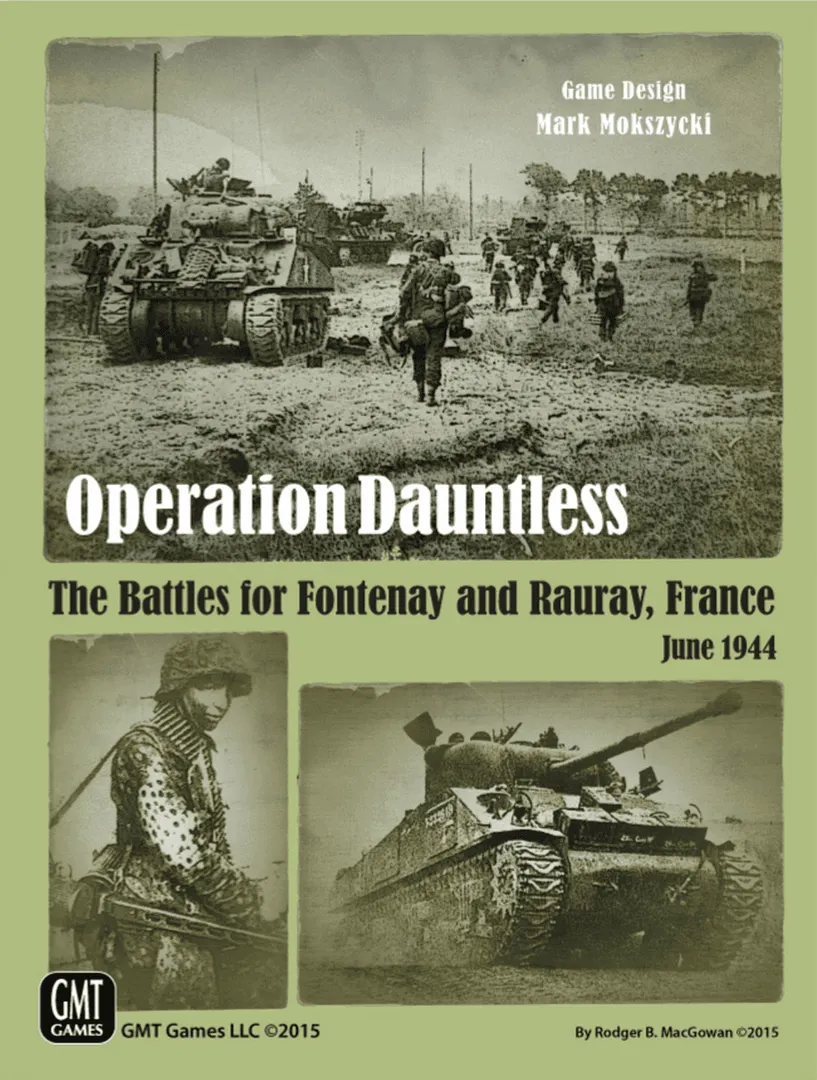
Operation Dauntless: C3i #30 scenarios
- 2 players
- 120 min
- 2016
2016
Rules assistance for Operation Dauntless: The Battles for Fontenay and Rauray, France, June 1944
Plain-language explanations of turns, card effects and disputed situations, with official source references and saved question history.
For 2 players
What would you like to know?
Answers come from the official rulebook, with the page to check.
Operation Dauntless: The Battles for Fontenay and Rauray, France, June 1944 is a board game released in 2016 for 2 players, 120–2400 minutes per game, and ages 12 and up. It was designed by Mark Mokszycki and its main mechanics are Dice Rolling, Hexagon Grid, and Simulation.
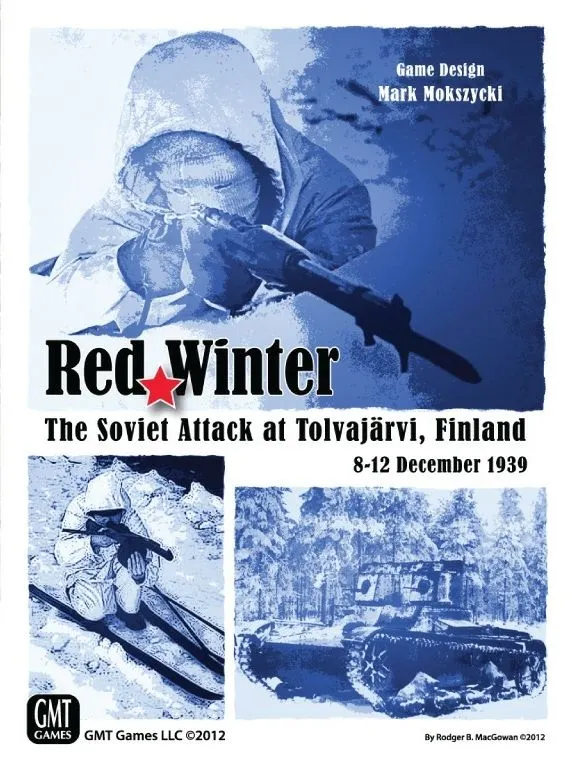
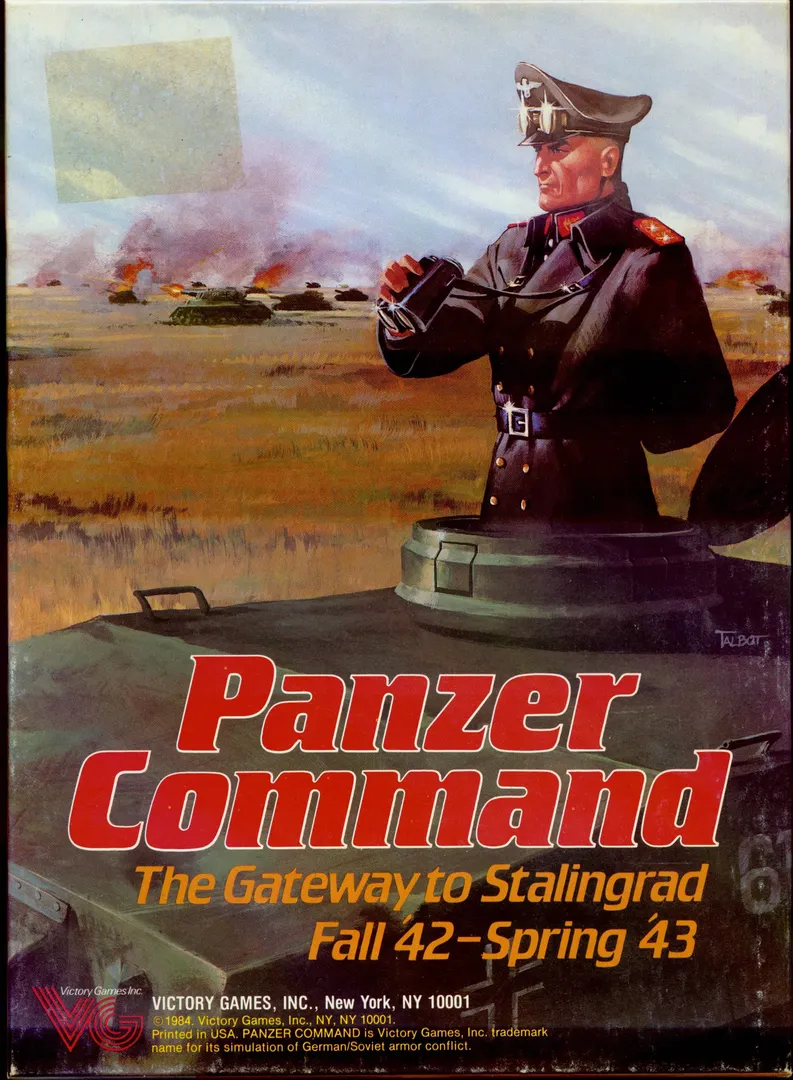





Operation Dauntless: The Battles for Fontenay and Rauray, France, June 1944, is a wargame that covers the actions of the British 49th Infantry Division (a.k.a "The Polar Bears") near Caen during Operation Martlet (called Operation Dauntless by the British at the time of the battle). Opposing these lads are elements of the 12th SS Panzer Division "Hitlerjugend" (Hitler Youth) and Panzer Lehr—elite panzergrenadier units. The goal of the British division is to seize the town of Fontenay, then press onward to secure the high ground near Rauray in time for the impending Operation Epsom, to be launched the next morning. The game by designer Mark Mokszycki uses the same system as Red Winter, his game on the Battle of Tolvajärvi from the Russo-Finnish Winter War of 1939. Scale is grand tactical: 90 minutes per game turn, 425 yards per hex, and mostly company sized infantry units with platoon sized armor units. Gone are the Winter War specific rules such as ski movement and night raids, and in their place we have a more detailed armor/anti-tank subsystem. There are lots of tanks on both sides in this one! Rules for Operation Dauntless include the 12th SS Fanatical Defense Table, British sabot ammo, tank destroyers, self-propelled infantry guns and artillery, combat engineers, troop transport, British air strikes, German nuisance raids (night bombings), infantry anti-tank weapons, German ammo shortage, and abstracted effects of the immense British opening barrage by 650 guns. Terrain is a mixture of corn and wheat fields, orchards, woods, heavy and light bocage, and small stone farm houses and villages. The Germans begin the game dug in, and they may place a limited number of fortifications during setup. The game includes a multi-day campaign as well as several shorter scenarios. The Germans are on the defensive overall, but they are armed to the teeth with many powerful panzer formations—including Panzer IVs, Panthers, and Tigers—and will find themselves able to counterattack frequently and effectively. Some of the shorter scenarios feature the Germans on the offensive to recapture lost ground. The game was designed for two players, but works very well solitaire. Game Scale: Turn: 90 minutes Map: 425 yards per hex Unit: Platoon to Company Game Contents: Three counter sheets of 528 5/8" counters (roughly 2 sheets of unit counters and 1 sheet of markers) One 22 x 34" map One 36 page Rule Book One 28 page Play Book (includes full-color illustrated examples of play, Comparisons to Red Winter, Tips & Strategies, and counter manifest) One 56 page Scenario Book (includes 11 tutorials, ~15 scenarios, and optional rules) One 48 page Reference Book (includes designer's notes and complete Order of Battle) Two Identical Player Aid Cards (foldout, 4 sided) One Player Air Card 2 (Optional rules)(1 sided) One British Reinforcement Card (8.5 x 11", 1 sided) One German Reinforcement Card (11 x 17", 1 sided) One Flowchart card (double-sided with LOS and Armor Reaction Cycle aids) One Campaign Game Setup & Vehicle Identification Card (2 sided) One Turn Track Card (Turn Track A: June 16-18 on front, Turn Track B: June 25-27 on back) One Information & Turn Phase Track Card (1 sided) One Tutorial Getting Started #1: Infantry Card (2 sided) One Tutorial Getting Started #2: Armor Card (2 sided) Three 6-sided dice Three 10-sided dice Complexity: Medium (similar to Red Winter or a tad more complex) Solitaire Suitability: High
Operation Dauntless: The Battles for Fontenay and Rauray, France, June 1944 supports 2 players according to the catalogue. This is the publisher’s listed player count, so the game is designed for exactly that number of participants. Variants for other group sizes, if any, are described in the rulebook of your edition, so check it before setting up a different configuration.
The listed playing time for Operation Dauntless: The Battles for Fontenay and Rauray, France, June 1944 is 120–2400 minutes. This is the publisher’s estimate for a full game. The actual duration depends on the group, the player count and familiarity with the rules: first sessions usually run longer, while experienced groups often finish faster. Setup and teaching time are not included in this estimate.
The catalogue lists Operation Dauntless: The Battles for Fontenay and Rauray, France, June 1944 for ages 12 and up. This is the publisher’s recommendation and reflects reading demands, rule complexity and small components rather than theme alone. Younger players can often join with help from an adult, so check the age guidance on your edition and consider your group’s experience with board games.
Operation Dauntless: The Battles for Fontenay and Rauray, France, June 1944 has a complexity rating of 4.1 out of 5 from BoardGameGeek players, which makes it a heavy game. The rating reflects how much rules knowledge, planning and decision-making a typical game demands. Expect a longer first teach for heavier games, and use a preparation guide before game night.
Operation Dauntless: The Battles for Fontenay and Rauray, France, June 1944 belongs to these categories: Wargame and World War II. Its main mechanics are Dice Rolling, Hexagon Grid, and Simulation. Categories describe the theme and setting of a game, while mechanics describe what players actually do on their turns. Each mechanic links to a catalogue hub with similar games, which helps when you want something comparable.
The credited designers of Operation Dauntless: The Battles for Fontenay and Rauray, France, June 1944 are: Mark Mokszycki. These credits come from the published game data and name the people responsible for the game’s design, not its illustrators or publishers. Designer pages on MeepleRules collect other titles by the same designers, which helps when you enjoy a game and want to find similar ones.
The catalogue lists Operation Dauntless: The Battles for Fontenay and Rauray, France, June 1944 as a base game. It can be played on its own with the components in the box and does not require any other title. Expansions, if any exist, add new content or rules on top of it and are listed separately in the catalogue with a link back to this base game.