- BGG rating
- 7.5
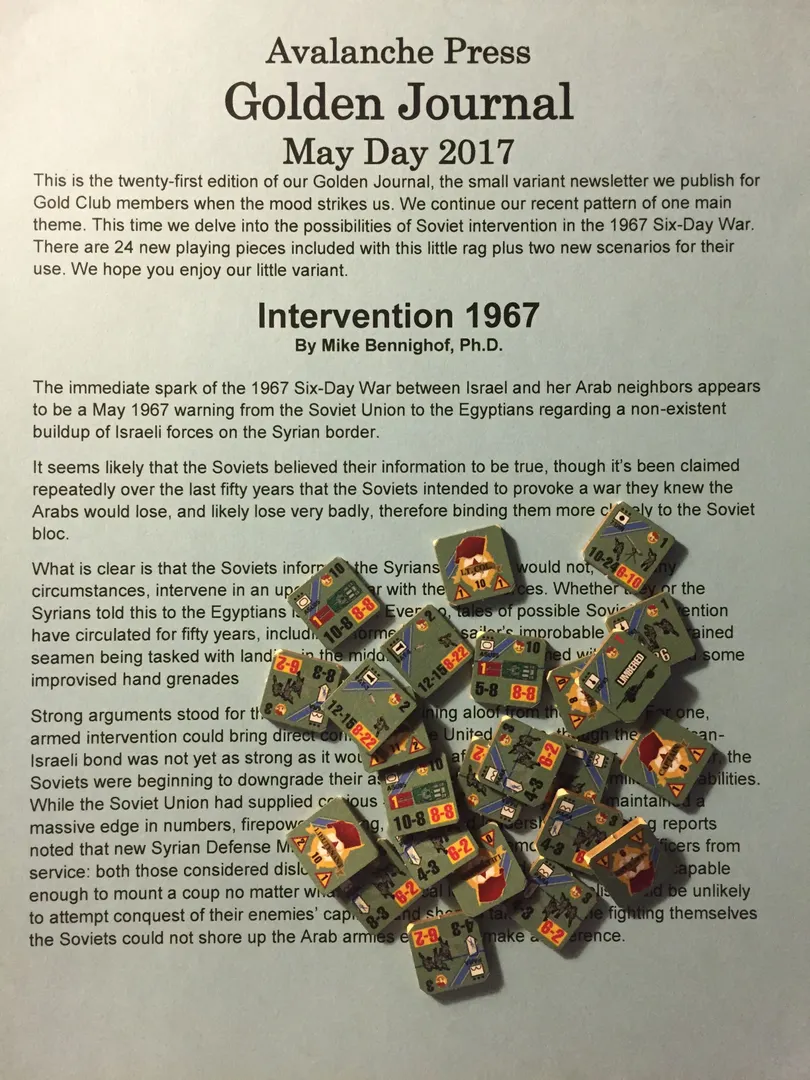
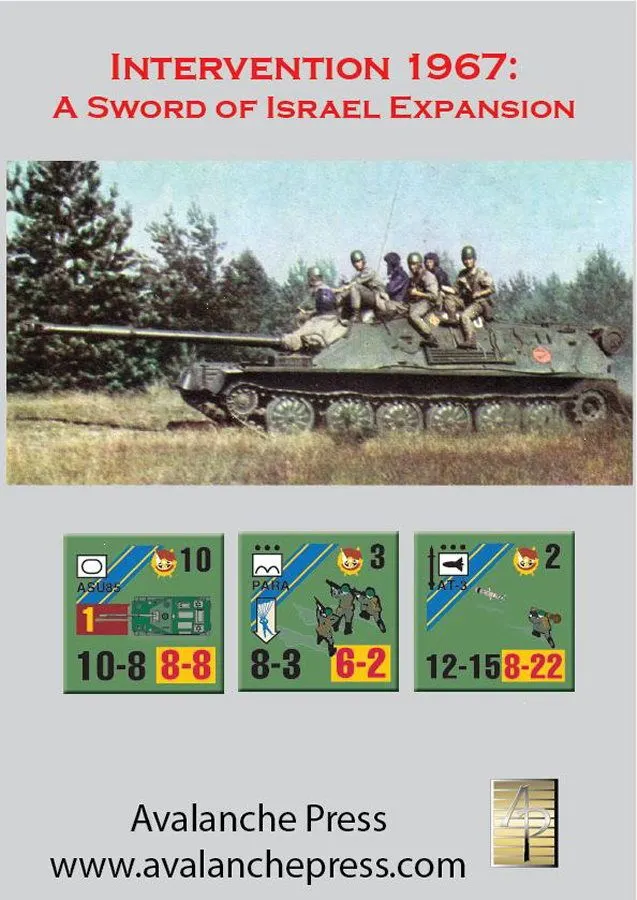
Panzer Grenadier (Modern): 1967 – Sword of Israel: Soviet Airborne
1–2 players2017
2013
Rules assistance for Panzer Grenadier (Modern): 1967 – Sword of Israel: The Six Day War
Plain-language explanations of turns, card effects and disputed situations, with saved question history.
For 2 players
What would you like to know?
Answers come from the official rulebook, with the page to check.
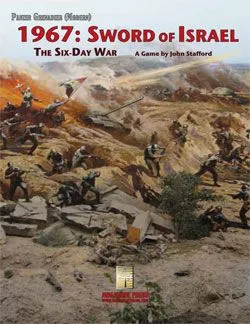
Panzer Grenadier (Modern): 1967 – Sword of Israel: The Six Day War is a board game released in 2013 for 2 players, 30 minutes per game, and ages 12 and up. It was designed by John Stafford and its main mechanics are Dice Rolling, Secret Unit Deployment, and Hexagon Grid.
1–2 players2017
1–2 players60–180 min2017
1–2 players60–180 min2020
1–2 players2023
2–4 players30–360 min2023
2 players120 min2005

2 players120 min2005

2 players60 min2008
2 players30–360 min2002

2 players120 min2009

1–2 players30–150 min2004

2 players120 min2009
2 players2002
2 players30–120 min1998

2 players180 min2004
2 players360 min2003

2 players30–60 min2006

2 players120 min2014

2 players120 min2012

2 players60 min2014

2 players360–6000 min1984

2 players360–1200 min1985

2 players180 min1983
1–6 players90–300 min2017
2–3 players360 min1979
1–5 players300–720 min2019
2 players240–360 min1977

2–3 players60–480 min1988

2 players120–240 min1975
From the Avalanche Press website: In June 1967, Israeli forces struck first against the Egyptian, Syrian and Jordanian forces massing on their borders for a final invasion of the Jewish state. For six days, battle raged along all fronts with the Israelis inflicting massive defeats on their Arab foes before the United Nations brokered a cease-fire agreement. 1967: Sword of Israel is a military history board game based on the battles of the 1967 Six-Day War, in which Israel held off and then defeated the combined armies of Egypt, Syria, Jordan and the Palestine Liberation Organization. There are fifty scenarios, portraying each of the important battles that took place in this war that set the course of modern history. The game system is based on the very popular Panzer Grenadier system, and will be instantly familiar to anyone who’s played any of the games in that series. Units represent platoons of tanks and infantry, batteries of artillery and anti-tank or anti-aircraft guns, and flights of three to five helicopters or aircraft. Designer John Stafford has provided fifty scenarios from the Six Day War. There are eight new maps by Guy Riessen, and 909 playing pieces.
Panzer Grenadier (Modern): 1967 – Sword of Israel: The Six Day War supports 2 players according to the catalogue. This is the publisher’s listed player count, so the game is designed for exactly that number of participants. Variants for other group sizes, if any, are described in the rulebook of your edition, so check it before setting up a different configuration.
The listed playing time for Panzer Grenadier (Modern): 1967 – Sword of Israel: The Six Day War is 30 minutes. This is the publisher’s estimate for a full game. The actual duration depends on the group, the player count and familiarity with the rules: first sessions usually run longer, while experienced groups often finish faster. Setup and teaching time are not included in this estimate.
The catalogue lists Panzer Grenadier (Modern): 1967 – Sword of Israel: The Six Day War for ages 12 and up. This is the publisher’s recommendation and reflects reading demands, rule complexity and small components rather than theme alone. Younger players can often join with help from an adult, so check the age guidance on your edition and consider your group’s experience with board games.
Panzer Grenadier (Modern): 1967 – Sword of Israel: The Six Day War belongs to these categories: Wargame and Modern Warfare. Its main mechanics are Dice Rolling, Secret Unit Deployment, and Hexagon Grid. Categories describe the theme and setting of a game, while mechanics describe what players actually do on their turns. Each mechanic links to a catalogue hub with similar games, which helps when you want something comparable.
The credited designers of Panzer Grenadier (Modern): 1967 – Sword of Israel: The Six Day War are: John Stafford. These credits come from the published game data and name the people responsible for the game’s design, not its illustrators or publishers. Designer pages on MeepleRules collect other titles by the same designers, which helps when you enjoy a game and want to find similar ones.
The catalogue lists Panzer Grenadier (Modern): 1967 – Sword of Israel: The Six Day War as a base game. It can be played on its own with the components in the box and does not require any other title. Expansions, if any exist, add new content or rules on top of it and are listed separately in the catalogue with a link back to this base game.

