
- BGG rank
- BGG #10,178
- BGG rating
- 6.7
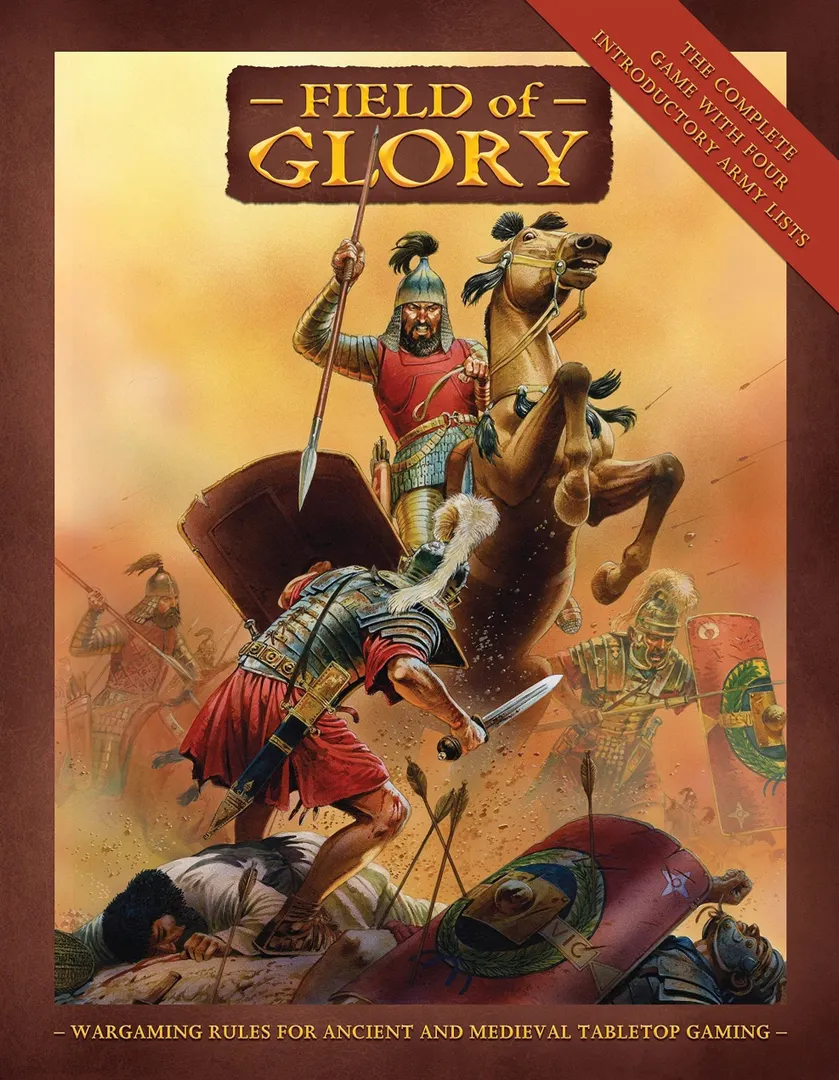
Field of Glory: Ancient and Medieval Wargaming Rules
- 2–4 players
- 180 min
- Complexity 3.6/5
- 2008
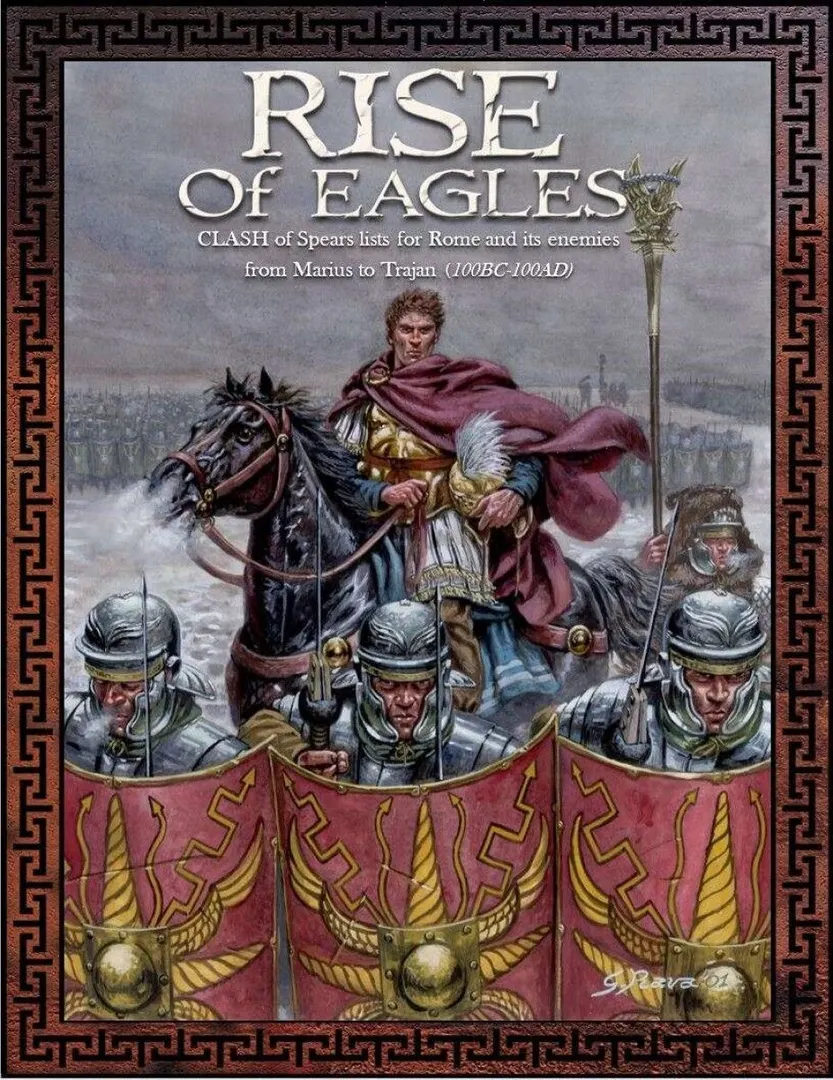
Expansion for Clash of Spears: Rules for Skirmish Battles in Ancient Times
2021
Rules assistance for Rise of Eagles: Clash of Spears lists for Rome and its enemies from Marius to Trajan (100BC-100AD)
Plain-language explanations of turns, card effects and disputed situations, with official source references and saved question history.
What would you like to know?
Answers come from the official rulebook, with the page to check.
Rise of Eagles: Clash of Spears lists for Rome and its enemies from Marius to Trajan (100BC-100AD) is an expansion for Clash of Spears: Rules for Skirmish Battles in Ancient Times released in 2021 for 2–4 players, 120–180 minutes per game, and ages 12 and up. It was designed by Alvaro Erize and Francisco Erize and its main mechanics are Scenario / Mission / Campaign Game.
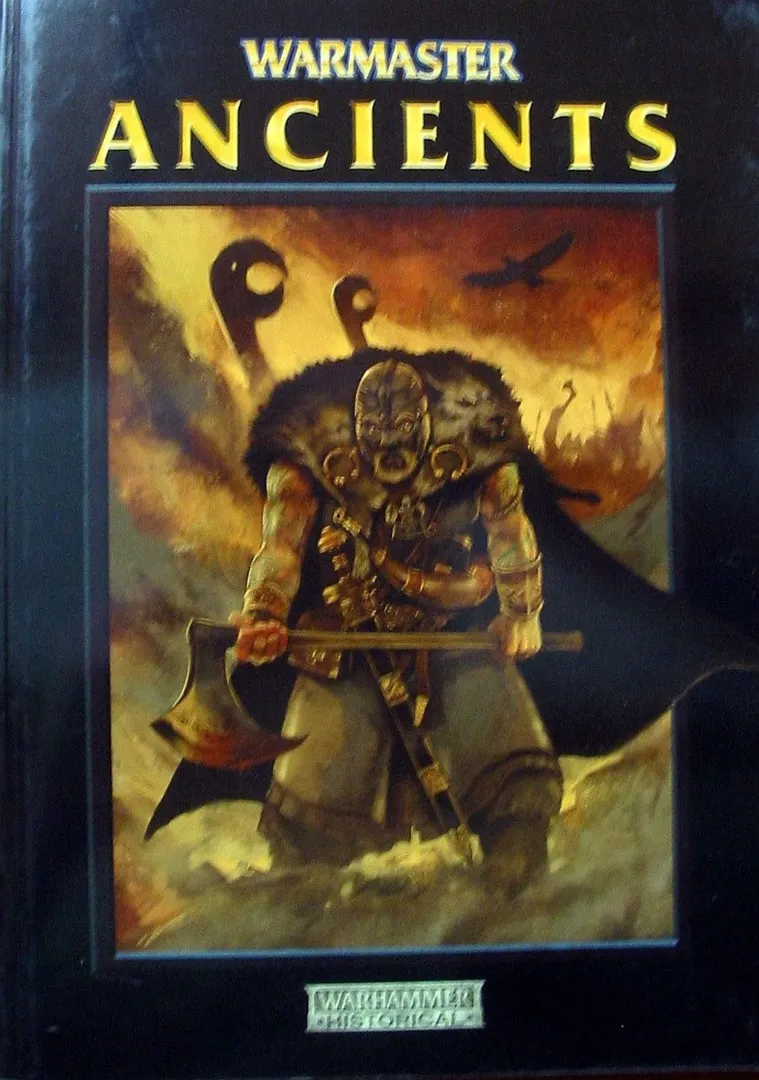
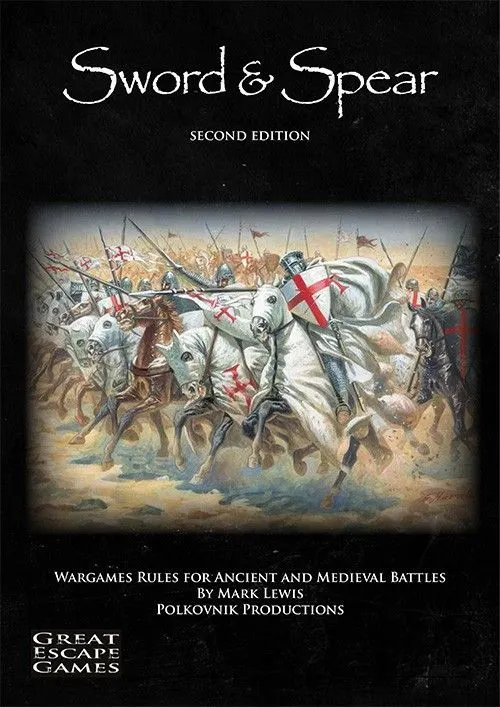


Rise of Eagles is an expansion to Clash of Spears This book expands the forces available in the core book adding 13 new lists. The lists include the Late Republican Army ( post Marian Reform ), the Early Imperial Army and enemies that fought against these armies such as Thracians, Germans, Britons, Dacians, Parthians, Spartacus Slave revolt, etc. We have also included the eastern enemies that Rome fought during the times of the Republic such as the armies of the successors of Alexander the Great or the Pontic kingdom. All in all this is a great complement to your core book multiplying the lists and periods in which you can set up your games. –Description from the publisher
Rise of Eagles: Clash of Spears lists for Rome and its enemies from Marius to Trajan (100BC-100AD) supports 2–4 players according to the catalogue. This range comes from the publisher’s listed player count, so the game can be set up for any group size within it. Some setups, rules and scoring details may still vary by player count, so check your edition’s rulebook for the exact configuration.
The listed playing time for Rise of Eagles: Clash of Spears lists for Rome and its enemies from Marius to Trajan (100BC-100AD) is 120–180 minutes. This is the publisher’s estimate for a full game. The actual duration depends on the group, the player count and familiarity with the rules: first sessions usually run longer, while experienced groups often finish faster. Setup and teaching time are not included in this estimate.
The catalogue lists Rise of Eagles: Clash of Spears lists for Rome and its enemies from Marius to Trajan (100BC-100AD) for ages 12 and up. This is the publisher’s recommendation and reflects reading demands, rule complexity and small components rather than theme alone. Younger players can often join with help from an adult, so check the age guidance on your edition and consider your group’s experience with board games.
Rise of Eagles: Clash of Spears lists for Rome and its enemies from Marius to Trajan (100BC-100AD) belongs to these categories: Wargame, Miniatures, and Ancient. Its main mechanics are Scenario / Mission / Campaign Game. Categories describe the theme and setting of a game, while mechanics describe what players actually do on their turns. Each mechanic links to a catalogue hub with similar games, which helps when you want something comparable.
The credited designers of Rise of Eagles: Clash of Spears lists for Rome and its enemies from Marius to Trajan (100BC-100AD) are: Alvaro Erize and Francisco Erize. These credits come from the published game data and name the people responsible for the game’s design, not its illustrators or publishers. Designer pages on MeepleRules collect other titles by the same designers, which helps when you enjoy a game and want to find similar ones.
The catalogue lists Rise of Eagles: Clash of Spears lists for Rome and its enemies from Marius to Trajan (100BC-100AD) as an expansion for Clash of Spears: Rules for Skirmish Battles in Ancient Times. Expansions add new content, rules or scenarios to the base game and usually cannot be played on their own, so you need Clash of Spears: Rules for Skirmish Battles in Ancient Times to use it. Check that your edition of Clash of Spears: Rules for Skirmish Battles in Ancient Times is compatible, as some expansions were revised between editions.