
- BGG rank
- BGG #6,201
- BGG rating
- 6.0
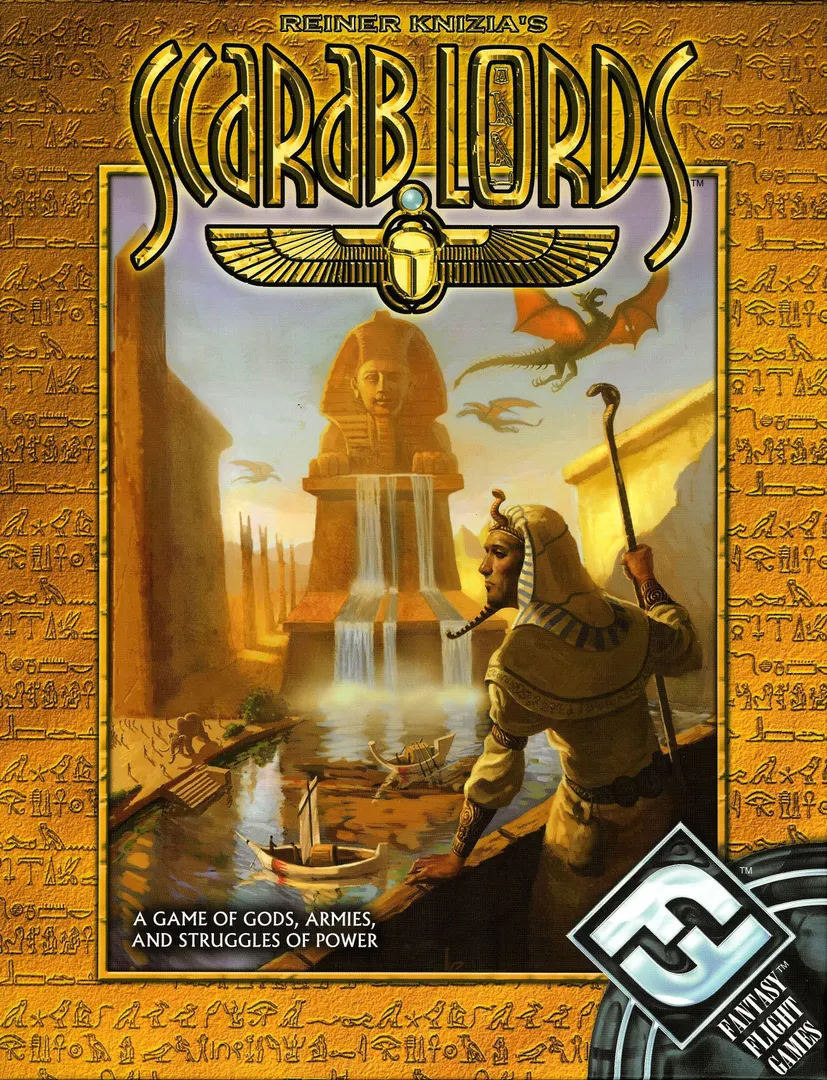
Scarab Lords
- 2 players
- 20–40 min
- Complexity 1.9/5
- 2002
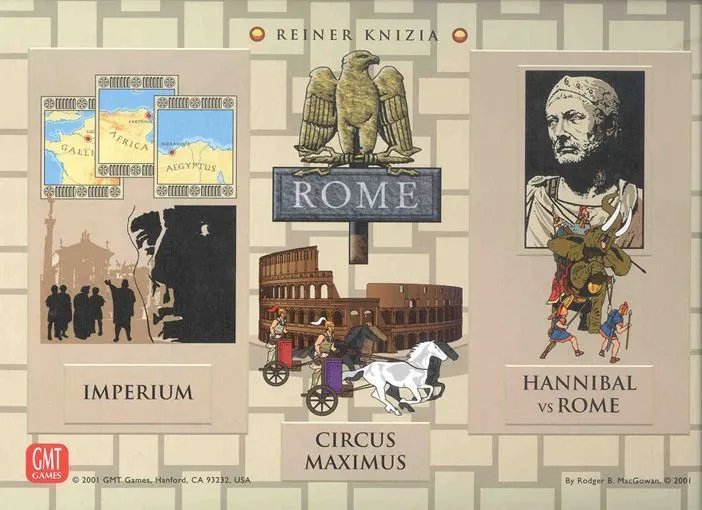
2001
Rules assistance for Rome: Imperium, Circus Maximus, Hannibal vs Rome
Plain-language explanations of turns, card effects and disputed situations, with official source references and saved question history.
For 2 players
What would you like to know?
Answers come from the official rulebook, with the page to check.
Rome: Imperium, Circus Maximus, Hannibal vs Rome is a board game released in 2001 for 2–5 players, 10–45 minutes per game, and ages 8 and up. It was designed by Reiner Knizia and its main mechanics are Hand Management, Area Movement, and Area Majority / Influence.



Reiner Knizia has designed a number of games set in Ancient Rome. This collection brings together three of the finest, covering three very different aspects of the Roman Empire: Hannibal versus Rome, Imperium and Circus Maximus. Hannibal versus Rome is a 30-minute two-player game depicing the initial struggle for supremacy between Rome and Carthage, which finally established Rome as the leading power in the Mediterranean. It draws on the events of the Second Punic War, during which Hannibal crossed the Alps with his elephants, and defeated Rome in the battle of Cannae. The Roman general Scipio succeeded in moving the fighting away from Italy, into Spain and Africa, where he defeated the Carthaginians at Zama. The map covers the Western Mediterranean. Players move Legions and Fleets, deciding conflicts by the use of cards in order to determine who will be the dominant power in the Mediterranean region. Imperium (a game for two to five players) focuses on Rome's political and territorial expansion during the Imperial period. Powerful families controlled the individual provinces in order to increase their wealth and power in Rome, until the Roman Empire reached its zenith in size in the year 100 under the Emperor Trajan. In each round the two to five players distribute markers onto areas of the Empire, with control of one area being decided each round. The players need to have the right influence at the decisive moment to take control, without neglecting long-term development. It is a game of planning and timing. Circus Maximus leads us into the heart of Rome itself with its renowned public entertainment for the masses; chariot racing. Chariot races were immensely popular in Rome. The Circus Maximus offered room for 200,000 spectators who avidly followed the races, roaring and cheering on their favourites. The courageous charioteers were divided into teams distinguished by different colours. The most successful were worshipped as heroes, but the risks were high and many paid for their fame and daring with their lives. Each of two to five players controls a team of three chariots. In a game of pure tactics, players receive five movement cards that they can assign each turn to individual chariots as they wish. The first to bring all three across the finish line wins the game and the laurel wreath. Note: the 3 games in this were previously released in Neue Spiele im alten Rom.
Rome: Imperium, Circus Maximus, Hannibal vs Rome supports 2–5 players according to the catalogue. This range comes from the publisher’s listed player count, so the game can be set up for any group size within it. Some setups, rules and scoring details may still vary by player count, so check your edition’s rulebook for the exact configuration.
The listed playing time for Rome: Imperium, Circus Maximus, Hannibal vs Rome is 10–45 minutes. This is the publisher’s estimate for a full game. The actual duration depends on the group, the player count and familiarity with the rules: first sessions usually run longer, while experienced groups often finish faster. Setup and teaching time are not included in this estimate.
The catalogue lists Rome: Imperium, Circus Maximus, Hannibal vs Rome for ages 8 and up. This is the publisher’s recommendation and reflects reading demands, rule complexity and small components rather than theme alone. Younger players can often join with help from an adult, so check the age guidance on your edition and consider your group’s experience with board games.
Rome: Imperium, Circus Maximus, Hannibal vs Rome has a complexity rating of 1.7 out of 5 from BoardGameGeek players, which makes it a light game. The rating reflects how much rules knowledge, planning and decision-making a typical game demands. Expect a longer first teach for heavier games, and use a preparation guide before game night.
Rome: Imperium, Circus Maximus, Hannibal vs Rome belongs to these categories: Card Game, Political, and Ancient. Its main mechanics are Hand Management, Area Movement, and Area Majority / Influence. Categories describe the theme and setting of a game, while mechanics describe what players actually do on their turns. Each mechanic links to a catalogue hub with similar games, which helps when you want something comparable.
The credited designers of Rome: Imperium, Circus Maximus, Hannibal vs Rome are: Reiner Knizia. These credits come from the published game data and name the people responsible for the game’s design, not its illustrators or publishers. Designer pages on MeepleRules collect other titles by the same designers, which helps when you enjoy a game and want to find similar ones.
The catalogue lists Rome: Imperium, Circus Maximus, Hannibal vs Rome as a base game. It can be played on its own with the components in the box and does not require any other title. Expansions, if any exist, add new content or rules on top of it and are listed separately in the catalogue with a link back to this base game.