
- BGG rank
- BGG #5,374
- BGG rating
- 6.9
Fool's Gold
- 3–5 players
- 60–90 min
- Complexity 2.1/5
- 2015
2016
Rules assistance for Salem
Plain-language explanations of turns, card effects and disputed situations, with official source references and saved question history.
For 3 players
What would you like to know?
Answers come from the official rulebook, with the page to check.
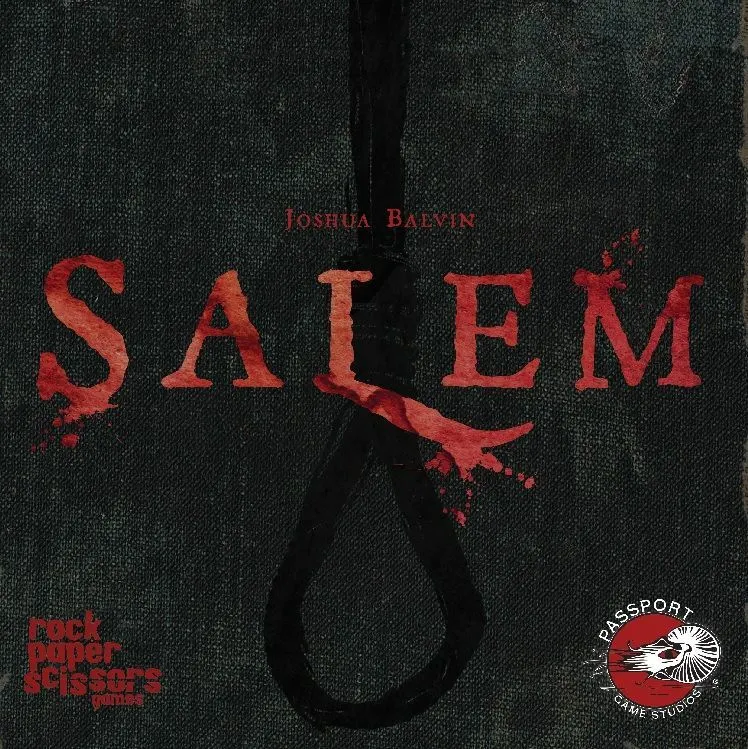
Salem is a board game released in 2016 for 3–7 players, 90–180 minutes per game, and ages 14 and up. It was designed by Joshua Gerald Balvin and its main mechanics are Simultaneous Action Selection, Simulation, and Voting.




The year is 1692. In an atmosphere of pessimism and charged paranoia, the citizens of Salem are at the mercy of demons – not demons of the soul, but demons of the mind. What began as a devout Puritan community devolved in a matter of months into a people torn apart by fear, lies, and fanatical orthodoxy. The residents of Salem quickly discovered that they could find Hell all around them. Salem incites the atmosphere of paranoia that held the village of Salem captive. Players act with the assumption that there are witches among them (and, in this case, there will be). Each player controls six residents of Salem, three of whom are witches. Game play is simple: try to rid the village of witches and keep the identities of your own residents secret. The game plays over the course of four rounds representing the four months (June–September 1692) in which the hysteria was at its height. Each round has two parts: a Witch Hunt and a Witch Trial, followed by hangings (the dates of which correspond to the four actual hangings that took place in Salem that year). During the Witch Hunt, players send residents to jail and provide alibis for their own jailed citizens. At the end of each round all jailed citizens stand trial. Players then collectively decide who is hanged and who is spared. The player who is most successful at discerning witches from villagers wins! While the story surrounding the Salem witch trials has become something of a legend, every character in this game is based on a real person whose life was directly touched and in some cases torn apart or taken away by the events surrounding the Salem witch trials. Extensive research has been done to craft the real-life stories of all 42 residents in the game. While this game focuses on the people and events specific to Salem, Massachusetts, similar witch hunts were taking place as far north as Maine and as far West as Connecticut. Surely, the devil had come to New England.
Salem supports 3–7 players according to the catalogue. This range comes from the publisher’s listed player count, so the game can be set up for any group size within it. Some setups, rules and scoring details may still vary by player count, so check your edition’s rulebook for the exact configuration.
The listed playing time for Salem is 90–180 minutes. This is the publisher’s estimate for a full game. The actual duration depends on the group, the player count and familiarity with the rules: first sessions usually run longer, while experienced groups often finish faster. Setup and teaching time are not included in this estimate.
The catalogue lists Salem for ages 14 and up. This is the publisher’s recommendation and reflects reading demands, rule complexity and small components rather than theme alone. Younger players can often join with help from an adult, so check the age guidance on your edition and consider your group’s experience with board games.
Salem has a complexity rating of 2.8 out of 5 from BoardGameGeek players, which makes it a medium-light game. The rating reflects how much rules knowledge, planning and decision-making a typical game demands. Expect a longer first teach for heavier games, and use a preparation guide before game night.
Salem belongs to these categories: Deduction, Horror, and Educational. Its main mechanics are Simultaneous Action Selection, Simulation, and Voting. Categories describe the theme and setting of a game, while mechanics describe what players actually do on their turns. Each mechanic links to a catalogue hub with similar games, which helps when you want something comparable.
The credited designers of Salem are: Joshua Gerald Balvin. These credits come from the published game data and name the people responsible for the game’s design, not its illustrators or publishers. Designer pages on MeepleRules collect other titles by the same designers, which helps when you enjoy a game and want to find similar ones.
The catalogue lists Salem as a base game. It can be played on its own with the components in the box and does not require any other title. Expansions, if any exist, add new content or rules on top of it and are listed separately in the catalogue with a link back to this base game.