
- BGG rating
- 7.0
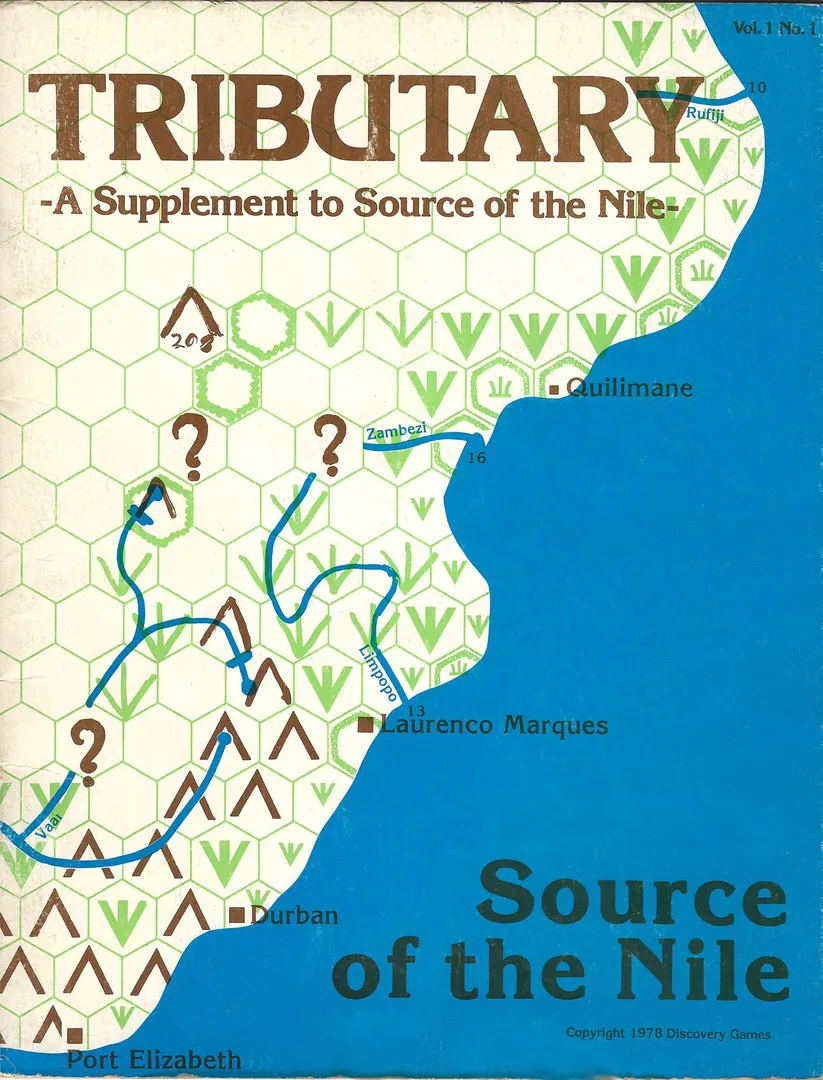
Source of the Nile: Tributary
- 1–6 players
- 180 min
- Complexity 2.8/5
- 1978
1978
Rules assistance for Source of the Nile
Plain-language explanations of turns, card effects and disputed situations, with official source references and saved question history.
For 1 player
What would you like to know?
Answers come from the official rulebook, with the page to check.
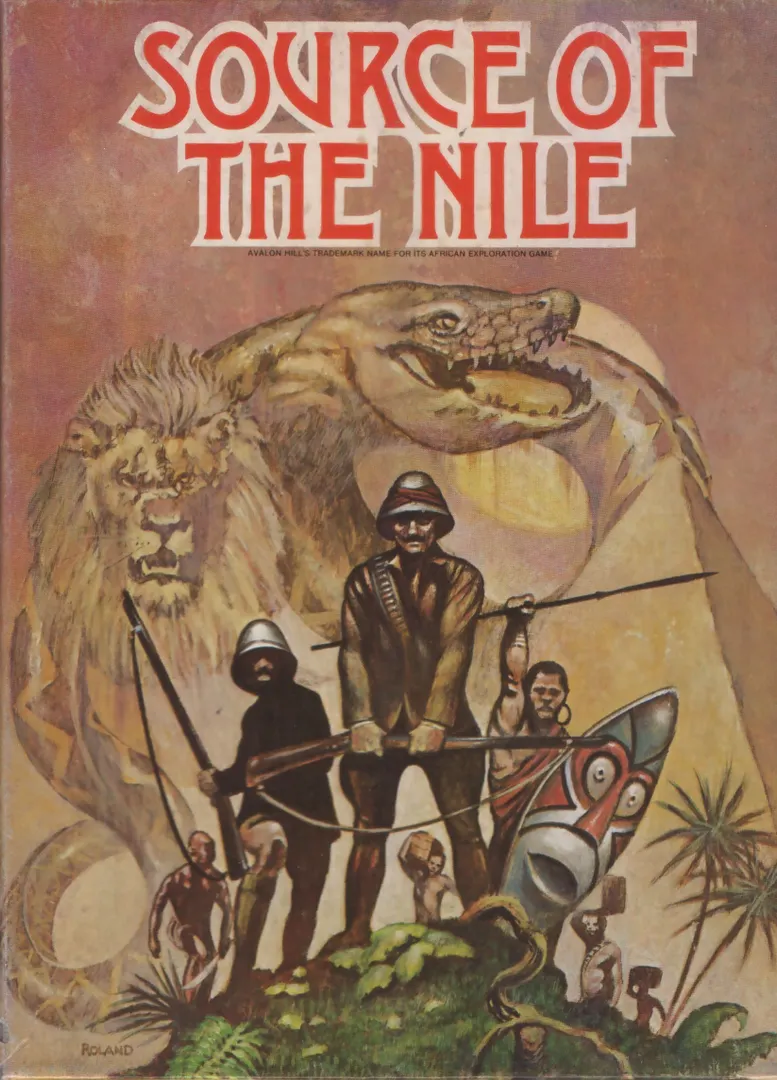
Source of the Nile is a board game released in 1978 for 1–6 players, 180 minutes per game, and ages 12 and up. It was designed by Ross Maker and Dave Wesely and its main mechanics are Dice Rolling, Variable Set-up, and Paper-and-Pencil.












Designed to be an educational and challenging game in which players compete primarily with Nature and with each other, luck tends to be an element in the game, but can be overcome by careful play. Because the situation is forever changing, there is no single best strategy; however, players must weigh risks against gains with every decision they make and good judgment will pay off. The game is played on a mapboard showing Africa from Khartoum to Capetown and Lagos to Mombasa. The periphery of this map, showing the territory known ca. 1820, is filled-in; the center is blank. A hexagonal grid is superimposed on the map to regulate movement and to delimit territory explored. In the course of play, each player moves a token (representing his explorer) from explored hexagons to blank hexagons one at a time.; terrain, native tribes and other discoveries within the hexagons are then semi-randomly determined, with allowance made for previous discoveries in adjacent hexagons. The player interacts with the discoveries (e.g. negotiates with new natives for guides) and records them on the mapboard using wax crayons. The mapboard surface is erasable. If the explorer dies before returning to Europe to publish his discoveries, all hexagons which only he has explored will be erased and "subsequent explorers will find that his discoveries were only rumors"; i.e., when other players explore the erased hexagons later they will have to generate new discoveries there. When explorers do return to civilization, however, they may publish their discoveries, after which they are safe from erasure. Players may also emulate real explorers by withholding some of their discoveries since they will enjoy some advantages when moving through terrain or dealing with natives known only to them. Points are scored for discoveries as they are published and once scored will not be lost if the explorer dies or is retired by his player. A player may retire his explorer at any time and then start a new explorer in Europe. Before each trip to Africa, explorers will have to raise money to support their expedition. New explorers with no discoveries to their credit must do this by drawing chance cards for several turns until they feel their finances are adequate. Experienced explorers can accelerate this process by publishing discoveries, which allow them to draw additional chance cards.
Source of the Nile supports 1–6 players according to the catalogue. This range comes from the publisher’s listed player count, so the game can be set up for any group size within it. Some setups, rules and scoring details may still vary by player count, so check your edition’s rulebook for the exact configuration.
The listed playing time for Source of the Nile is 180 minutes. This is the publisher’s estimate for a full game. The actual duration depends on the group, the player count and familiarity with the rules: first sessions usually run longer, while experienced groups often finish faster. Setup and teaching time are not included in this estimate.
The catalogue lists Source of the Nile for ages 12 and up. This is the publisher’s recommendation and reflects reading demands, rule complexity and small components rather than theme alone. Younger players can often join with help from an adult, so check the age guidance on your edition and consider your group’s experience with board games.
Source of the Nile has a complexity rating of 2.9 out of 5 from BoardGameGeek players, which makes it a medium-light game. The rating reflects how much rules knowledge, planning and decision-making a typical game demands. Expect a longer first teach for heavier games, and use a preparation guide before game night.
Source of the Nile belongs to these categories: Exploration and Post-Napoleonic. Its main mechanics are Dice Rolling, Variable Set-up, and Paper-and-Pencil. Categories describe the theme and setting of a game, while mechanics describe what players actually do on their turns. Each mechanic links to a catalogue hub with similar games, which helps when you want something comparable.
The credited designers of Source of the Nile are: Ross Maker and Dave Wesely. These credits come from the published game data and name the people responsible for the game’s design, not its illustrators or publishers. Designer pages on MeepleRules collect other titles by the same designers, which helps when you enjoy a game and want to find similar ones.
The catalogue lists Source of the Nile as a base game. It can be played on its own with the components in the box and does not require any other title. Expansions, if any exist, add new content or rules on top of it and are listed separately in the catalogue with a link back to this base game.