
- BGG rank
- BGG #6,589
- BGG rating
- 7.4
Napoleon at Leipzig
- 2–3 players
- 60–300 min
- Complexity 2.9/5
- 1979
1997
Rules assistance for The 6 Days of Glory
Plain-language explanations of turns, card effects and disputed situations, with official source references and saved question history.
What would you like to know?
Answers come from the official rulebook, with the page to check.
The 6 Days of Glory is a board game released in 1997 for 1–3 players, 180 minutes per game, and ages 12 and up. It was designed by Kevin Zucker and its main mechanics are Dice Rolling and Hexagon Grid.



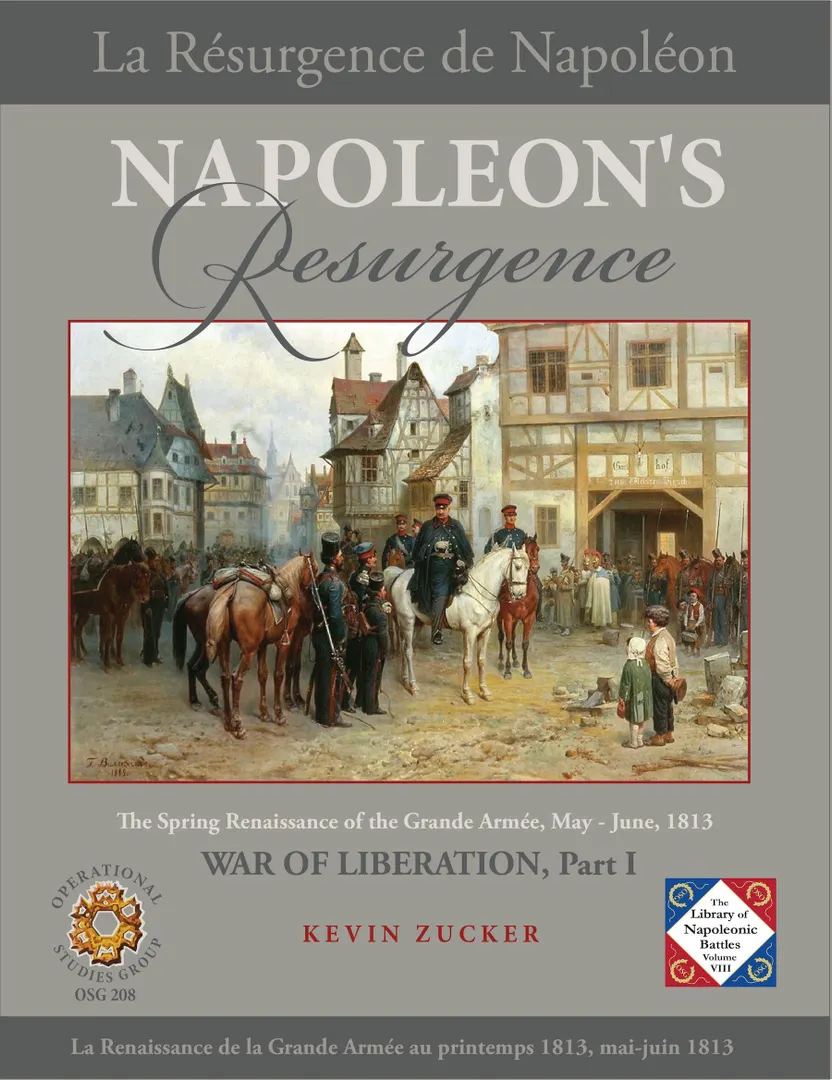
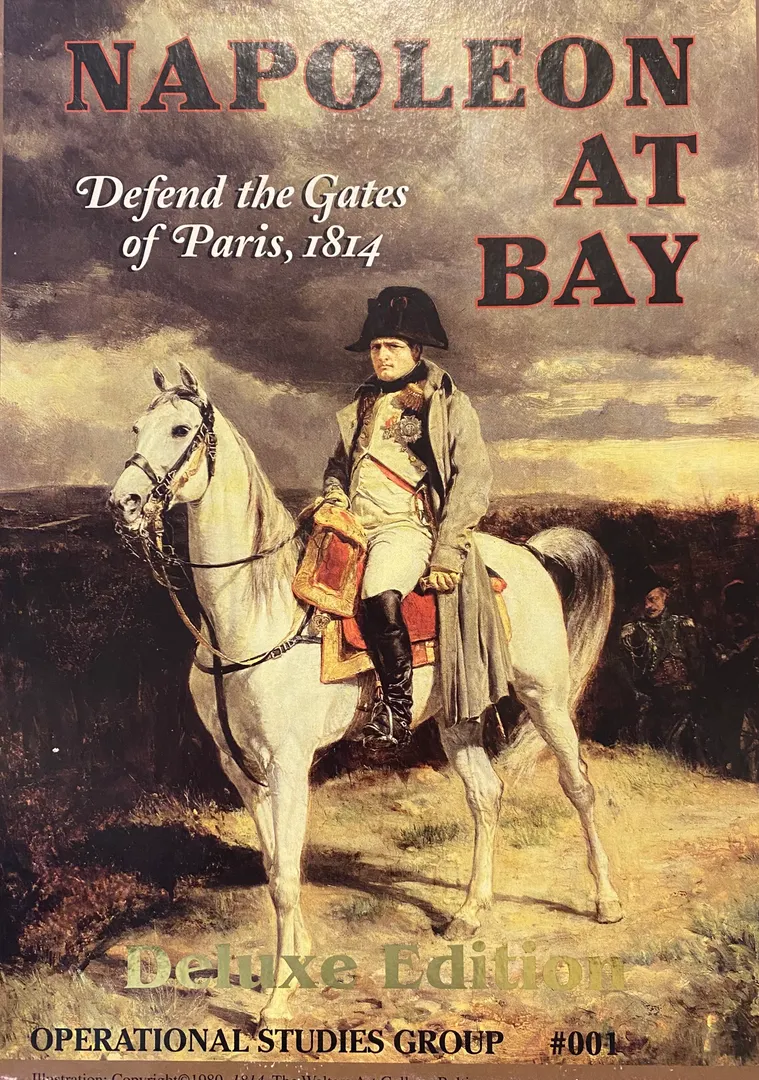
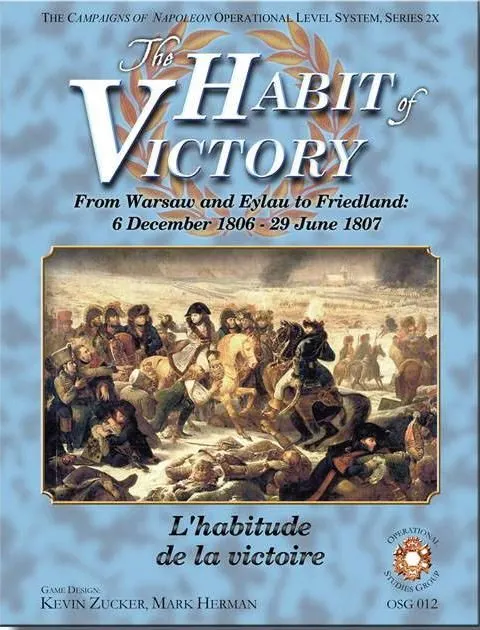
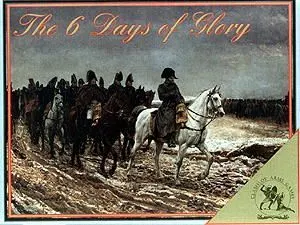
On to Paris! Napoleon in retreat, full. Napoleon was defeated in the battle of Leipzig the previous year. He was determined to make one last stand on the road to Paris. Facing a coalition between Prussia under Blucher and Russia under Sacken, Napoleon caught them and was about to crush them in decisive battles before Paris in 6 days of February, 1814. Designed by Hall of Fame Napoleonic game designer Kevin Zucker, developed by Paul Dangel, the game comes with a standard 22" x 34" map by Rick Barber showing mud and snowy ground at 1,700 yards per hex, 280 counters, mostly division size units. One 24-pages rulebook with 6-pages of historical commentary by the designer and 1-page of Terrain Effects Chart included (hence the rules actually occupy only 17 pages). The Six Days of Glory is an operational Napoleonic game. 3 short scenarios are included, covering the campaigns in three separate battles at three cities along the road to Paris: Champaubert (9~10 Feb); Montmirail (11~12 Feb) and Vauchamps (13~14 Feb), each playable in less than 1 ½ hours. A campaign scenario linking all three (9~14 Feb) battles from the beginning to the end can be completed in less than 3 hours. The French moves first in all scenarios. The game has a standard command check – move – combat sequence with an additional night turn on each turn during which armies can force march to out maneuver the enemy. Features include Chain-of-Command and Leadership Initiative, Artillery Bombardment, Supply and demoralization, Repulse at odds greater than 5-to-1, Movement across Pontoon Trains and Bridges (Allied only), and an interesting weather effect of forced mud on wheeled unit during the afternoon (PM) turn. Team play is also possible where Allied command is divided between Prussian and Russian and thus communication between the two is not allowed unless written messages are exchanged. GAME SYSTEM: DAYS System = 1,600m/hex, 800-1,000 men/SP, 6 hours/turn.
The 6 Days of Glory supports 1–3 players according to the catalogue. This range comes from the publisher’s listed player count, so the game can be set up for any group size within it. Some setups, rules and scoring details may still vary by player count, so check your edition’s rulebook for the exact configuration.
The listed playing time for The 6 Days of Glory is 180 minutes. This is the publisher’s estimate for a full game. The actual duration depends on the group, the player count and familiarity with the rules: first sessions usually run longer, while experienced groups often finish faster. Setup and teaching time are not included in this estimate.
The catalogue lists The 6 Days of Glory for ages 12 and up. This is the publisher’s recommendation and reflects reading demands, rule complexity and small components rather than theme alone. Younger players can often join with help from an adult, so check the age guidance on your edition and consider your group’s experience with board games.
The 6 Days of Glory has a complexity rating of 2.8 out of 5 from BoardGameGeek players, which makes it a medium-light game. The rating reflects how much rules knowledge, planning and decision-making a typical game demands. Expect a longer first teach for heavier games, and use a preparation guide before game night.
The 6 Days of Glory belongs to these categories: Wargame and Napoleonic. Its main mechanics are Dice Rolling and Hexagon Grid. Categories describe the theme and setting of a game, while mechanics describe what players actually do on their turns. Each mechanic links to a catalogue hub with similar games, which helps when you want something comparable.
The credited designers of The 6 Days of Glory are: Kevin Zucker. These credits come from the published game data and name the people responsible for the game’s design, not its illustrators or publishers. Designer pages on MeepleRules collect other titles by the same designers, which helps when you enjoy a game and want to find similar ones.
The catalogue lists The 6 Days of Glory as a base game. It can be played on its own with the components in the box and does not require any other title. Expansions, if any exist, add new content or rules on top of it and are listed separately in the catalogue with a link back to this base game.

