
- BGG rank
- BGG #1,180
- BGG rating
- 7.5
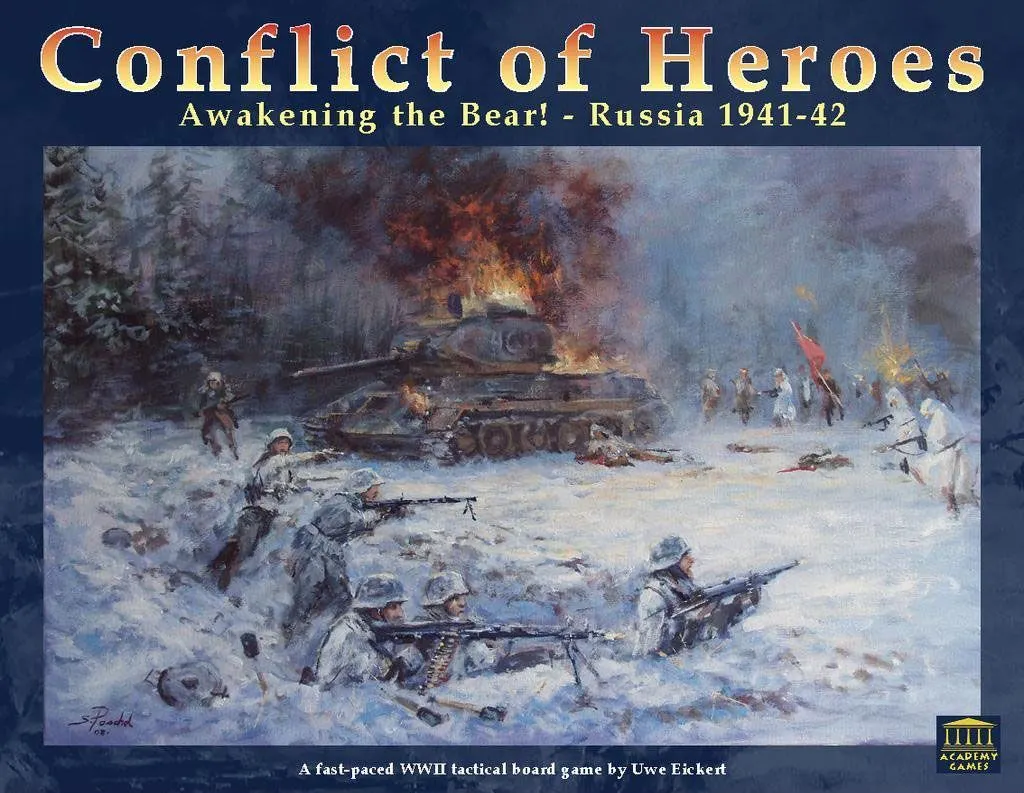
Conflict of Heroes: Awakening the Bear! – Russia 1941-42
- 1–4 players
- 120 min
- Complexity 3.0/5
- 2008
2012
Rules assistance for The Battle of Stalingrad
Plain-language explanations of turns, card effects and disputed situations, with official source references and saved question history.

For 2 players
What would you like to know?
Answers come from the official rulebook, with the page to check.
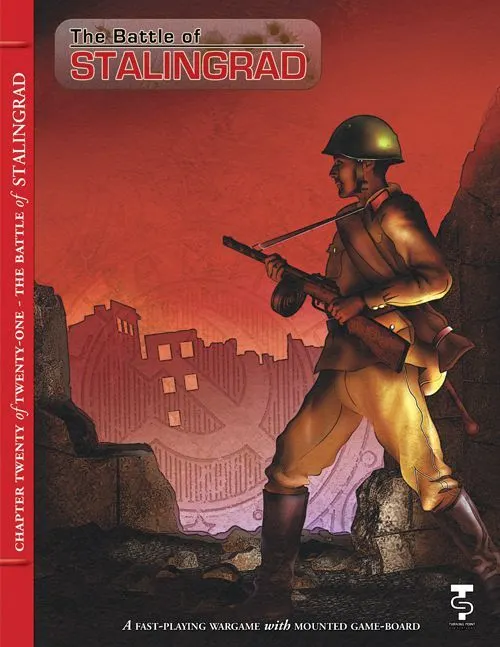
The Battle of Stalingrad is a board game released in 2012 for 2 players. It was designed by Hjalmar Gerber and its main mechanics are Dice Rolling, Hexagon Grid, and Simulation.





From the publisher's website: Each player will take the role of the operational theater commander. You still have leaders with short names and shorter tempers looking over your shoulder and telling you want to do (handled in game terms with directives and procedures that turn your decision making choices as much into "How do I please him?" as "How do I beat the enemy?") Counters represent mostly Soviet armies and German corps, with "assets" that can be attached to both, and minor Axis allies represented as well. Map scale is 55km to the hex, with 2 turns per month. The Battle of Stalingrad manages to provide monster game nuances in a game small in size with innovative design. For example, the sequence of play is not the same for each side. And why should it be? The Axis and Soviet armies do not do the same tasks each turn, because their armies operated differently. The Soviet player actually allocates supplies as he sees fit. Does he reward success or try to stave off defeat? Both players use Tactical and Strategic movement, as they move their forces around the battlefield. German Primary and Secondary objectives are determined randomly (and hidden from the Soviets!). Side operations in the Caucasus offer additional victory points but occupy units to achieve them. Are the points worth the cost? Operation Uranus, the great Soviet counteroffensive, has optional start times, with incentives for delay (if the rest of the Soviet front can hold out!). Sudden death victory is possible for both sides, encouraging that extra effort that could win it all...or leave one exposed and exhausted. At the end of the game, key point adjustments and multipliers get factored in and compared. Short of the Sudden Death victory, which side really "wins" can be in doubt to the very end. As it should be, in a situation like this. Part of the TPS, "Decisive Battles" series That means straightforward rules, key insights into the history behind the game, and designs aimed at one-session conclusions and high replay value. With shifting objectives and variable entry times for key units, no two Stalingrad games will play the same.
The Battle of Stalingrad supports 2 players according to the catalogue. This is the publisher’s listed player count, so the game is designed for exactly that number of participants. Variants for other group sizes, if any, are described in the rulebook of your edition, so check it before setting up a different configuration.
The Battle of Stalingrad has a complexity rating of 2.2 out of 5 from BoardGameGeek players, which makes it a medium-light game. The rating reflects how much rules knowledge, planning and decision-making a typical game demands. Expect a longer first teach for heavier games, and use a preparation guide before game night.
The Battle of Stalingrad belongs to these categories: Wargame and World War II. Its main mechanics are Dice Rolling, Hexagon Grid, and Simulation. Categories describe the theme and setting of a game, while mechanics describe what players actually do on their turns. Each mechanic links to a catalogue hub with similar games, which helps when you want something comparable.
The credited designers of The Battle of Stalingrad are: Hjalmar Gerber. These credits come from the published game data and name the people responsible for the game’s design, not its illustrators or publishers. Designer pages on MeepleRules collect other titles by the same designers, which helps when you enjoy a game and want to find similar ones.
The catalogue lists The Battle of Stalingrad as a base game. It can be played on its own with the components in the box and does not require any other title. Expansions, if any exist, add new content or rules on top of it and are listed separately in the catalogue with a link back to this base game.