
- BGG rank
- BGG #6,090
- BGG rating
- 8.4
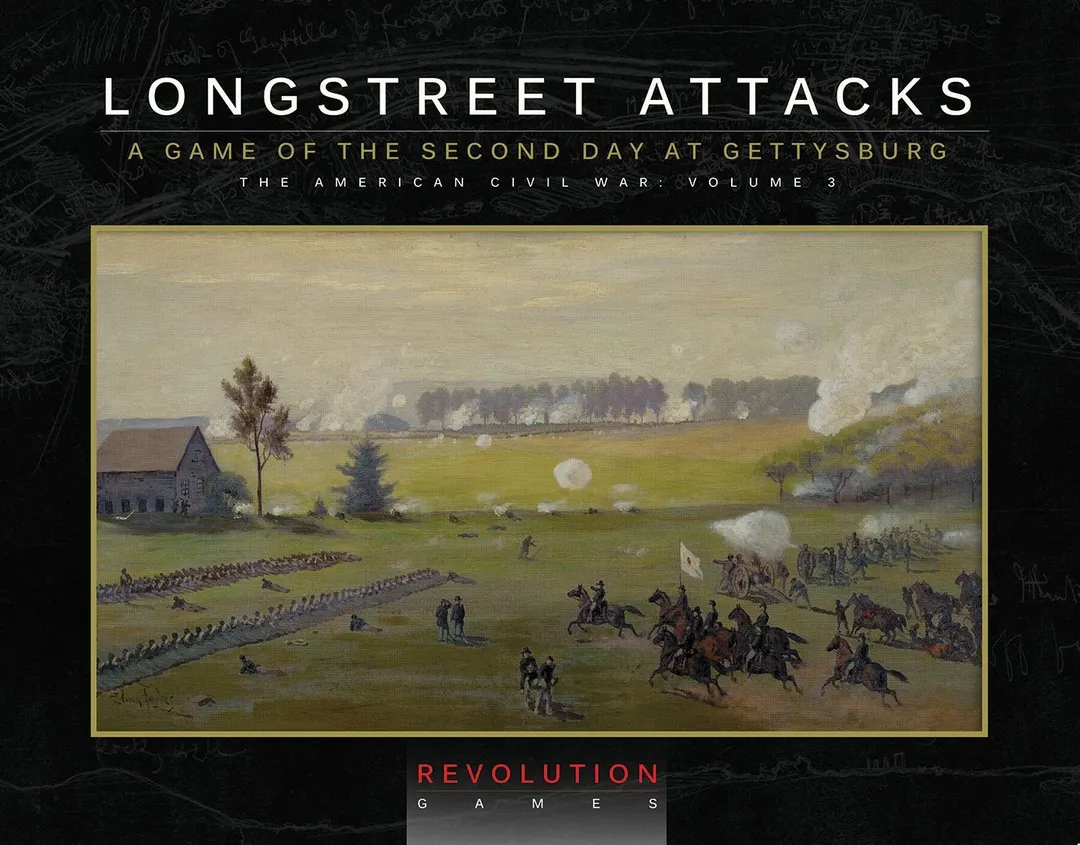
Longstreet Attacks: The Second Day at Gettysburg
- 1–4 players
- 90–720 min
- Complexity 3.5/5
- 2018
2019
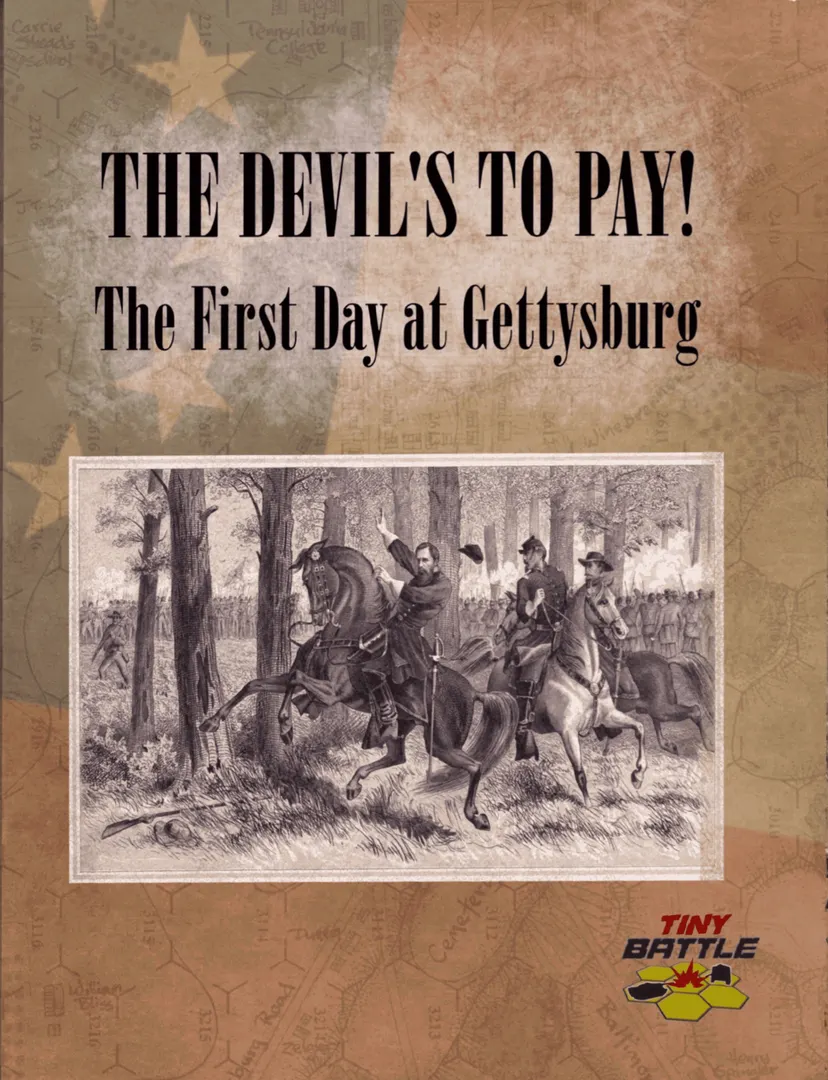
Rules assistance for The Devil's to Pay!: The First Day at Gettysburg
Plain-language explanations of turns, card effects and disputed situations, with official source references and saved question history.
For 1 player
What would you like to know?
Answers come from the official rulebook, with the page to check.
The Devil's to Pay!: The First Day at Gettysburg is a board game released in 2019 for 1–2 players, 120–240 minutes per game, and ages 9 and up. It was designed by Hermann Luttmann and its main mechanics are Dice Rolling, Hexagon Grid, and Simulation.




On the morning of July 1st, 1863 a column of Rebel soldiers from Brig. Gen. James Archer’s brigade of the Army of Northern Virginia headed down the Chambersburg Pike from Cashtown, PA towards the town of Gettysburg in search of provisions. Since JEB Stuart’s cavalry was nowhere to be found, the Confederate column was actually being led by the cannons of Pegram’s Artillery Brigade in a rare 19th century deployment of “recon by fire”. Archer’s Division commander, Maj. Gen. Henry Heth, was not worried however – he had it on firm authority that only militia was in the area and that “they would run as soon as we appeared”. Upon their approach up to Herr’s Ridge to the west of Gettysburg, the dismounted Union cavalry pickets of Buford’s 1st Cavalry Division began harassing the approaching butternut columns. As they were driven off and the Rebs crested the ridge, they were confronted with a far larger cavalry force than they had anticipated and they were now hotly engaged in an unexpected encounter. Archer’s men, along with the quick-marching soldiers of Brig. Gen. Robert Davis’ brigade, began a coordinated advance on Buford’s horse soldiers. The blue-clad troopers were hard pressed but their carbines allowed them to fire rapidly and from cover. Relief finally appeared at about 9:30 am when Maj. Gen. John Reynolds of Ist Corps rode up to Buford at the Lutheran Seminary. He then famously asked Buford, “What’s the matter, John?” Buford’s reply was “The Devil’s to pay!” And from such inauspicious beginnings started one of the greatest battles of history. This first day was to set the tone of the entire three-day Battle of Gettysburg …. a first day in which ultimate victory or defeat for either side could be traced to the decisions, maneuverings and fighting performances of each army’s soldiers and leaders during these initial critical hours. The Devil’s to Pay! is a game depicting not only the actual events of July 1st at the Battle of Gettysburg, but also what could have happened on that fateful first day. Two players will each command either the Confederate forces of Lt. Gen A.P. Hill and Lt. Gen. Richard Ewell or the Union forces of Maj. Gen. John Reynolds and Maj. Gen. Oliver Howard. The game is played on a gorgeous map of the battle area designed and drawn by Rick Barber, with each hex equaling 250 yards. Formations are multi-counter brigades, with each Strength Point representing about 100 men, with each unit counter representing a group of regiments, apportioned as they were deployed at the battle. The system is a new version of the Blind Swords system, with this implementation emphasizing ease-of-play and accessibility while maintaining the popular spirit of “historical chaos” represented by the other games in the Blind Swords family. The system utilizes a unique chit-pull mechanic that will keep players on their toes and engaged throughout the entire game. —description from designer
The Devil's to Pay!: The First Day at Gettysburg supports 1–2 players according to the catalogue. This range comes from the publisher’s listed player count, so the game can be set up for any group size within it. Some setups, rules and scoring details may still vary by player count, so check your edition’s rulebook for the exact configuration.
The listed playing time for The Devil's to Pay!: The First Day at Gettysburg is 120–240 minutes. This is the publisher’s estimate for a full game. The actual duration depends on the group, the player count and familiarity with the rules: first sessions usually run longer, while experienced groups often finish faster. Setup and teaching time are not included in this estimate.
The catalogue lists The Devil's to Pay!: The First Day at Gettysburg for ages 9 and up. This is the publisher’s recommendation and reflects reading demands, rule complexity and small components rather than theme alone. Younger players can often join with help from an adult, so check the age guidance on your edition and consider your group’s experience with board games.
The Devil's to Pay!: The First Day at Gettysburg has a complexity rating of 2.6 out of 5 from BoardGameGeek players, which makes it a medium-light game. The rating reflects how much rules knowledge, planning and decision-making a typical game demands. Expect a longer first teach for heavier games, and use a preparation guide before game night.
The Devil's to Pay!: The First Day at Gettysburg belongs to these categories: Wargame, Civil War, and Post-Napoleonic. Its main mechanics are Dice Rolling, Hexagon Grid, and Simulation. Categories describe the theme and setting of a game, while mechanics describe what players actually do on their turns. Each mechanic links to a catalogue hub with similar games, which helps when you want something comparable.
The credited designers of The Devil's to Pay!: The First Day at Gettysburg are: Hermann Luttmann. These credits come from the published game data and name the people responsible for the game’s design, not its illustrators or publishers. Designer pages on MeepleRules collect other titles by the same designers, which helps when you enjoy a game and want to find similar ones.
The catalogue lists The Devil's to Pay!: The First Day at Gettysburg as a base game. It can be played on its own with the components in the box and does not require any other title. Expansions, if any exist, add new content or rules on top of it and are listed separately in the catalogue with a link back to this base game.