
- BGG rank
- BGG #15,214
- BGG rating
- 6.6
Shadows Upon Lassadar
- 1 player
- 30 min
- Complexity 2.3/5
- 2011
2012
Rules assistance for The Land of Enin
Plain-language explanations of turns, card effects and disputed situations, with official source references and saved question history.
For 1 player
What would you like to know?
Answers come from the official rulebook, with the page to check.
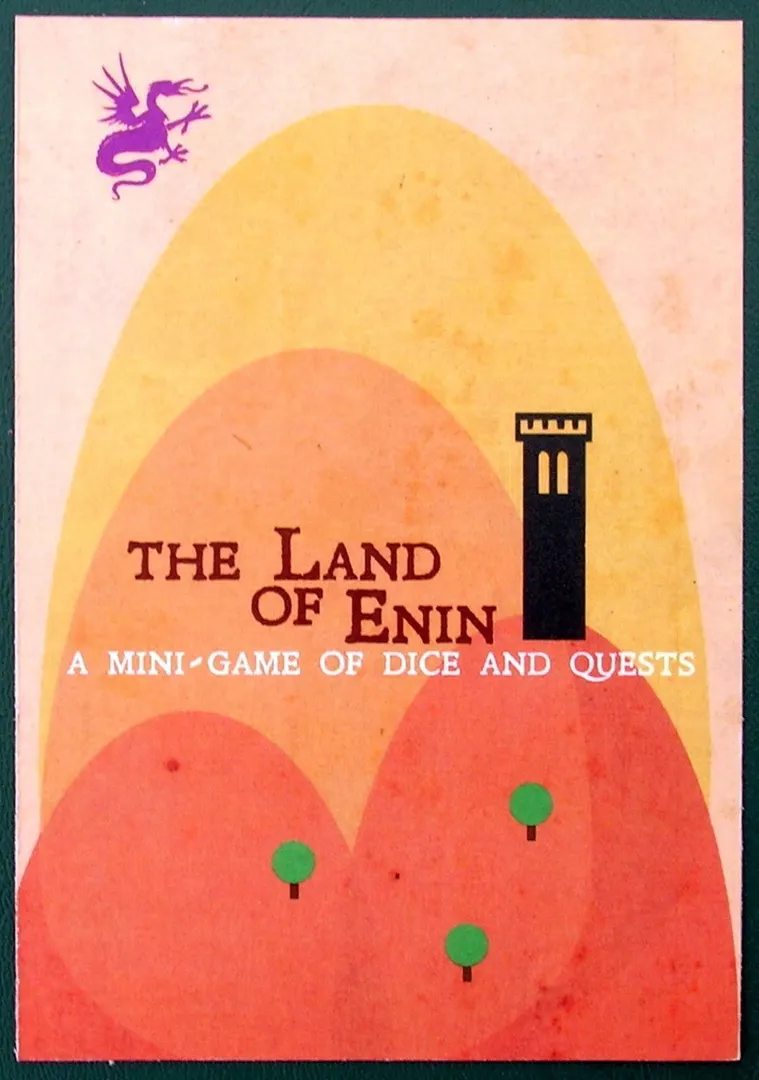
The Land of Enin is a board game released in 2012 for 1 player, 20 minutes per game, and ages 8 and up. It was designed by Todd Sanders and its main mechanics are Push Your Luck, Roll / Spin and Move, and Dice Rolling.
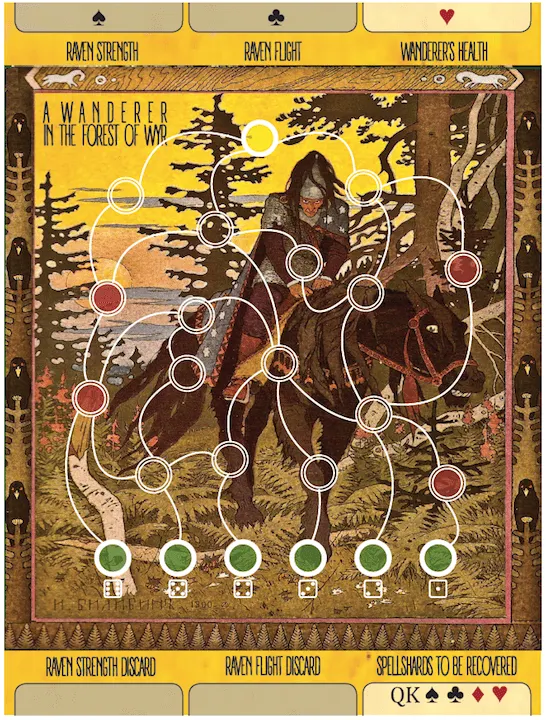
You've grown up with the outrageous tales of your forefathers - your Uncle Jack, the golden goose thief, your Mother’s 2nd cousin Jack the Giant Teaser and Lima Bean Eater and Grandpa Jack who had that thing about jumping over candlesticks. And now it’s your turn to set out and find fortune in the Land of Enin. One fateful day an enchanted sheep (or pig, you are not quite clear on the details, all those enchanted talking animals look alike after awhile) saunters up and tells you about a Lost Book of Magic that will gain you a kingdom of your own, if only you can find it. To win this solitaire game you must: first, steal a key from the town elders, and sweet talk a watchword from an old witch woman, then rescue a maiden from a goblin tower, then return her to her royal father who will give you a magic lodestone to find your way through the Tombs of Neuve and search for the Lost Book and win you your kingdom! all while battling monsters a'plenty, finding treasure and magic items and generally questing about! Needed to Play: the 9 Land of Enin cards (or the player sheet if you are playing the mini-mini version) 1D6 and 1D10 (2D10 is even better) 10 black wooden cubes 2 yellow wooden cubes 1 red, blue and green wooden cube and 1 Meeple o’Adventure Play: Each turn consists of 2 phases: Travel and Questing. Travel Phase During the Travel Phase, roll 1D10 to determine where you move to. Each Location Card, in the lower right, lists which of the other Locations you can move to depending on what number you roll. A roll of 0 allows you to choose any location. Questing Phase During the Questing Phase, roll 1D10 and, on the chart on the Location Card, find the action which matches the rolled number. Encounters result in a further 1D10 roll on a matching Encounter Card. Combat: If you encounter a monster, during the Questing Phase, you must fight it in combat. Different monsters are encountered based on your current experience level. The land of Enin is a fast and fun dice game for one player.
The Land of Enin supports 1 player according to the catalogue. This is the publisher’s listed player count, so the game is designed for exactly that number of participants. Variants for other group sizes, if any, are described in the rulebook of your edition, so check it before setting up a different configuration.
The listed playing time for The Land of Enin is 20 minutes. This is the publisher’s estimate for a full game. The actual duration depends on the group, the player count and familiarity with the rules: first sessions usually run longer, while experienced groups often finish faster. Setup and teaching time are not included in this estimate.
The catalogue lists The Land of Enin for ages 8 and up. This is the publisher’s recommendation and reflects reading demands, rule complexity and small components rather than theme alone. Younger players can often join with help from an adult, so check the age guidance on your edition and consider your group’s experience with board games.
The Land of Enin has a complexity rating of 1.4 out of 5 from BoardGameGeek players, which makes it a light game. The rating reflects how much rules knowledge, planning and decision-making a typical game demands. Expect a longer first teach for heavier games, and use a preparation guide before game night.
The Land of Enin belongs to these categories: Fantasy, Fighting, and Print & Play. Its main mechanics are Push Your Luck, Roll / Spin and Move, and Dice Rolling. Categories describe the theme and setting of a game, while mechanics describe what players actually do on their turns. Each mechanic links to a catalogue hub with similar games, which helps when you want something comparable.
The credited designers of The Land of Enin are: Todd Sanders. These credits come from the published game data and name the people responsible for the game’s design, not its illustrators or publishers. Designer pages on MeepleRules collect other titles by the same designers, which helps when you enjoy a game and want to find similar ones.
The catalogue lists The Land of Enin as a base game. It can be played on its own with the components in the box and does not require any other title. Expansions, if any exist, add new content or rules on top of it and are listed separately in the catalogue with a link back to this base game.