
- BGG rank
- BGG #13,751
- BGG rating
- 7.6
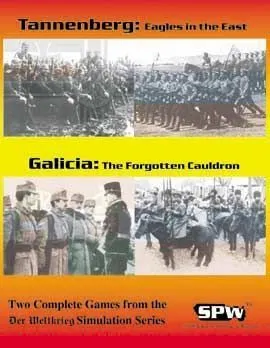
Tannenberg: Eagles in the East / Galicia: The Forgotten Cauldron
- 2 players
- 360 min
- Complexity 2.7/5
- 1999
1997
Rules assistance for The Schlieffen Plan
Plain-language explanations of turns, card effects and disputed situations, with official source references and saved question history.
For 2 players
What would you like to know?
Answers come from the official rulebook, with the page to check.
The Schlieffen Plan is a board game released in 1997 for 2 players, 360 minutes per game, and ages 12 and up. It was designed by David Schroeder and its main mechanics are Dice Rolling, Grid Movement, and Hexagon Grid.
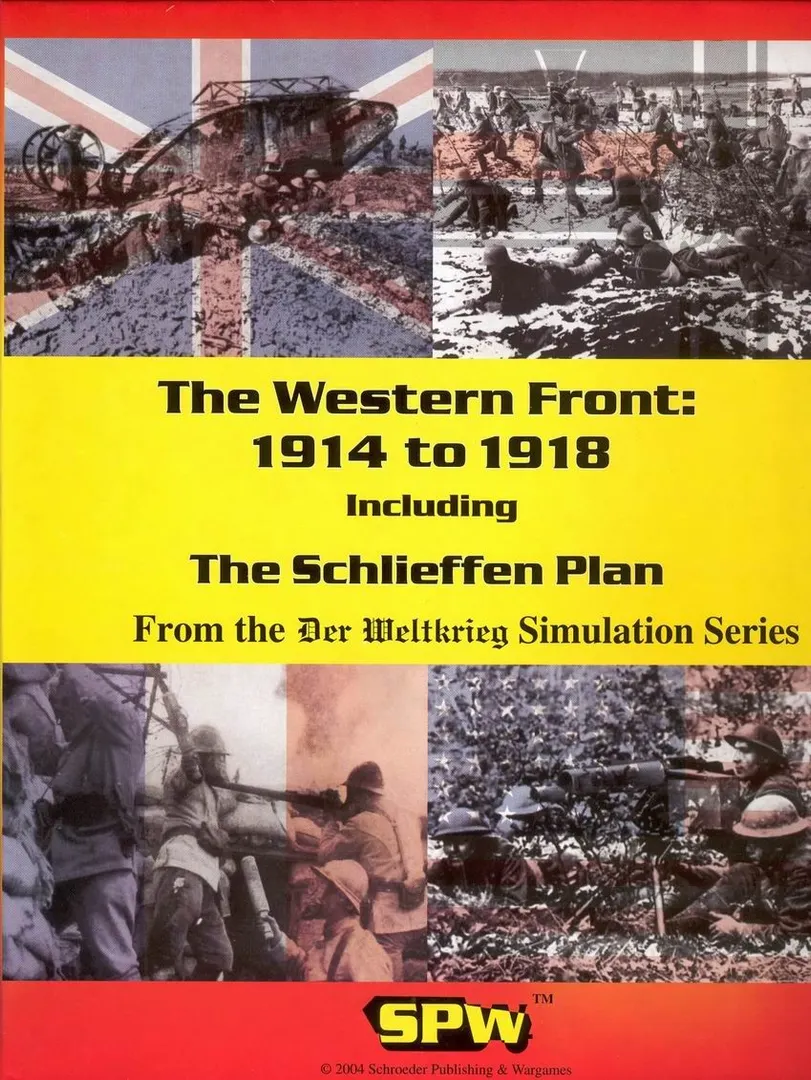
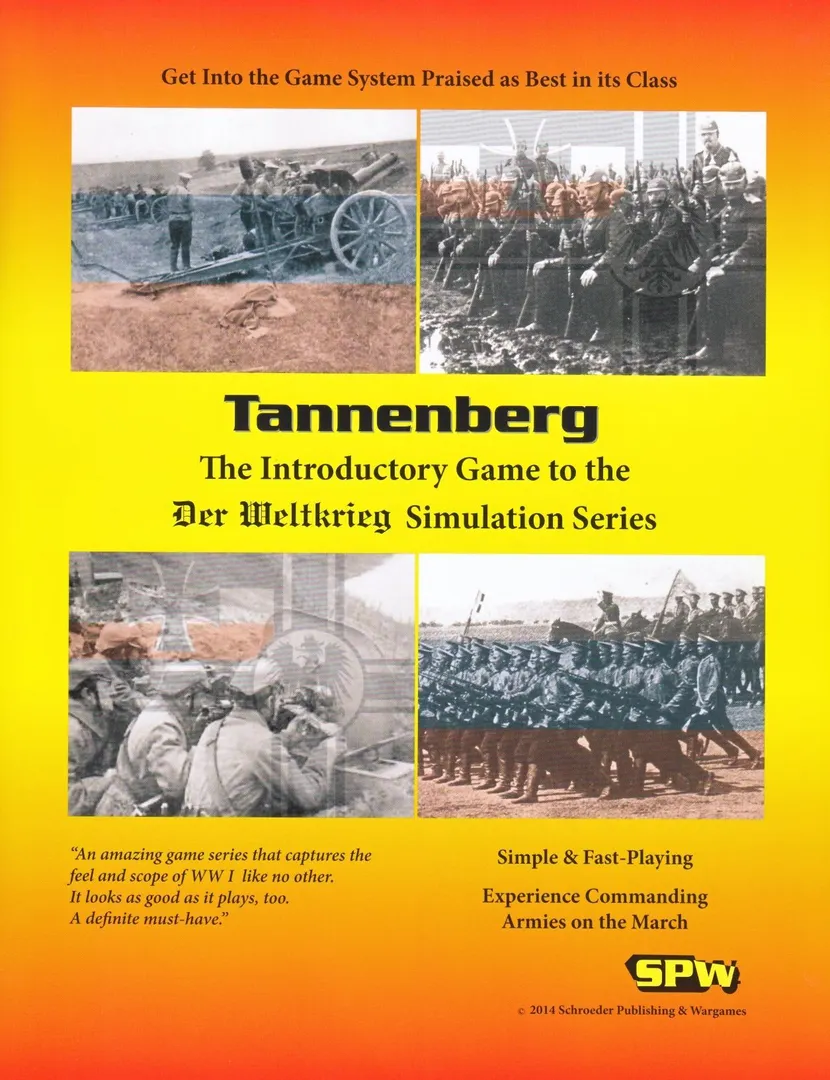


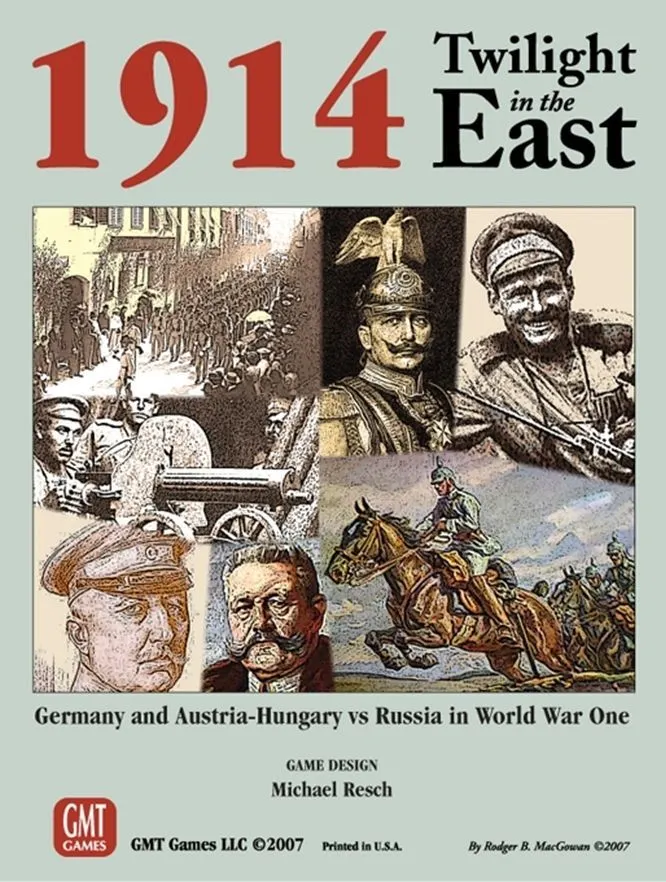


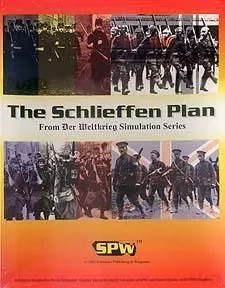
Part of David Schroeder's "Der Weltkrieg" wargame series. 'The Schlieffen Plan' covers the campaigns in France and Belgium in 1914. 24"x17" map [From the back of the box] August 1914: Diplomacy fails in the aftermath of the assassination of the Austrian Archduke in Sarajevo. The great powers of Europe begin to mobilize their armies, initially believing that their potential opponents will back down at the show of strength. Yet no one shrinks from the face of an increasingly inevitable war. The Germans move towards war according to the Schlieffen plan. As chief of the pre-war German general staff, von Schlieffen envisions a powerful group of German armies (the Right Wing) quickly moving through Belgium and northern France to attack Paris from the rear, while weaker forces protect the German border with France. France mobilizes according to their own 'Plan 17'. This offensive-minded plan calls for the bulk of French forces to quickly re-conquer those parts of France lost to Germany in 1870. To do this, France masses her armies along the German border between Belgium and Switzerland. As the Schlieffen plan is executed, tiny Belgium is invaded by 4 separate German armies. The Germans believe that the Belgians will either offer no resistance, or will quickly be swept aside by their might. But Belgium does resist, fighting on in the face of hopeless odds, even as the Germans employ secret weapons like the massive Big Bertha guns. As events quickly unfold, Great Britain lands an expeditionary force in France to help defend Belgium and assist France. It meets the German juggernaught as it pushes through Belgium. The French, meanwhile, incur huge losses when they execute 'Plan 17'. They now rush to stop the Germans from reaching Paris. The plans of both sides fail, due to not only to mistakes in execution, but due to causes that could have been foreseen and acted upon. As a result, neither side is able to achieve its objectives, and the consequences is the stalemate of trench warfare. The Schlieffen Plan covers the campaign in Belgium and France from August to November 1914. In this simulation, you assume the role of the commander of either the German or Allied armies. The forces available to you are the same that were available to the historical participants. Bit it is up to you to make your own strategic decisions, and to execute your your own plans as you see fit. This is your chance to prove that you could have done better, that you could have changed the course of history. This is the first in a series of simulations designed to interlock to allow you to simulate conflicts and campaigns from 1914 to the present and beyond across all of Europe, North Africa, and the Middle East. Each simulation is self contained. Yet, tied together, they will allow you to control all aspects of land, sea, & air warfare. Scale is 20km/hex 4 days per turn Unit Sizes: Division/Brigade 560 Backprinted Counters Medium Complexity Very High Solitaire Suitability
The Schlieffen Plan supports 2 players according to the catalogue. This is the publisher’s listed player count, so the game is designed for exactly that number of participants. Variants for other group sizes, if any, are described in the rulebook of your edition, so check it before setting up a different configuration.
The listed playing time for The Schlieffen Plan is 360 minutes. This is the publisher’s estimate for a full game. The actual duration depends on the group, the player count and familiarity with the rules: first sessions usually run longer, while experienced groups often finish faster. Setup and teaching time are not included in this estimate.
The catalogue lists The Schlieffen Plan for ages 12 and up. This is the publisher’s recommendation and reflects reading demands, rule complexity and small components rather than theme alone. Younger players can often join with help from an adult, so check the age guidance on your edition and consider your group’s experience with board games.
The Schlieffen Plan has a complexity rating of 3.3 out of 5 from BoardGameGeek players, which makes it a medium-weight game. The rating reflects how much rules knowledge, planning and decision-making a typical game demands. Expect a longer first teach for heavier games, and use a preparation guide before game night.
The Schlieffen Plan belongs to these categories: Wargame and World War I. Its main mechanics are Dice Rolling, Grid Movement, and Hexagon Grid. Categories describe the theme and setting of a game, while mechanics describe what players actually do on their turns. Each mechanic links to a catalogue hub with similar games, which helps when you want something comparable.
The credited designers of The Schlieffen Plan are: David Schroeder. These credits come from the published game data and name the people responsible for the game’s design, not its illustrators or publishers. Designer pages on MeepleRules collect other titles by the same designers, which helps when you enjoy a game and want to find similar ones.
The catalogue lists The Schlieffen Plan as a base game. It can be played on its own with the components in the box and does not require any other title. Expansions, if any exist, add new content or rules on top of it and are listed separately in the catalogue with a link back to this base game.