
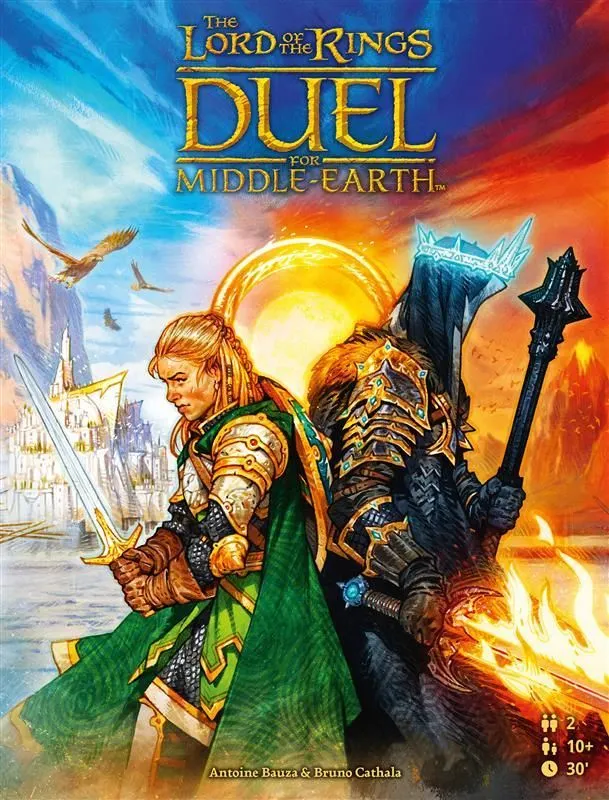
- BGG rank
- BGG #18
- BGG rating
- 8.4
The Lord of the Rings: Duel for Middle-earth
- 2 players
- 30 min
- Complexity 2.1/5
- 2024
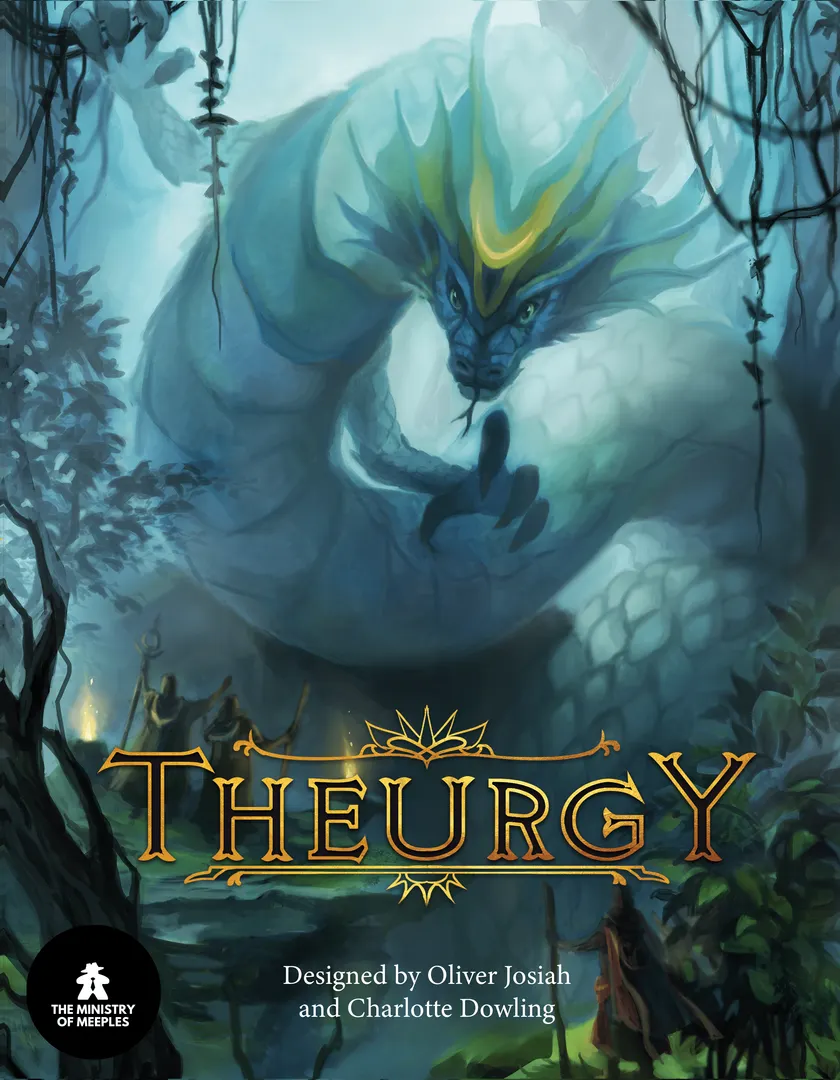
2022
Rules assistance for Theurgy
Plain-language explanations of turns, card effects and disputed situations, with official source references and saved question history.
For 1 player
What would you like to know?
Answers come from the official rulebook, with the page to check.
Theurgy is a board game released in 2022 for 1–6 players, 60–180 minutes per game, and ages 14 and up. It was designed by Rowan Dowling and Oliver Josiah and its main mechanics are Variable Player Powers, Hand Management, and Take That.





How long has it been since last you cast your gaze upon the world? Mortals always were such feeble things, and mortal memories doubly so… Doubts swarm in every place they make their homes, stones that once formed temple-walls now line their hearths, and all your earthly offspring slumber. No matter. It should be short work to cast out the doubts, rebuild the temples, and awaken some of your old allies. Only a few faithful acolytes remain, but they will suffice. After all, you are not some feeble mortal, and who could defy the will of a God? In Theurgy, you and up to five others take on the role of half-forgotten gods and compete to have temples built in your honour. A player wins if, at their end of their turn, they have met one of three winning conditions: Become the Official Faith: Build X temples, including one in the Capital. Fulfil Your Calling: Build X+1 temples and meet your secret objective. Spread Across the Land: Build X+2 temples anywhere on the board. The exact number of temples you need to build for the winning conditions varies with the player count. In many ways, Theurgy is a classic area control strategy game in which you must carve out your territory and undermine the territory belonging to your rivals. However, to achieve this, players must also manage and draft cards wisely. By performing incredible miracles, unleashing epic combinations of monsters, and cleverly utilising their deity’s unique power, players can find ingenious ways to give themselves a surprising edge. A turn consists of choosing one of the following four actions: Pilgrimage: move acolytes and followers from settlement to settlement. Along the way, your acolytes can preach to convert the resident population or fight off monsters to protect your following from the ill will of your rivals. Spread the Word: place (or replace) a faith token to mark your growing cultural influence in the surrounding settlements. It will be far easier to construct temples if your religion is already deeply rooted in the region's culture. Divine Intervention: perform a miracle by playing a card from your hand or choose a monster to summon from the cards available in the central area. A player may also activate the abilities of monsters they have already summoned, so that the larger a player’s horde, the more powerful their interventions become. Test the Faith: trigger an anomalous event in a settlement of your choice to see which god the locals turn to when their faith is tested. The distribution of followers in a settlement, each deity’s cultural influence, and the level of scepticism present there all play a role in determining which religion's temple will be constructed – and which torn down… The most successful deities are those best able to time their interventions and use their turns to sneak their influence under the radar and establish followings in the most unlikely of places. —description from the publisher
Theurgy supports 1–6 players according to the catalogue. This range comes from the publisher’s listed player count, so the game can be set up for any group size within it. Some setups, rules and scoring details may still vary by player count, so check your edition’s rulebook for the exact configuration.
The listed playing time for Theurgy is 60–180 minutes. This is the publisher’s estimate for a full game. The actual duration depends on the group, the player count and familiarity with the rules: first sessions usually run longer, while experienced groups often finish faster. Setup and teaching time are not included in this estimate.
The catalogue lists Theurgy for ages 14 and up. This is the publisher’s recommendation and reflects reading demands, rule complexity and small components rather than theme alone. Younger players can often join with help from an adult, so check the age guidance on your edition and consider your group’s experience with board games.
Theurgy has a complexity rating of 3.1 out of 5 from BoardGameGeek players, which makes it a medium-weight game. The rating reflects how much rules knowledge, planning and decision-making a typical game demands. Expect a longer first teach for heavier games, and use a preparation guide before game night.
Theurgy belongs to these categories: Fantasy and Territory Building. Its main mechanics are Variable Player Powers, Hand Management, and Take That. Categories describe the theme and setting of a game, while mechanics describe what players actually do on their turns. Each mechanic links to a catalogue hub with similar games, which helps when you want something comparable.
The credited designers of Theurgy are: Rowan Dowling and Oliver Josiah. These credits come from the published game data and name the people responsible for the game’s design, not its illustrators or publishers. Designer pages on MeepleRules collect other titles by the same designers, which helps when you enjoy a game and want to find similar ones.
The catalogue lists Theurgy as a base game. It can be played on its own with the components in the box and does not require any other title. Expansions, if any exist, add new content or rules on top of it and are listed separately in the catalogue with a link back to this base game.