
- BGG rank
- BGG #24,115
- BGG rating
- 5.8
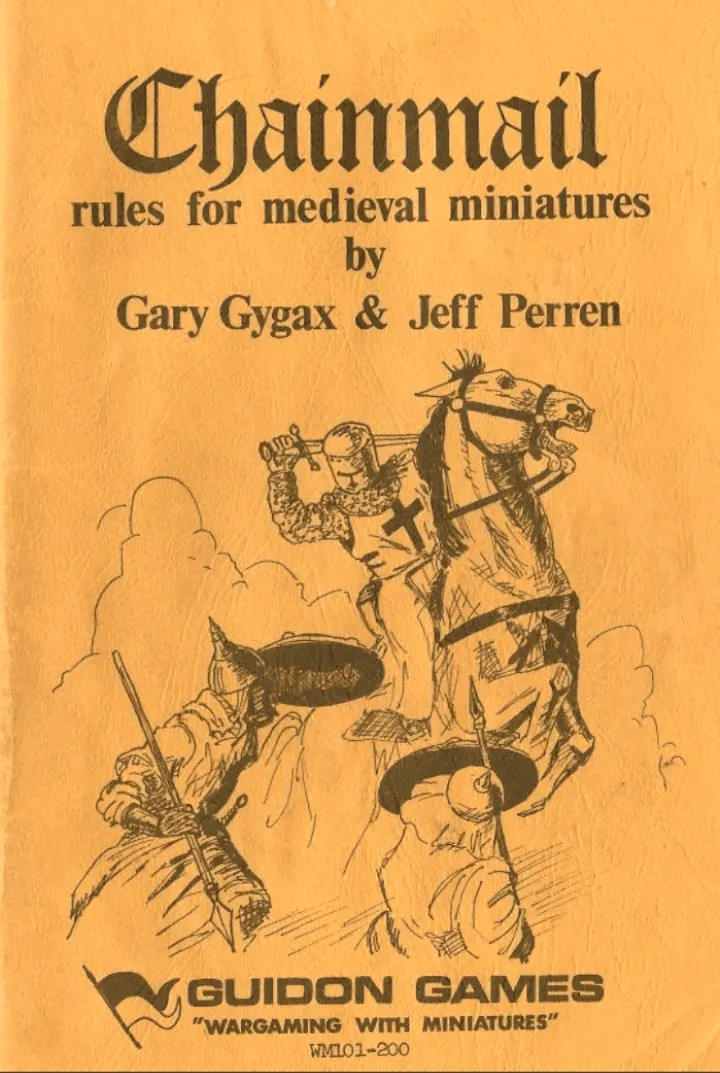
Chainmail: Rules for Medieval Miniatures
- 2–10 players
- 360 min
- Complexity 2.3/5
- 1971
1971
Rules assistance for Tractics
Plain-language explanations of turns, card effects and disputed situations, with official source references and saved question history.
For 2 players
What would you like to know?
Answers come from the official rulebook, with the page to check.
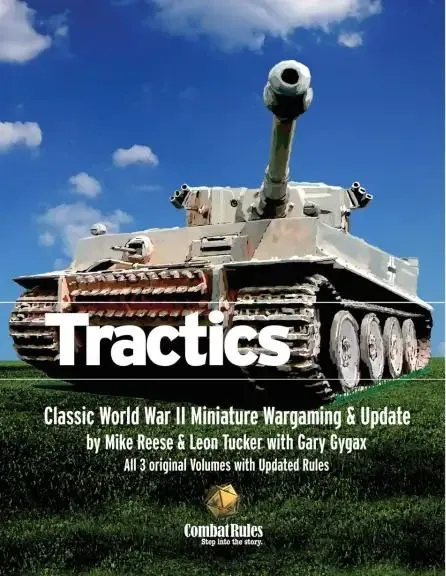
Tractics is a board game released in 1971 for 2 players, 90 minutes per game, and ages 12 and up. It was designed by Gary Gygax, Mike Reese, and Leon Tucker and its main mechanics are Dice Rolling, Simulation, and Line of Sight.
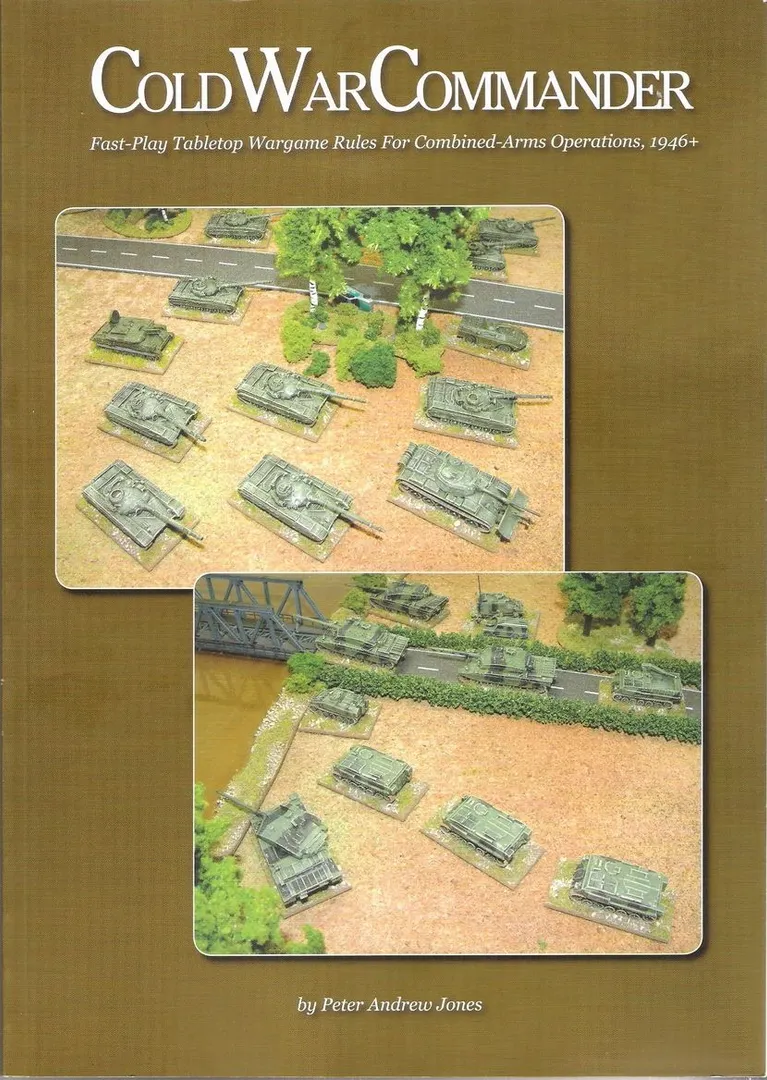
Tracticts was created in 1971 by Mike Reese and Leon Tucker with contributions by Gary Gygax. Its theme was World War 2 Combat and it was published by Guidon Games in 1971 and republished by TSR, Inc. in 1975. Its combat style involved 1:285 scale micro armour miniatures. When it was first created it used the 1/87 scale miniatures that were common but this later changed. The game came as a boxed set containing three booklets illustrated by Don Lowry. Tractics was innovative when it was published due to the fact that it was the first game that was published using a 20-sided die. In 1968 Reese and Tucker, two members of the LGTSA, began play-testing rules for tank combat that would eventually form the core of Tractics. Gygax contributed some rules on infantry, covered in the second booklet, and the third booklet would cover additional topics such as airstrikes and the MODERN period (which at the time included rumors of the XM-1 tank). The players must first acquire the miniatures and build the terrain. Reese and Tucker were interested in an accurate simulation, and as a result the game provides data describing the rate of movement, thickness of armor, and rate of fire for the makes of tank in service from 1940 to 1970. The tanks in Tractics have a 30% chance to hit a target which in essence means rolling at least a 15 on the 20 sided die. The modifiers of battle apply depending upon several factors such as concealment. The game is consequently slower to conduct than a board wargame such as Tactics II. For miniature wargamers who felt that the amount of detail was excessive, Reese and Tucker recommended their earlier Fast Rules (1970) although that set covered WWII only. Tractics requires the use of a judge. Since players are unaware of their enemies locations, the pieces are placed on the map only when they are detected or they march to an open view.
Tractics supports 2 players according to the catalogue. This is the publisher’s listed player count, so the game is designed for exactly that number of participants. Variants for other group sizes, if any, are described in the rulebook of your edition, so check it before setting up a different configuration.
The listed playing time for Tractics is 90 minutes. This is the publisher’s estimate for a full game. The actual duration depends on the group, the player count and familiarity with the rules: first sessions usually run longer, while experienced groups often finish faster. Setup and teaching time are not included in this estimate.
The catalogue lists Tractics for ages 12 and up. This is the publisher’s recommendation and reflects reading demands, rule complexity and small components rather than theme alone. Younger players can often join with help from an adult, so check the age guidance on your edition and consider your group’s experience with board games.
Tractics has a complexity rating of 3.8 out of 5 from BoardGameGeek players, which makes it a heavy game. The rating reflects how much rules knowledge, planning and decision-making a typical game demands. Expect a longer first teach for heavier games, and use a preparation guide before game night.
Tractics belongs to these categories: Wargame, Miniatures, and World War II. Its main mechanics are Dice Rolling, Simulation, and Line of Sight. Categories describe the theme and setting of a game, while mechanics describe what players actually do on their turns. Each mechanic links to a catalogue hub with similar games, which helps when you want something comparable.
The credited designers of Tractics are: Gary Gygax, Mike Reese, and Leon Tucker. These credits come from the published game data and name the people responsible for the game’s design, not its illustrators or publishers. Designer pages on MeepleRules collect other titles by the same designers, which helps when you enjoy a game and want to find similar ones.
The catalogue lists Tractics as a base game. It can be played on its own with the components in the box and does not require any other title. Expansions, if any exist, add new content or rules on top of it and are listed separately in the catalogue with a link back to this base game.