
- BGG rating
- 6.4
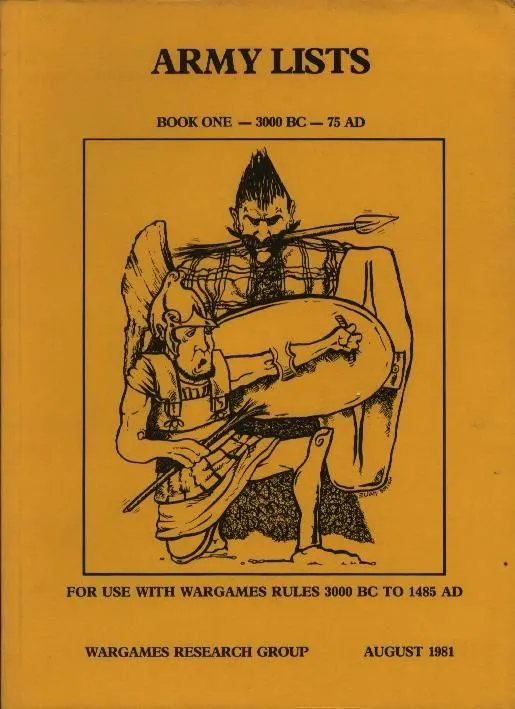
Army Lists Book One: 3000 BC – 75 AD
- 2 players
- 120 min
- Complexity 2.0/5
- 1981
1980
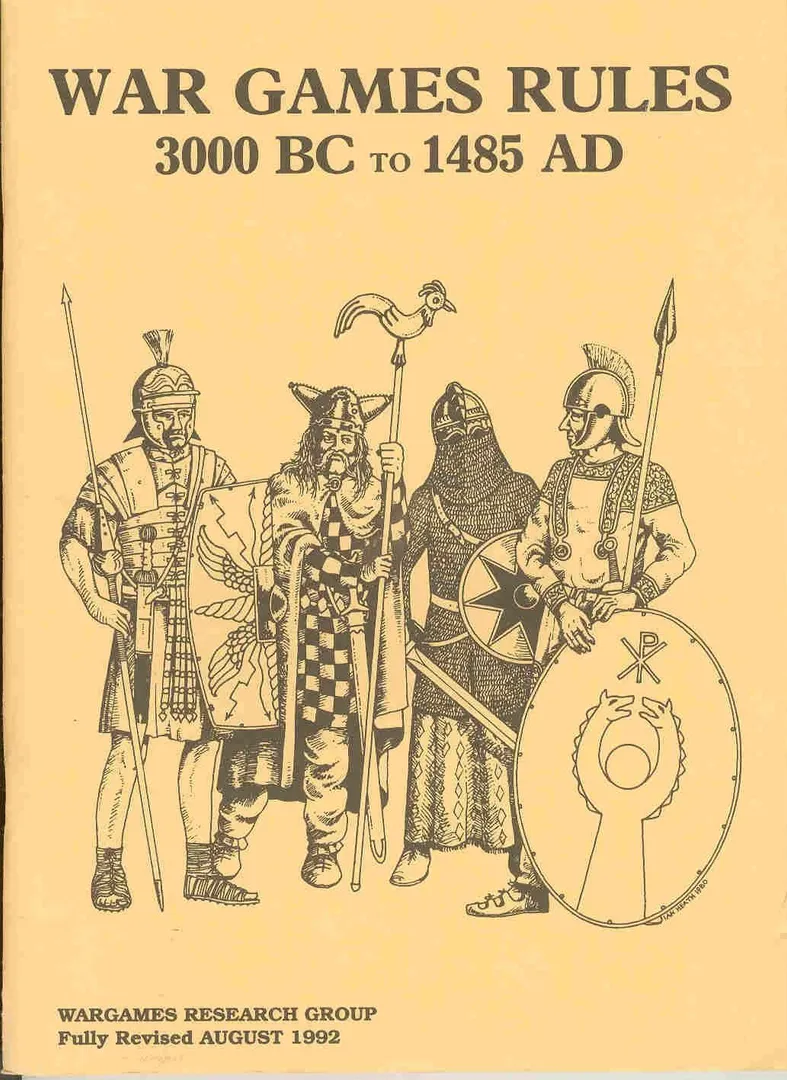
Rules assistance for War Games Rules 3000 BC to 1485 AD
Plain-language explanations of turns, card effects and disputed situations, with official source references and saved question history.
For 2 players
What would you like to know?
Answers come from the official rulebook, with the page to check.
War Games Rules 3000 BC to 1485 AD is a board game released in 1980 for 2 players, 120–180 minutes per game, and ages 12 and up. It was designed by Philip C. Barker and its main mechanics are Dice Rolling, Paper-and-Pencil, and Simulation.

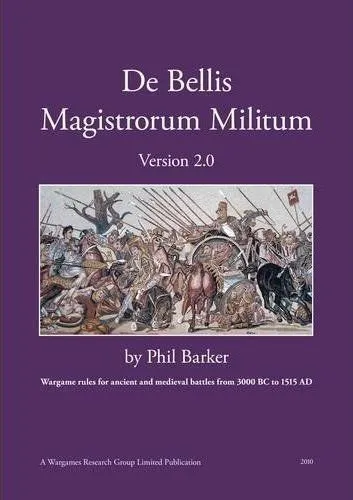
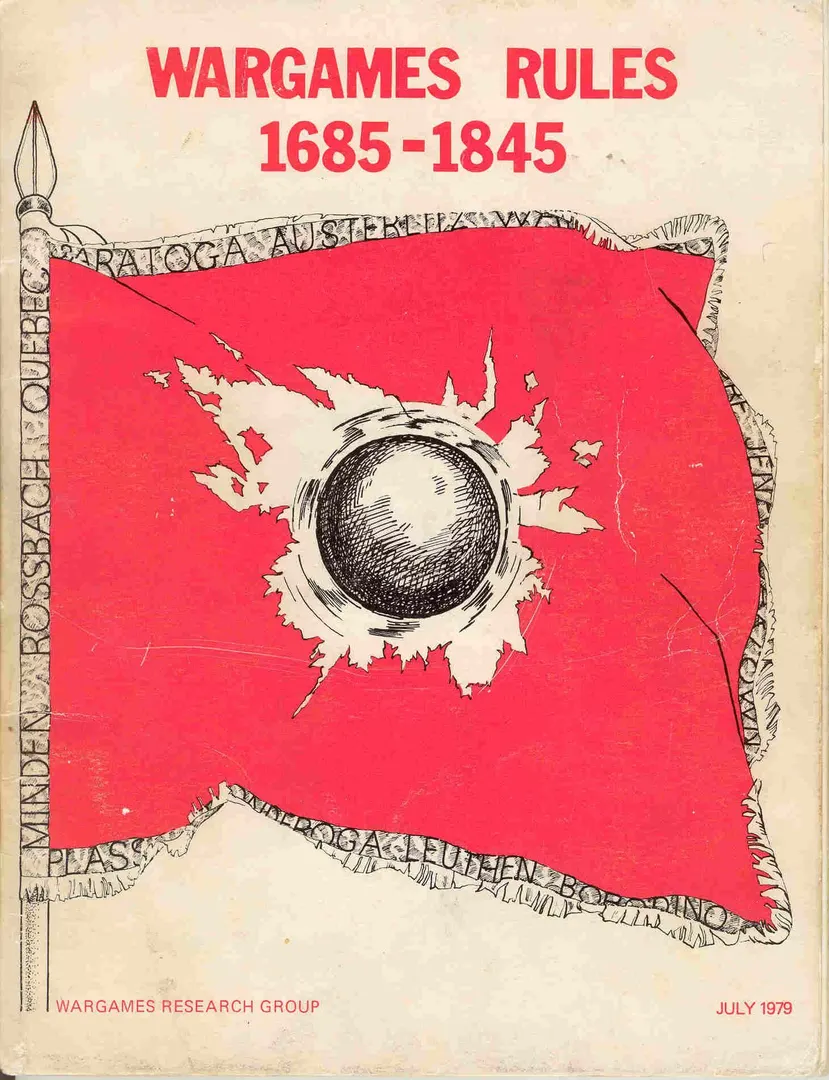
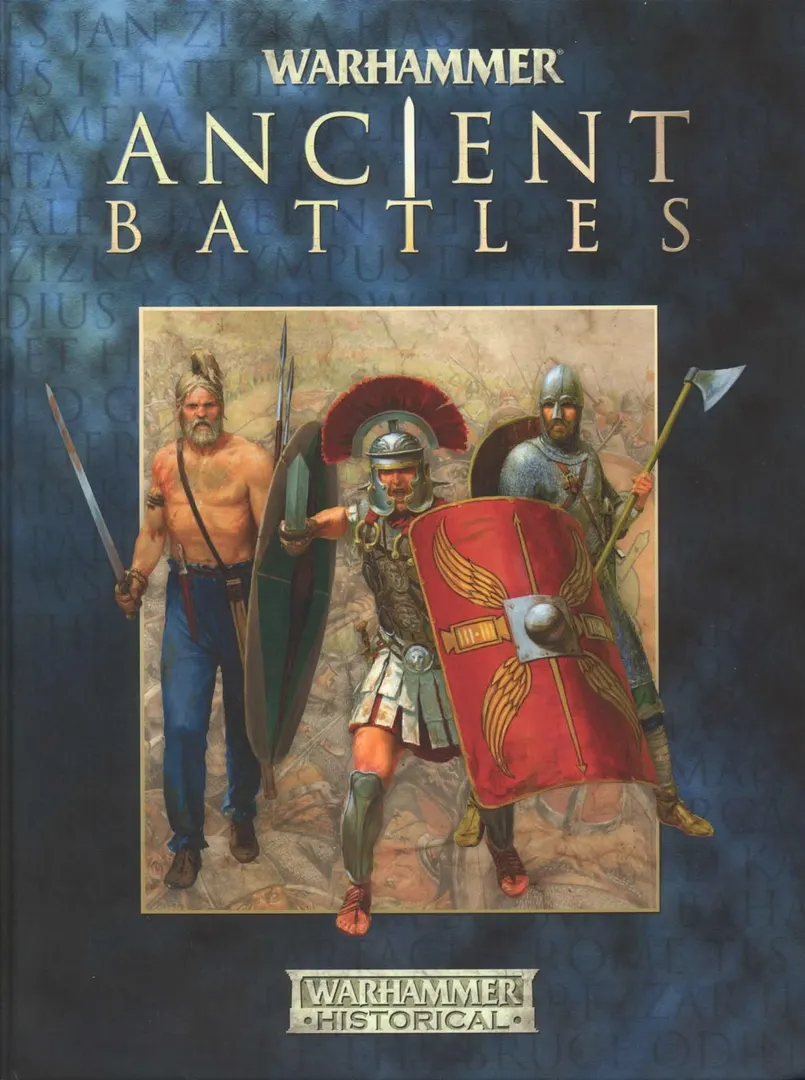
From the Intro to the 7th edition rules The first edition of our original ancient rules appeared in 1969, and their adopted for the British National Wargames Championships of that year. Despite competition from many would be rival sets, succeeding editions have been used in every important convention worldwide since then, and are used by an overwhelming majority of ancient wargamers. Their mechanisms have become a wargames standard used for every conceivable historical period, including some for which WE consider then unsuitable! The seventh edition went to the printers in late 1985, and in the seven years since has almost completely taken over from previous editions. Feedback from play by several thousand customers has made it possible to provide free update sheets available in return for a stamped addressed envelope or international reply coupon. A few of the amendments blocked minor loopholes, most clarify meanings and some incorporate goal ideas for improvements suggested and justified by players. All such changes to date are incorporated into the text of this printing of the rule book as Version 7.5. Seventh was a revolutionary, rather than evolutionary, change from previous editions. It places much more emphasis on realism, the problems of command, terrain and natural conditions, and seeks to distract players from excessive pre—occupation with weapon and amour differences important only if “all things are equal”. It is the function of the general to ensure that things are NEVER equal! We also take the view that a putative difference in weapon characteristics that cannot be shown to have influenced tactics in, or the result of, at least one historical battle is likely to be spurious. The tendency sung rule writers to show off their knowledge rather than produce the simplest realistic simulation is natural but unhelpful. The unanimous conclusion of the users is that seventh is far more realistic than other sets and greatly widens the gap between good and poor tacticians. They applaud the end of the "fire work display” with units whizzing off in all directions without getting in each other’s way the increased mobility out of and the reduced maneuverability in proximity to the enemy the need to take conditions, terrain and the chance of a surprise into account when planning, the way the fatigue rules force a proper use of reserves, the way rebased troops no longer fall over in the box, and not least, the discomfiture of rule lawyers. Since its introduction, seventh has been used in the great majority of tournaments around the world, and even passed the fearsome test of the Milton Keynes 36 hour sleepless marathon event. Tournaments normally use the full rules with terrain choice, weather, unusual deployments and unreliable generals without these causing any difficulty or complaint of unfairness. A public demonstration game at Northern Militaire with one player per side each using 3,600 points of 25mm figures on a 6 foot x 4 foot table with plenty of terrain finished with a decisive win in something over two hours. This implies that increased realism has not been achieved at the cost of “playability”. Gums now play ‘inch quicker. The major difficulty faced by players transferring from the previous editions is one of imagination. It DOES help to plan as if you wore commanding a real army rather than trying to analyze the rules to deduce goal tactics. Cannon mistakes are to leave cavalry at the rear of a marching column instead of scouting in front, keeping the general safe instead of in a position to see, letting an unreliable general continue disobedience instead of correcting him, ignoring terrain difficulties when deploying, with consequent traffic jams when moving out, accepting waver tests instead of avoiding then like the plague, deploying front and rear lines too close so that they became entangled, and leaving front line units to become exhausted or be overwhelmed instead of reinforcing or withdrawing then in goal tine. Victory with seventh edition goes to the player who has best learned the skills of real historical generals, not he with most grasp of the minutiae of the rules. Finally, although 7th is simpler than its predecessor and much simpler than its rivals, it is necessarily complex and needs large numbers of figures, a full sized table, and two or mare hours to play. For those occasions for which it will not suit, we recommend our other rule set for the period, the very successful “De Bellis Antiquitatis”. DBA allows much quicker games with far fewer figures on a 24” square terrain, incorporates a campaign systen and army lists, and is especially suitable for beginners, the young, jaded elders, large multi-player gases and odd moments
War Games Rules 3000 BC to 1485 AD supports 2 players according to the catalogue. This is the publisher’s listed player count, so the game is designed for exactly that number of participants. Variants for other group sizes, if any, are described in the rulebook of your edition, so check it before setting up a different configuration.
The listed playing time for War Games Rules 3000 BC to 1485 AD is 120–180 minutes. This is the publisher’s estimate for a full game. The actual duration depends on the group, the player count and familiarity with the rules: first sessions usually run longer, while experienced groups often finish faster. Setup and teaching time are not included in this estimate.
The catalogue lists War Games Rules 3000 BC to 1485 AD for ages 12 and up. This is the publisher’s recommendation and reflects reading demands, rule complexity and small components rather than theme alone. Younger players can often join with help from an adult, so check the age guidance on your edition and consider your group’s experience with board games.
War Games Rules 3000 BC to 1485 AD has a complexity rating of 3.6 out of 5 from BoardGameGeek players, which makes it a medium-weight game. The rating reflects how much rules knowledge, planning and decision-making a typical game demands. Expect a longer first teach for heavier games, and use a preparation guide before game night.
War Games Rules 3000 BC to 1485 AD belongs to these categories: Wargame, Miniatures, and Medieval. Its main mechanics are Dice Rolling, Paper-and-Pencil, and Simulation. Categories describe the theme and setting of a game, while mechanics describe what players actually do on their turns. Each mechanic links to a catalogue hub with similar games, which helps when you want something comparable.
The credited designers of War Games Rules 3000 BC to 1485 AD are: Philip C. Barker. These credits come from the published game data and name the people responsible for the game’s design, not its illustrators or publishers. Designer pages on MeepleRules collect other titles by the same designers, which helps when you enjoy a game and want to find similar ones.
The catalogue lists War Games Rules 3000 BC to 1485 AD as a base game. It can be played on its own with the components in the box and does not require any other title. Expansions, if any exist, add new content or rules on top of it and are listed separately in the catalogue with a link back to this base game.