

- Puesto en BGG
- BGG #7576
- Puntuación BGG
- 7,4
The Next War: Modern Conflict in Europe
- 2 jugadores
- 360 min
- Complejidad 4,2/5
- 1978
1977
Ayuda con las reglas de Fulda Gap: The First Battle of the Next War
Explicaciones claras de turnos, efectos de cartas y situaciones dudosas, con referencias a fuentes oficiales e historial de preguntas guardado.
Para 2 jugadores
¿Qué quieres saber?
Las respuestas salen del reglamento oficial, con la página para comprobarlo.
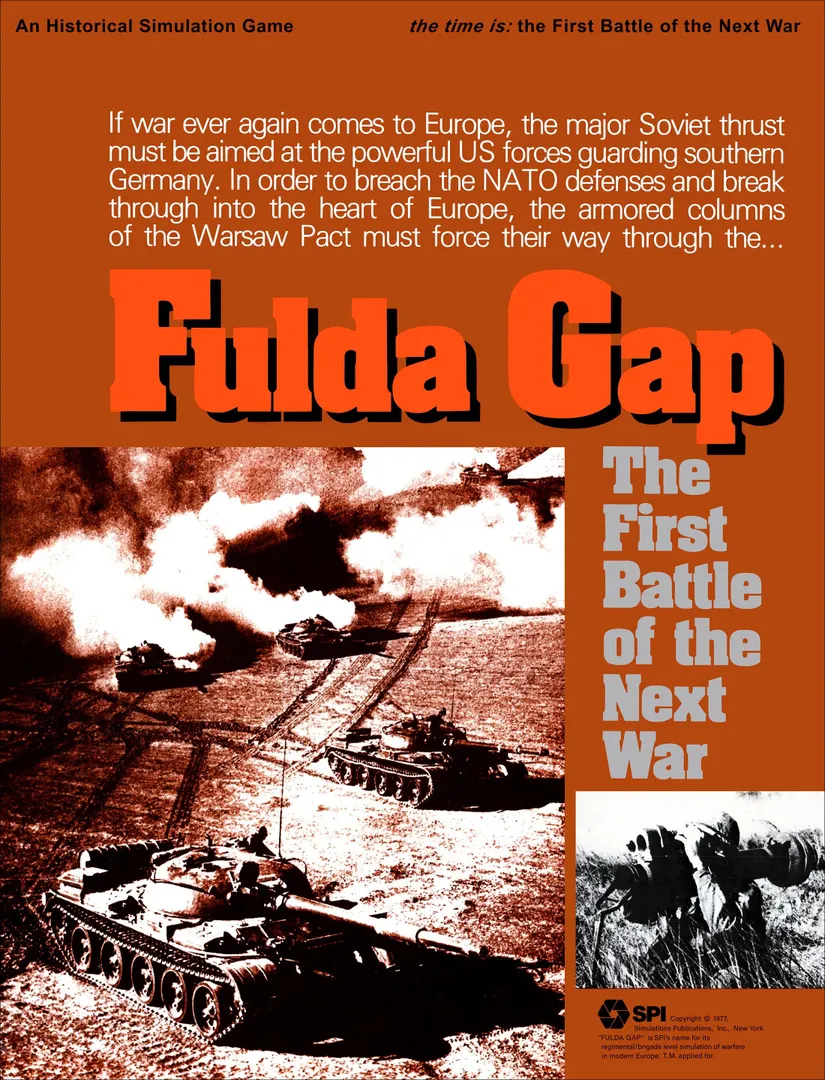
Fulda Gap: The First Battle of the Next War es un juego de mesa publicado en 1977 para 2 jugadores, con partidas de 300 minutos y a partir de 12 años. Fue diseñado por Jim Dunnigan y sus mecánicas principales son Dice Rolling, Hexagon Grid y Simulation.


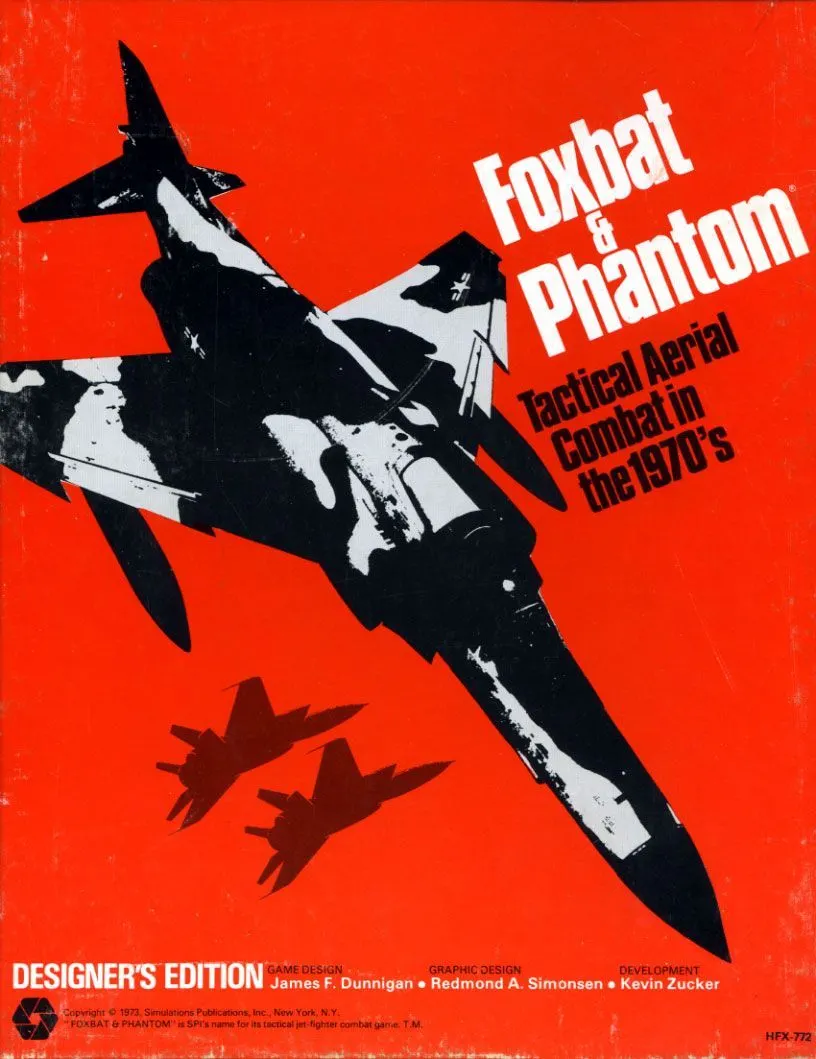
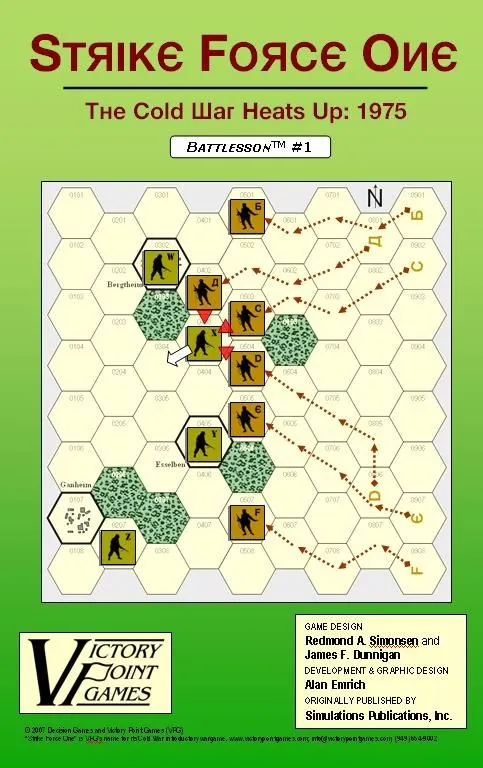



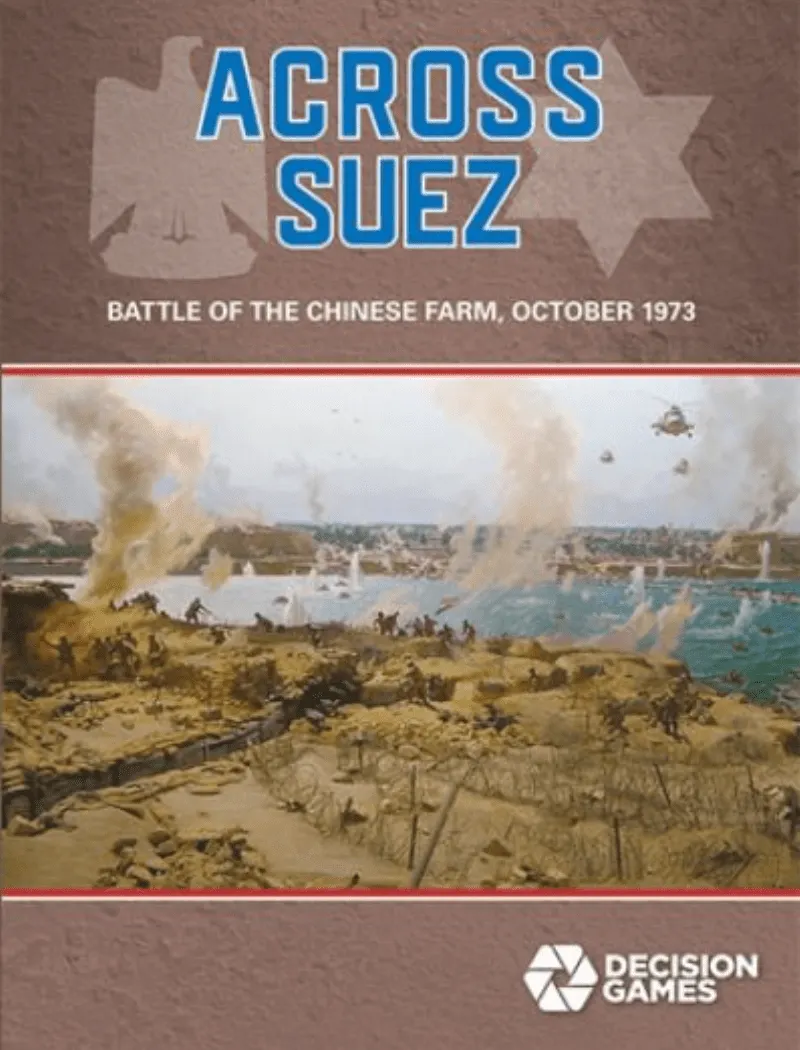
En inglés
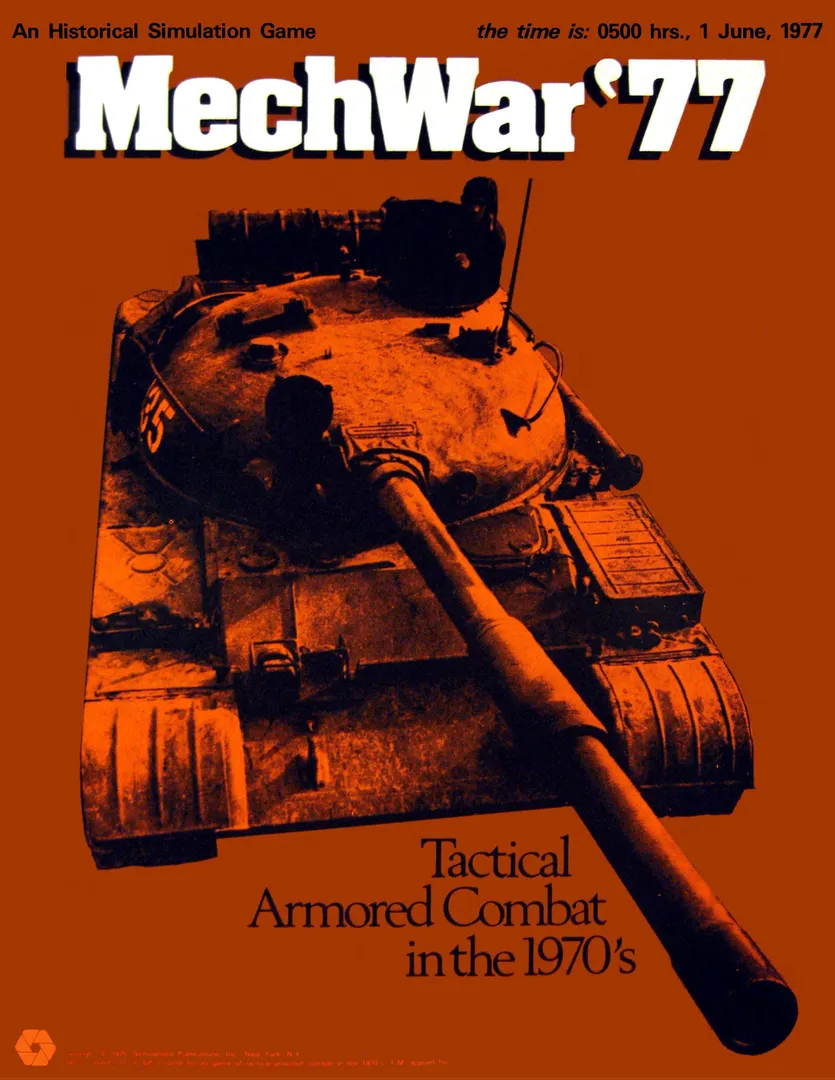
"Fulda Gap: The First Battle of the Next War", is a regimental/brigade level wargame simulation of a possible Warsaw Pact assault into West Germany through the area of relatively open terrain centered around the town of Fulda sometime in the near future. Success would allow the Pact armies to drive a wedge between the NATO forces deployed to the north and south, seize several important logistic centers, and perhaps establish a bridgehead across the Rhine River. Of all the scenarios for a coming world war, none has received more attention than the possibility of a future NATO-Warsaw Pact confrontation. For 25 years, the armies of East and West have faced one another across a divided Germany, each knowing that it is in this region that the course of any war will be decided. There are two types of games: the Standard Game and the Advanced Game. Preferably, the Players should become familiar with the Standard Garne first and then increase the level of complexity until they find a rules mix with which they are most comfortable. The key to the game lies in the combination of a unique combat system and a new untried unit procedure. Basically, each ground combat unit consists of three "steps" and an untried status. As a unit enters combat, its actual strength— which may be greater or less than its normal face-value — must be determined. Combat results are expressed in terms of "retreat points" which must be expended either by retreating and/or by taking step losses. Since the owning player controls the path and method of retreat, there is a wide range of possible outcomes from each combat situation. Fulda Gap Shows the likely impact of a great number of factors on modern warfare. Supply and movement systems stress the importance of roads and autobahns; rules are provided to reflect the importance of divisional integrity, artillery, helicopters, airmobile units, replacements, Soviet doctrine, field fortifications, and disengagement. And players wishing to increase the complexity of the game may use an innovative air system. Extensive rules also cover chemical and nuclear warfare. Game Scale: Game Turn: 1 day Hex: 3.88 miles / 6.25 kilometers Units: Regiment & Brigade Game Inventory: One 22 x 34" full color map One dual-side printed countersheet (400 1/2" counters) One 16-page Fulda Gap rulebook One dual-side printed Turn Record/Reinforcement Track Two dual-side printed Charts & Tables folder (4 pages, Combat, Terrain tables, etc) Solitaire Playability: High Complexity Level: Medium Players: 2 or more Playing Time: 4-15 hours
Según el catálogo, Fulda Gap: The First Battle of the Next War admite 2 jugadores. Es el número de jugadores indicado por la editorial, así que el juego está diseñado exactamente para esa cantidad de participantes. Las variantes para otros tamaños de grupo, si existen, se describen en el reglamento de tu edición; consúltalo antes de preparar otra configuración.
La duración indicada para Fulda Gap: The First Battle of the Next War es de 300 minutos, la estimación de la editorial para una partida completa. El tiempo real depende del grupo, del número de jugadores y del conocimiento de las reglas: las primeras partidas suelen alargarse y los grupos con experiencia terminan antes. La preparación y la explicación de las reglas no están incluidas.
El catálogo indica Fulda Gap: The First Battle of the Next War a partir de 12 años. Es la recomendación de la editorial y refleja la lectura necesaria, la complejidad de las reglas y las piezas pequeñas, no solo el tema. Los más pequeños a menudo pueden jugar con ayuda de un adulto: comprueba la edad recomendada en tu edición y la experiencia de tu grupo.
Fulda Gap: The First Battle of the Next War tiene una puntuación de complejidad de 3,2 sobre 5 según los jugadores de BoardGameGeek, lo que lo convierte en un juego de complejidad media. La puntuación refleja cuánto conocimiento de reglas, planificación y toma de decisiones exige una partida típica. Los juegos exigentes requieren una explicación inicial más larga, así que conviene usar una guía de preparación.
Fulda Gap: The First Battle of the Next War pertenece a estas categorías: Wargame y Modern Warfare. Sus mecánicas principales son Dice Rolling, Hexagon Grid y Simulation. Las categorías describen el tema y la ambientación de un juego, mientras que las mecánicas describen lo que los jugadores hacen realmente en su turno. Cada mecánica lleva a una página del catálogo con juegos similares.
Los autores acreditados de Fulda Gap: The First Battle of the Next War son: Jim Dunnigan. Estos créditos proceden de los datos publicados del juego y nombran a las personas responsables de su diseño, no a ilustradores ni editoriales. Las páginas de autor de MeepleRules reúnen otros títulos de los mismos autores, algo útil cuando un juego te gusta y buscas otros parecidos.
El catálogo clasifica Fulda Gap: The First Battle of the Next War como juego base. Se juega por sí solo con los componentes de la caja y no requiere ningún otro título. Las expansiones, si existen, añaden contenido o reglas nuevas y aparecen por separado en el catálogo con un enlace a este juego base.