

- Rang BGG
- BGG #8 797
- Note BGG
- 7,8
Antietam 1862
- 1–2 joueurs
- 60–300 min
- Complexité 2,5/5
- 2019
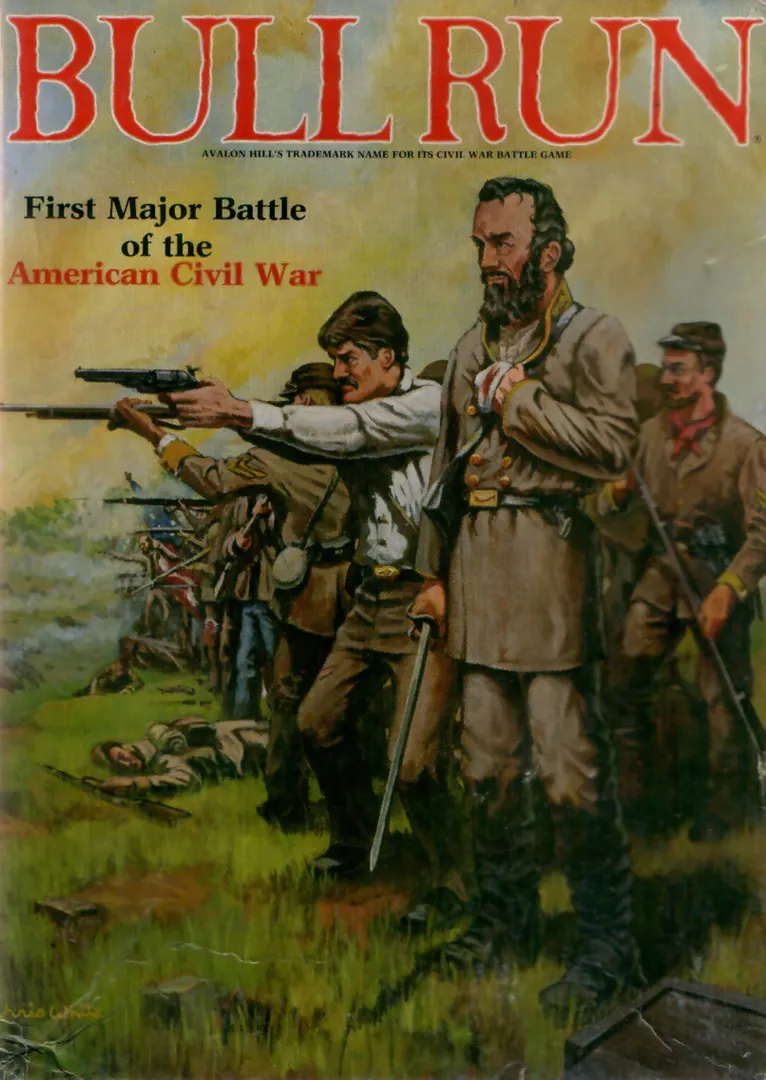
1983
Aide aux règles de Bull Run: The First Major Battle of the American Civil War
Des explications claires des tours, effets de cartes et situations litigieuses, avec des références aux sources officielles et un historique des questions sauvegardé.
Pour 2 joueurs
Que voulez-vous savoir ?
Les réponses viennent du livret officiel, avec la page à vérifier.
Bull Run: The First Major Battle of the American Civil War est un jeu de société sorti en 1983 pour 2 joueurs, avec des parties de 240 minutes et à partir de 12 ans. Il a été conçu par Richard Hamblen et ses principales mécaniques sont Dice Rolling, Variable Set-up et Grid Movement.






En anglais
"Bull Run: The First Major Battle of the American Civil War" is a tactical combat wargame of the first battle of Bull Run. The game is played on a map of the area over which the battle was fought overlaid with a hexagonal grid. Units are infantry, cavalry, and artillery, with brigade, division, and army leaders. Each turn is 30 minutes, and each hex represents 1000 ft. Units are basically regiments and batteries. Some infantry regiments with their brigade leader are capable of forming brigades, increasing offensive power at the expense of movement. Batteries can be limbered for increased movement at the expense of firepower, or unlimbered with full firepower and limited movement. Combat is a modified version of the classic system adopted by the earlier Avalon Hill games. However, rules for leader command activation, infantry screening of artillery, and infantry forming brigades to prevent soak-off attacks, ranged artillery, rally of losses are give the game a unique flavour. The major terrain obstacle is Bull Run which provides the Confederate with defensive advantages and hinders Union movement. The game begins with the Union troops approaching partially hidden, unsuspecting Confederate forces. As the Union attack develops, additional Confederate leaders and combat units are activated and are rushed to stem the Union advance. The Union player wins if he is able to capture any of three objective hexes by the end of the game or takes Manassas at any time. The Confederate player wins if he takes Centreville at any time or prevents the Union player from holding any of objective hexes at the game end. The game consists of a 32" by 22" mapboard, 260 counters, various charts, a 12 page rulebook and 1 die. Magazine References: The GENERAL Index Article List: The GENERAL Vol.20,No.5 Series Replay - Bull Run: The First Major Battle of the American Civil War, Rex A. Martin, Paul O'Neil, Richard Hamblen Bull Run: The First Major Battle of the American Civil War – “West Point's Finest, The Commanders at Bull Run” (Historical) A. Blumberg & Richard Hamblen Bull Run: The First Major Battle of the American Civil War – “Rebel Yell, Opening placement for Confederate Players” (Strategy) Rex A. Martin Bull Run: The First Major Battle of the American Civil War – “First Blood, The Battle of First Bull Run” (Historical) Michael Craighead The Question Box - Bull Run: The First Major Battle of the American Civil War Contest #117 - Bull Run: The First Major Battle of the American Civil War The GENERAL Vol.20,No.6 Series Replay - Bull Run: The First Major Battle of the American Civil War, Rex A. Martin, Paul O'Neil, Richard Hamblen The GENERAL Vol.25,No.5 Bull Run: The First Major Battle of the American Civil War – “Risky Business -A designer's look at Bull Run: The First Major Battle of the American Civil War” (Designer notes) Richard Hamblen
Selon le catalogue, Bull Run: The First Major Battle of the American Civil War se joue à 2 personnes. C’est le nombre de joueurs indiqué par l’éditeur : le jeu est donc conçu pour exactement ce nombre de participants. Les variantes pour d’autres tailles de groupe, s’il en existe, sont décrites dans la règle de votre édition ; consultez-la avant d’installer une autre configuration.
La durée indiquée pour Bull Run: The First Major Battle of the American Civil War est de 240 minutes, selon l’estimation de l’éditeur pour une partie complète. La durée réelle dépend du groupe, de l’effectif et de la connaissance des règles : les premières parties sont plus longues, les groupes expérimentés terminent plus vite. Mise en place et explication des règles ne sont pas comprises.
Le catalogue indique Bull Run: The First Major Battle of the American Civil War à partir de 12 ans. C’est la recommandation de l’éditeur ; elle tient compte de la lecture nécessaire, de la complexité des règles et des petits composants, pas seulement du thème. Les plus jeunes peuvent souvent participer avec l’aide d’un adulte : vérifiez l’âge indiqué sur votre édition et tenez compte de l’expérience de votre groupe.
Bull Run: The First Major Battle of the American Civil War obtient une note de complexité de 2,8 sur 5 auprès des joueurs de BoardGameGeek, ce qui en fait un jeu plutôt léger. Cette note reflète la quantité de règles, de planification et de décisions qu’exige une partie typique. Prévoyez une explication plus longue pour les jeux exigeants et utilisez un guide de préparation avant la soirée.
Bull Run: The First Major Battle of the American Civil War appartient à ces catégories : Wargame, Civil War et Post-Napoleonic. Ses principales mécaniques sont Dice Rolling, Variable Set-up et Grid Movement. Les catégories décrivent le thème et l’univers d’un jeu, tandis que les mécaniques décrivent ce que les joueurs font réellement pendant leur tour. Chaque mécanique mène à une page du catalogue avec des jeux similaires.
Les auteurs crédités pour Bull Run: The First Major Battle of the American Civil War sont : Richard Hamblen. Ces crédits proviennent des données publiées du jeu et désignent les personnes responsables de sa conception, et non les illustrateurs ou les éditeurs. Les pages d’auteurs sur MeepleRules regroupent les autres titres des mêmes auteurs, ce qui est utile lorsqu’un jeu vous plaît et que vous en cherchez de similaires.
Le catalogue présente Bull Run: The First Major Battle of the American Civil War comme un jeu de base. Il se joue seul avec le matériel contenu dans la boîte et ne nécessite aucun autre titre. Les extensions, s’il en existe, y ajoutent du contenu ou des règles et sont répertoriées séparément dans le catalogue, avec un lien vers ce jeu de base.