

- Pozycja w BGG
- BGG #9028
- Ocena BGG
- 7,2
Great War at Sea: Jutland
- 2 graczy
- 30–120 min
- Złożoność 3,1/5
- 2006
Pomoc w zasadach gry Second World War at Sea: Spice Islands
Zrozumiałe wyjaśnienia tur, efektów kart i spornych sytuacji z odnośnikami do oficjalnych źródeł i zapisaną historią pytań.
Co chcesz wiedzieć?
Odpowiedzi pochodzą z oficjalnej instrukcji, ze stroną do sprawdzenia.
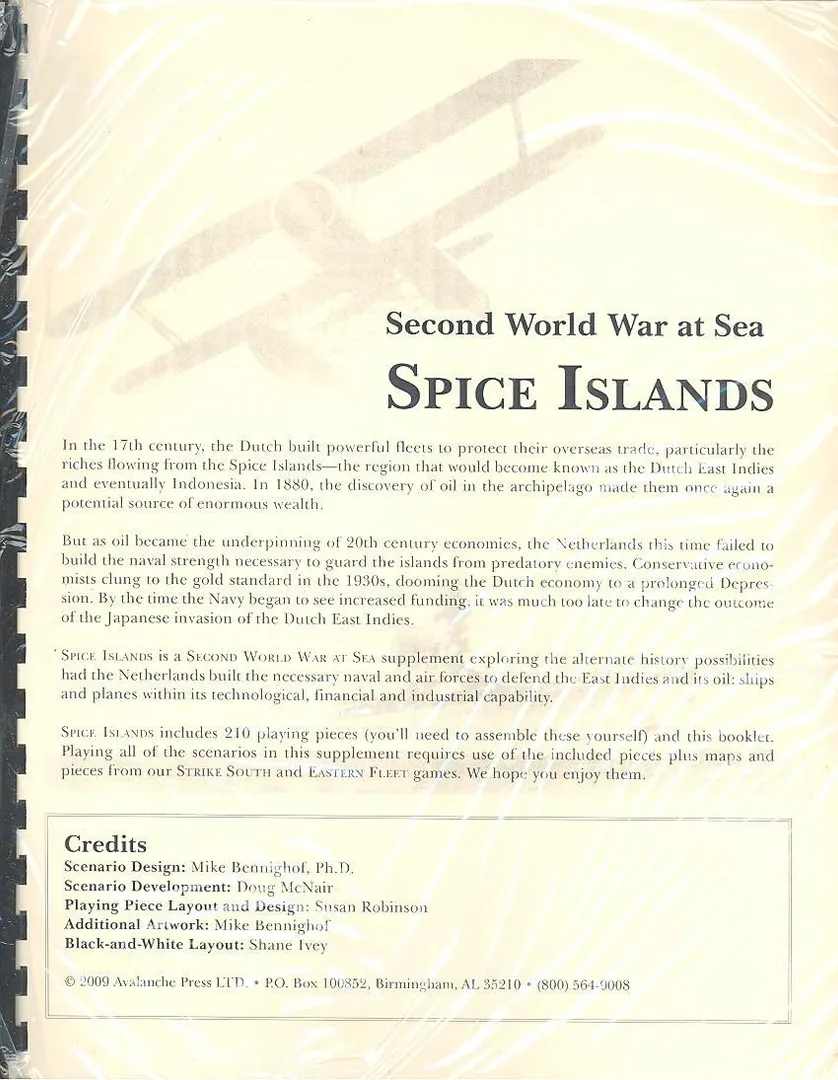
Second World War at Sea: Spice Islands to dodatek do gry Second World War at Sea: Eastern Fleet wydany w 2009 roku dla 1–2 graczy, z rozgrywką trwającą 30 minut i dla osób od 12 lat. Projekt gry: Michael Bennighof i Doug McNair.



Po angielsku
From the Avalanche Press website: In the 17th century, the Dutch built powerful fleets to protect their overseas trade, particularly the riches flowing from the Spice Islands — the region that would become known as the Dutch East Indies and eventually Indonesia. In 1880, the discovery of oil in the archipelago made them once again a potential source of enormous wealth. But as oil became the underpinning of 20th century economies, the Netherlands this time failed to build the naval strength necessary to guard the islands from predatory enemies. Conservative economists clung to the gold standard in the 1930s, dooming the Dutch economy to a prolonged Depression. By the time the Navy began to see increased funding, it was much too late to change the outcome of the Japanese invasion of the Dutch East Indies. In the 1930s, Dutch shipyards stood at the leading edge of naval technology: Dutch submarines first deployed the schnorkel breathing device, for example, and Dutch warships boasted the sophisticated Hazemeyer fire control system that would be enthusiastically copied by the Royal Navy and others. The Netherlands had the means to create a large and modern fleet, and the oil wealth of Borneo and Sumatra provided the motive. But by seeing deficits as a more lethal enemy than the Axis, the government doomed both the home country and the colonies to defeat and occupation. Spice Islands is a Second World War at Sea supplement exploring the alternate history possibilities had the Netherlands built the necessary naval and air forces to defend the East Indies and its oil: ships and planes within its financial and industrial capability. The supplement includes ten scenarios, or separate game situations, based on battles that might have been waged by the Royal Netherlands Navy against the Japanese. The pieces represent modernized versions of the dreadnought battleships planned but not completed, and some of those planned or discussed but never built. This module is not playable by itself, but requires ownership of Strike South to play most of the scenarios and Midway to enjoy all of them." Spice Islands was originally sold exclusively via pdf download. Starting in 2011, it was made available as a printed and spiral-bound booklet with die-cut counters. There are 210 counters, 70 long "ship" units, and 140 smaller ship, aircraft and fleet / base units.
Według katalogu Second World War at Sea: Spice Islands obsługuje od 1 do 2 graczy. Ten zakres odpowiada liczbie graczy podanej przez wydawcę, więc grę można przygotować dla dowolnej grupy w jego granicach. Przygotowanie, niektóre zasady i punktacja mogą jednak różnić się w zależności od liczby graczy; dokładną konfigurację sprawdź w instrukcji swojego wydania.
Podany czas rozgrywki w Second World War at Sea: Spice Islands wynosi 30 minut. To szacunek wydawcy dla pełnej partii. Rzeczywisty czas zależy od grupy, liczby graczy i znajomości zasad: pierwsze partie zwykle trwają dłużej, a doświadczone grupy kończą szybciej. Przygotowanie gry i tłumaczenie zasad nie są wliczone w ten szacunek.
Katalog podaje dla Second World War at Sea: Spice Islands wiek od 12 lat. To zalecenie wydawcy, które uwzględnia wymagania dotyczące czytania, złożoność zasad i drobne elementy, a nie tylko tematykę. Młodsi gracze często mogą dołączyć z pomocą dorosłego; sprawdź zalecenie wiekowe swojego wydania i weź pod uwagę doświadczenie grupy z grami planszowymi.
Second World War at Sea: Spice Islands ma ocenę złożoności 3,0 na 5 według graczy BoardGameGeek, co czyni ją grą średnio złożoną. Ocena pokazuje, ile znajomości zasad, planowania i podejmowania decyzji wymaga typowa rozgrywka. Cięższe gry wymagają dłuższego pierwszego tłumaczenia, dlatego przed wieczorem z grami warto skorzystać z przewodnika przygotowania.
Second World War at Sea: Spice Islands należy do tych kategorii: Wargame, Nautical i World War II. Kategorie opisują temat, świat i styl gry, a nie jej zasady. Przefiltruj katalog według tej samej kategorii, aby znaleźć podobne gry, jeśli spodobała ci się gra Second World War at Sea: Spice Islands i szukasz czegoś porównywalnego na kolejny wieczór z grami.
Autorzy wymienieni przy Second World War at Sea: Spice Islands to: Michael Bennighof i Doug McNair. Te informacje pochodzą z opublikowanych danych gry i wskazują osoby odpowiedzialne za jej projekt, a nie ilustratorów czy wydawców. Strony autorów w MeepleRules zbierają inne tytuły tych samych twórców, co pomaga, gdy gra ci się podoba i szukasz podobnych.
W katalogu Second World War at Sea: Spice Islands figuruje jako dodatek do Second World War at Sea: Eastern Fleet. Dodatki dokładają nową zawartość, zasady lub scenariusze do gry podstawowej i zwykle nie nadają się do samodzielnej gry, więc do korzystania z niego potrzebujesz gry Second World War at Sea: Eastern Fleet. Sprawdź, czy twoje wydanie gry Second World War at Sea: Eastern Fleet jest zgodne, bo niektóre dodatki zmieniano między wydaniami.