
- BGG rank
- BGG #24,893
- BGG rating
- 6.0
Twilight's Last Gleaming 2
- 1–2 players
- 180 min
- Complexity 2.4/5
- 2004
2022
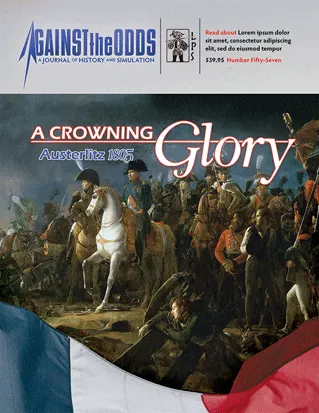
Rules assistance for A Crowning Glory: Austerlitz 1805
Plain-language explanations of turns, card effects and disputed situations, with official source references and saved question history.
What would you like to know?
Answers come from the official rulebook, with the page to check.
A Crowning Glory: Austerlitz 1805 is a board game released in 2022 for 1–2 players and 240 minutes per game. It was designed by Ty Bomba and its main mechanics are Dice Rolling and Hexagon Grid.




Even weeks before Trafalgar, by August 1805 the newly crowned Emperor Napoleon Ier, had come to understand his plans required action on land. More specifically, he had to defeat his continental enemies in order to secure his continued power. Britain, Russia and Austria were allied against him and, since he couldn’t get at the British on their island fortress, and Russia was too far away to allow for the required quick victory, he was left with invading Austria. Rapidly surrounding and capturing the main Austrian Army at Ulm, December found Napoleon at Austerlitz (modern day Skavkov u Brna) in southern Moravia at the end of a very stretched supply line. He also appeared to be slightly outnumbered by an Coalition army made up of the remnants of Austrian forces, plus a sizable Russian contingent. Feigning weakness, Napoleon lured the Coalition force into attacking his right flank (where he wanted them to), then counterpunched through the Coalition center to encircle most of them. The Coalition were crushed, and through the victory, Napoleon cemented his hold on the throne. It was a crowning glory. This two-player grand-tactical simulation by Ty Bomba presents the battle generally considered to have been Napoleon’s greatest victory. Both players have the opportunity to attack and defend, but the main burden of the offensive resides with the French player. His opponent, the Allied player, commands the Austrian and Russian units. Each hexagon on the map represents 600 yards (549 meters) from side to opposite side. The units are brigades and divisions. Each full turn represents one hour of ‘real time.’ Published in Against The Odds #57 —description from the publisher
A Crowning Glory: Austerlitz 1805 supports 1–2 players according to the catalogue. This range comes from the publisher’s listed player count, so the game can be set up for any group size within it. Some setups, rules and scoring details may still vary by player count, so check your edition’s rulebook for the exact configuration.
The listed playing time for A Crowning Glory: Austerlitz 1805 is 240 minutes. This is the publisher’s estimate for a full game. The actual duration depends on the group, the player count and familiarity with the rules: first sessions usually run longer, while experienced groups often finish faster. Setup and teaching time are not included in this estimate.
A Crowning Glory: Austerlitz 1805 has a complexity rating of 2.3 out of 5 from BoardGameGeek players, which makes it a medium-light game. The rating reflects how much rules knowledge, planning and decision-making a typical game demands. Expect a longer first teach for heavier games, and use a preparation guide before game night.
A Crowning Glory: Austerlitz 1805 belongs to these categories: Wargame and Napoleonic. Its main mechanics are Dice Rolling and Hexagon Grid. Categories describe the theme and setting of a game, while mechanics describe what players actually do on their turns. Each mechanic links to a catalogue hub with similar games, which helps when you want something comparable.
The credited designers of A Crowning Glory: Austerlitz 1805 are: Ty Bomba. These credits come from the published game data and name the people responsible for the game’s design, not its illustrators or publishers. Designer pages on MeepleRules collect other titles by the same designers, which helps when you enjoy a game and want to find similar ones.
The catalogue lists A Crowning Glory: Austerlitz 1805 as a base game. It can be played on its own with the components in the box and does not require any other title. Expansions, if any exist, add new content or rules on top of it and are listed separately in the catalogue with a link back to this base game.