
- BGG rank
- BGG #2,212
- BGG rating
- 7.7
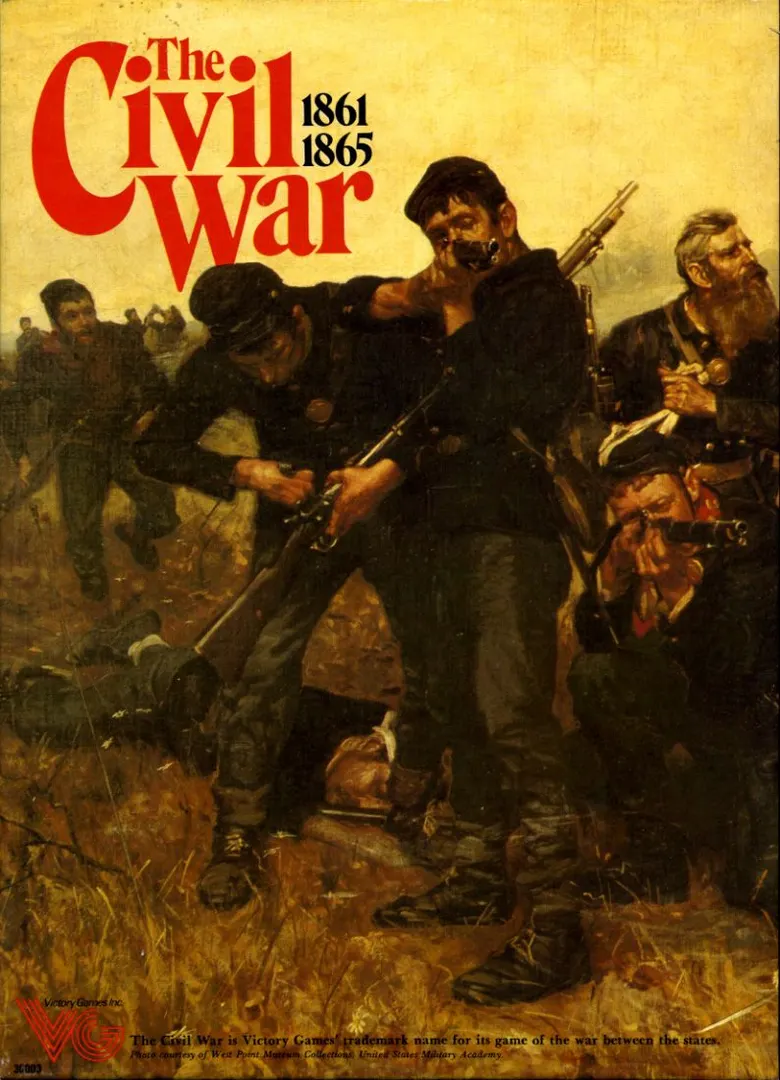
The Civil War 1861-1865
- 1–2 players
- 120–1200 min
- Complexity 3.8/5
- 1983
2025
Rules assistance for All Are Brothers: Solferino, 1859
Plain-language explanations of turns, card effects and disputed situations, with official source references and saved question history.
For 1 player
What would you like to know?
Answers come from the official rulebook, with the page to check.
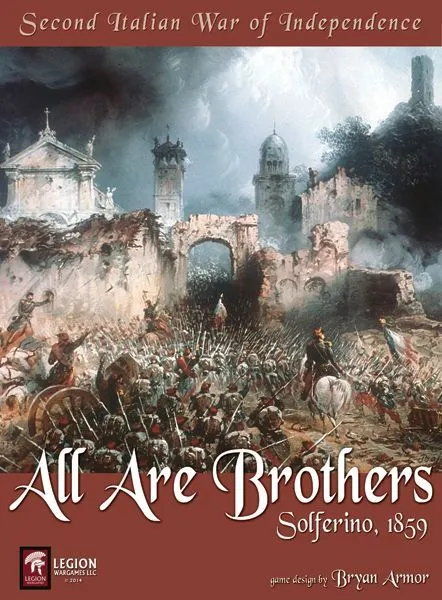
All Are Brothers: Solferino, 1859 is a board game released in 2025 for 1–4 players and 90–300 minutes per game. It was designed by Bryan Armor (II) and its main mechanics are Dice Rolling, Hexagon Grid, and Simulation.
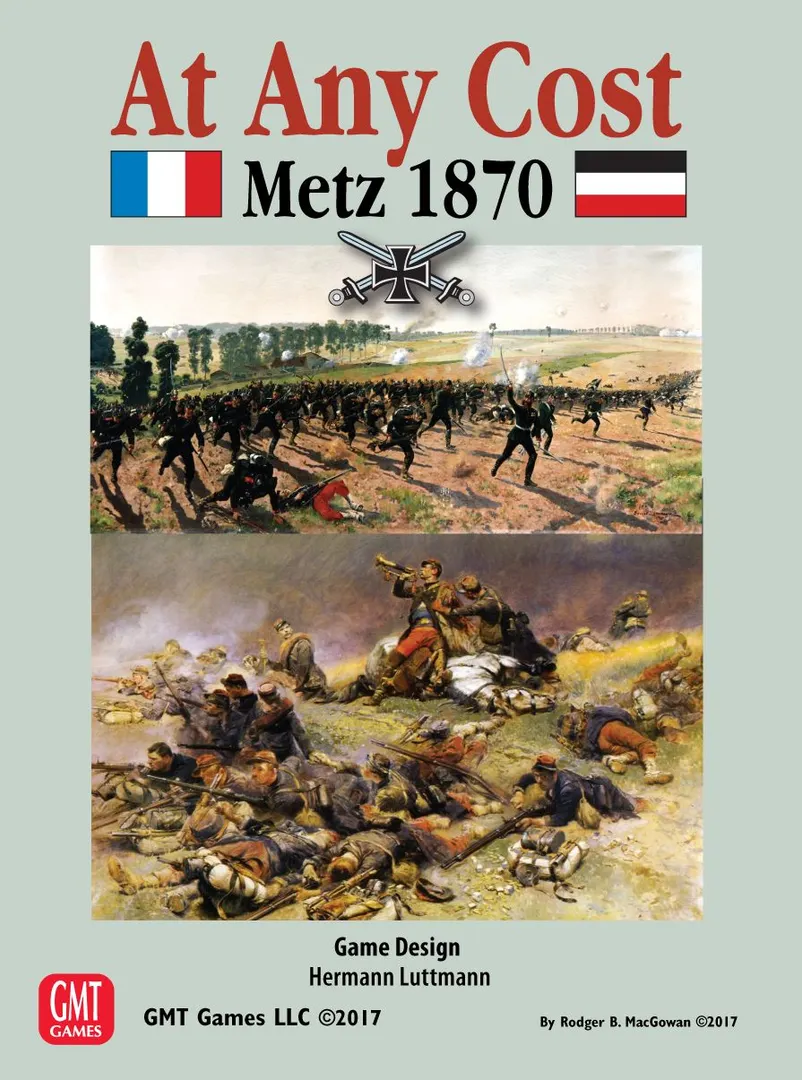
All Are Brothers: Solferino, 1859 simulates the decisive battle of the Second Italian War of Independence at the Brigade-level, with some additional Regimental-size and smaller detachments included. National and corps-level leaders are represented, on a map at 500 meters per hex, with 1-hour turns. Five scenarios are included: three that separately cover the north, central, and southern sectors of the battle, as well as a combined full battle scenario, along with a small introductory scneario. The combined scenario is suitable for up to four players (France, Sardinia-Piedmont, Austrian 1st Army, and Austrian 2nd Army). The battle itself was a grinding slugfest often described as a "soldier's battle" - a deliberate slight to the often uninspired leadership of the generals and a tribute to an allied victory gained only at the tip of the bayonet. Villagers in the surrounding region would do their best in the days after to treat the myriad wounded, and answer as to why Austrians, Hungarians, Czechs, Serbs, and Slovaks were treated as well as the Italians: "Tutti fratelli" (All are brothers). The battle pits two Austrian armies against the combined forces of France and Sardinia-Piedmont, and features the full panoply of colorful period units - Jagers and Grenzers, massed cavalry divisions of all types, Bersaglieri, French Imperial Guard, and the French African Zouaves and Turcos. Advances in infantry and artillery firepower would soon make the tactics of the time obsolete, and the carnage at Solferino reflected the start of this paradigm shift, soon to be highlighted bloodily by the Austro-Prussian and Franco-Prussian wars. This treatment of Solferino features an adaptation of Hermann Luttmann’s Blind Swords system (At Any Cost, Hammerin' Sickles, Stonewall's Sword) as the core ruleset. The system is heavy on unpredictability and fog of war due to the chit pull mechanic. The chit pull mechanic also very much aids in solitaire play, as does variable activation rules and reinforcement tables. A number of other features help make face-to-face play attractive, including a number of scenario variants and optional rules, a free-setup full battle scenario, and the move-and-countermove of event chit play. Nation-specific event chits also inject some period flavor.
All Are Brothers: Solferino, 1859 supports 1–4 players according to the catalogue. This range comes from the publisher’s listed player count, so the game can be set up for any group size within it. Some setups, rules and scoring details may still vary by player count, so check your edition’s rulebook for the exact configuration.
The listed playing time for All Are Brothers: Solferino, 1859 is 90–300 minutes. This is the publisher’s estimate for a full game. The actual duration depends on the group, the player count and familiarity with the rules: first sessions usually run longer, while experienced groups often finish faster. Setup and teaching time are not included in this estimate.
All Are Brothers: Solferino, 1859 has a complexity rating of 2.4 out of 5 from BoardGameGeek players, which makes it a medium-light game. The rating reflects how much rules knowledge, planning and decision-making a typical game demands. Expect a longer first teach for heavier games, and use a preparation guide before game night.
All Are Brothers: Solferino, 1859 belongs to these categories: Wargame and Post-Napoleonic. Its main mechanics are Dice Rolling, Hexagon Grid, and Simulation. Categories describe the theme and setting of a game, while mechanics describe what players actually do on their turns. Each mechanic links to a catalogue hub with similar games, which helps when you want something comparable.
The credited designers of All Are Brothers: Solferino, 1859 are: Bryan Armor (II). These credits come from the published game data and name the people responsible for the game’s design, not its illustrators or publishers. Designer pages on MeepleRules collect other titles by the same designers, which helps when you enjoy a game and want to find similar ones.
The catalogue lists All Are Brothers: Solferino, 1859 as a base game. It can be played on its own with the components in the box and does not require any other title. Expansions, if any exist, add new content or rules on top of it and are listed separately in the catalogue with a link back to this base game.