

- BGG rank
- BGG #2,071
- BGG rating
- 6.6
Clans
- 2–4 players
- 30 min
- Complexity 2.0/5
- 2002
2003
Rules assistance for Bridges of Shangri-La
Plain-language explanations of turns, card effects and disputed situations, with official source references and saved question history.
For 3 players
What would you like to know?
Answers come from the official rulebook, with the page to check.
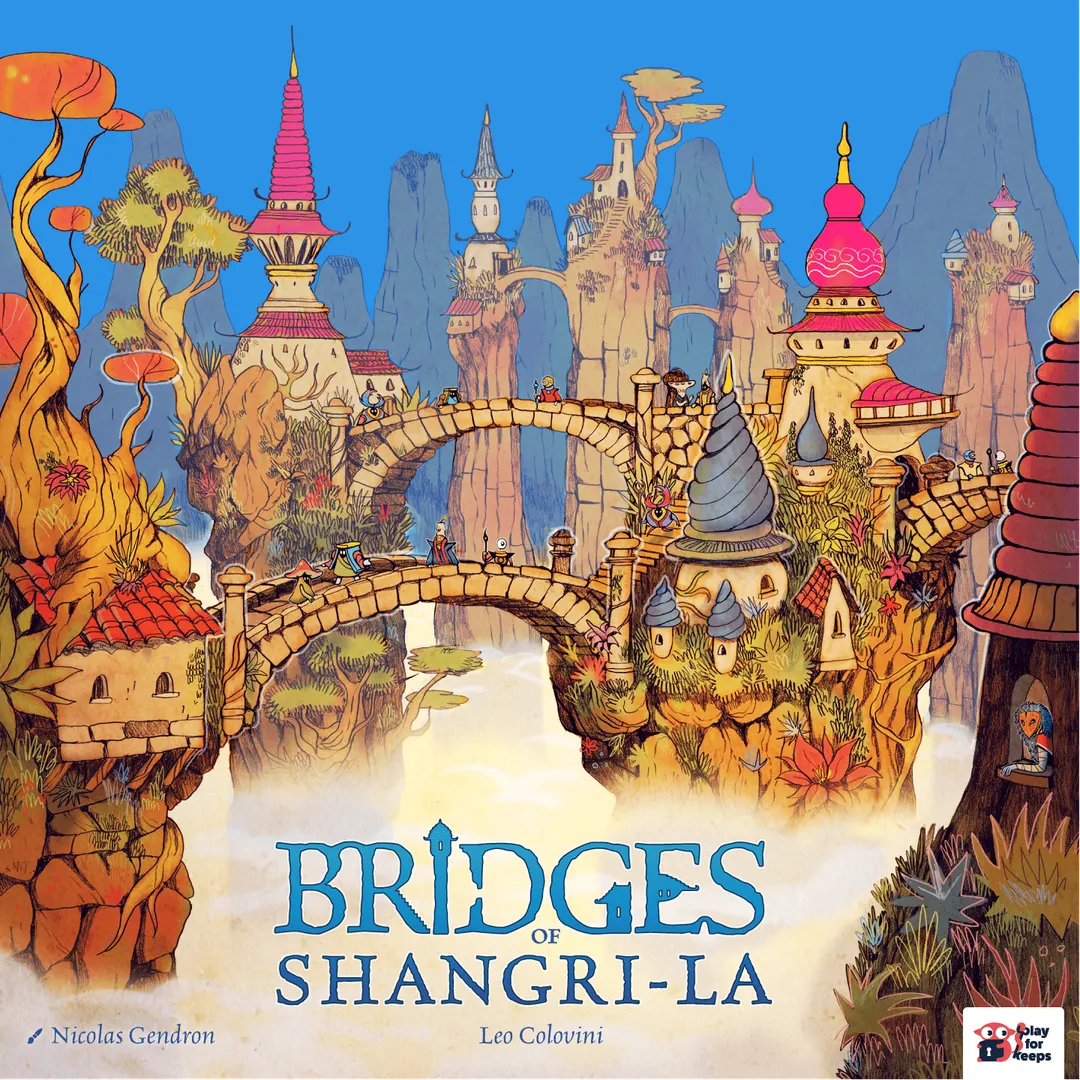
Bridges of Shangri-La is a board game released in 2003 for 3–4 players, 60 minutes per game, and ages 10 and up. It was designed by Leo Colovini and its main mechanics are Point to Point Movement, Area Majority / Influence, and Tile Placement.






In Shangri-La, the mysterious and isolated utopia nestled high in the mountains, a strange struggle for dominance has begun. Once peaceful and neighborly, the Masters of the competing mountain-folk train their students and send them out across bridges to control neighboring villages. To take control of a village, the students must come together in uncomfortable alliances, regardless of their tribal origin. Eventually students become Masters themselves, train new students and expand to other villages. There is one thing each student must keep in mind as they travel from village to village -- the mystical powers of Shangri-La mysteriously cause the bridges to collapse, separating villages forever. One crucial question will decide the winner: who will control the most Masters of Shangri-La? Players take on the roles of leaders of a specific tribe. There is a battle raging over the empty villages of the land and players must quickly fill those villages with their tribal leaders. As players migrate tribal leaders from one village to the next, they must not become too weak or they risk losing leaders to opposing tribes. The ultimate object of the game is to have the most leaders on the board at the end of the game. It is an abstract game with many options and tense until the end. 2004 Mensa Select Thematically, players are adding masters and students, and trying to have the students migrate to nearby villages to become masters. Functionally, this is essentially a military game. Players either spend their turn reinforcing a village (adding more tokens there) or invading a neighboring village (expanding influence if you have more total tokens than the victim). The unique twist is that, after each invasion, the connecting bridge is removed. So over the course of the game, attack options become more and more limited, until the game naturally comes to a conclusion.
Bridges of Shangri-La supports 3–4 players according to the catalogue. This range comes from the publisher’s listed player count, so the game can be set up for any group size within it. Some setups, rules and scoring details may still vary by player count, so check your edition’s rulebook for the exact configuration.
The listed playing time for Bridges of Shangri-La is 60 minutes. This is the publisher’s estimate for a full game. The actual duration depends on the group, the player count and familiarity with the rules: first sessions usually run longer, while experienced groups often finish faster. Setup and teaching time are not included in this estimate.
The catalogue lists Bridges of Shangri-La for ages 10 and up. This is the publisher’s recommendation and reflects reading demands, rule complexity and small components rather than theme alone. Younger players can often join with help from an adult, so check the age guidance on your edition and consider your group’s experience with board games.
Bridges of Shangri-La has a complexity rating of 2.7 out of 5 from BoardGameGeek players, which makes it a medium-light game. The rating reflects how much rules knowledge, planning and decision-making a typical game demands. Expect a longer first teach for heavier games, and use a preparation guide before game night.
Bridges of Shangri-La belongs to these categories: Territory Building, Abstract Strategy, and Travel. Its main mechanics are Point to Point Movement, Area Majority / Influence, and Tile Placement. Categories describe the theme and setting of a game, while mechanics describe what players actually do on their turns. Each mechanic links to a catalogue hub with similar games, which helps when you want something comparable.
The credited designers of Bridges of Shangri-La are: Leo Colovini. These credits come from the published game data and name the people responsible for the game’s design, not its illustrators or publishers. Designer pages on MeepleRules collect other titles by the same designers, which helps when you enjoy a game and want to find similar ones.
The catalogue lists Bridges of Shangri-La as a base game. It can be played on its own with the components in the box and does not require any other title. Expansions, if any exist, add new content or rules on top of it and are listed separately in the catalogue with a link back to this base game.