
- BGG rating
- 9.3
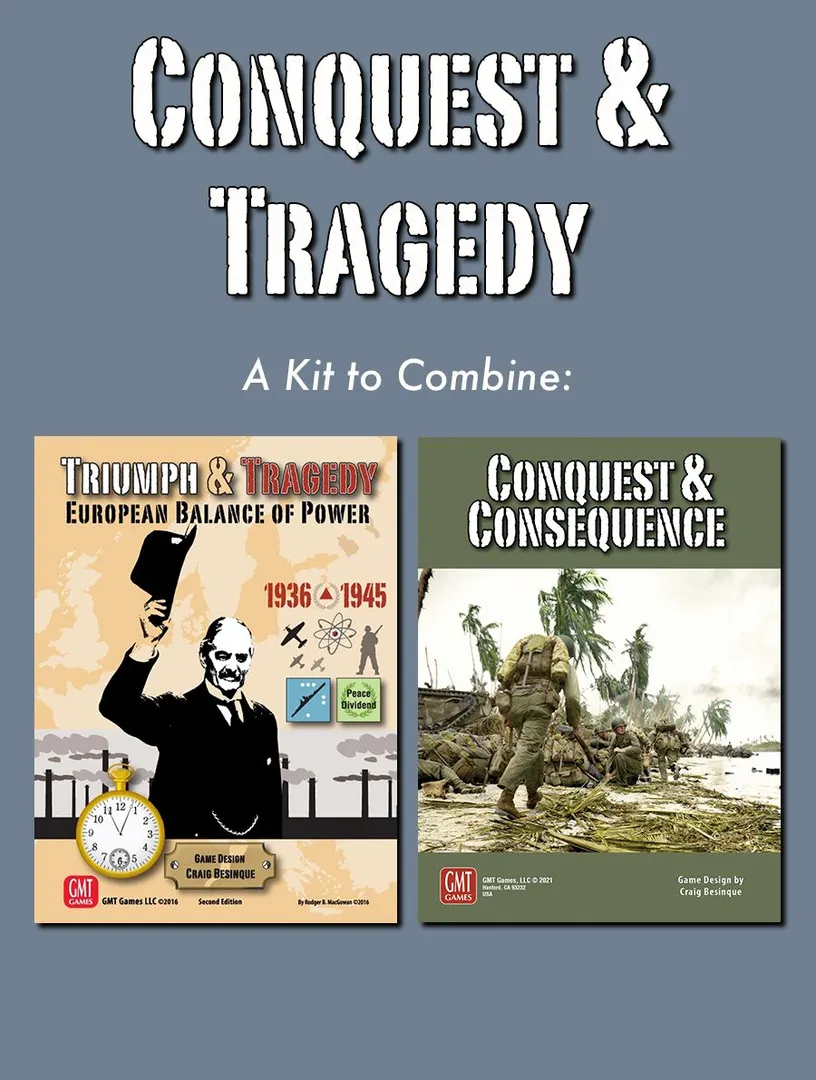
Conquest & Tragedy
- 3–6 players
- 300–500 min
- 2026
2021
Rules assistance for Conquest & Consequence
Plain-language explanations of turns, card effects and disputed situations, with official source references and saved question history.
For 2 players
What would you like to know?
Answers come from the official rulebook, with the page to check.
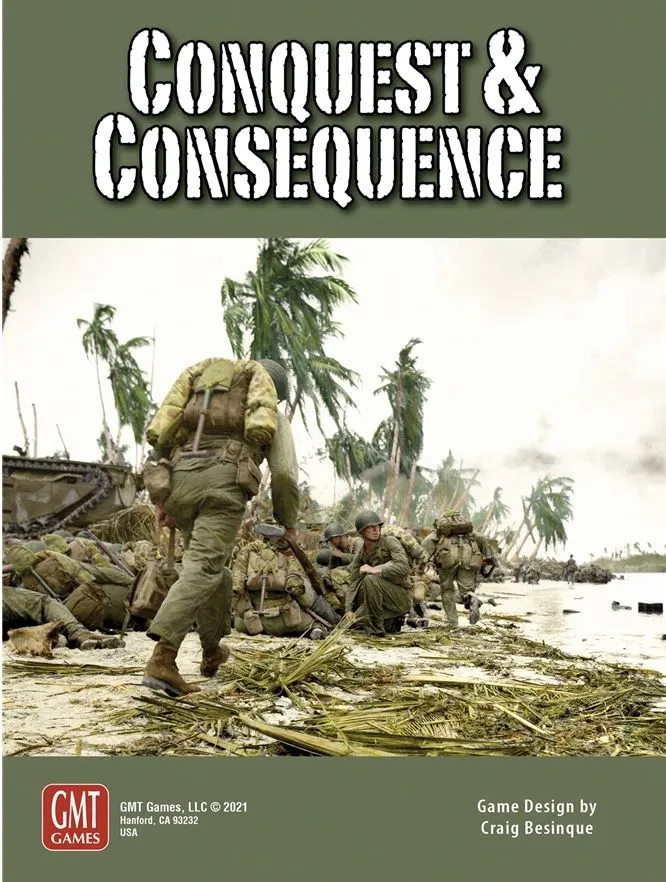
Conquest & Consequence is a board game released in 2021 for 2–3 players, 240–360 minutes per game, and ages 12 and up. It was designed by Craig Besinque and its main mechanics are Area Majority / Influence, Tech Trees / Tech Tracks, and Campaign / Battle Card Driven.
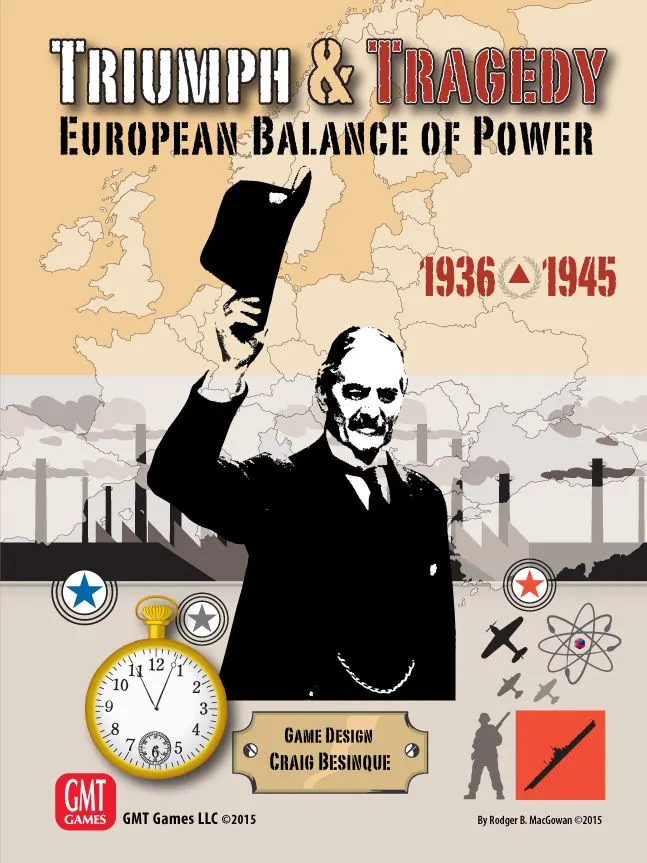



Conquest and Consequence brings the Triumph & Tragedy system to the Pacific/East Asia theater during the same 1936-1945 time period. Like T&T, it is designed for three players, maintaining the three-sided dynamic that adds so much variety and intrigue to the system. Those three sides are: Militarist Japan, the first Asian power to modernize, which seeks to replace the European colonial empires in East Asia with a true "all-Asian" empire, with itself as the natural leader. The Communist Soviet faction, which is comprised of the Siberian USSR and the Red Chinese revolutionaries. The Capitalist USA faction, which consists of the United States, the British Empire, and the struggling regime of Nationalist China. The game begins in 1936 with the Militarists in control of Japan and expansion on the agenda. Its [war] industry is well-developed, but it is weak in population and particularly resources. Its battle-hardened army has easily overrun resource-rich Manchuria, and a weak China awaits. Japan (like Germany in T&T) has the early initiative due to its well-prepared military. Will it: Move south into China? Take the "Northern Road" into resource-rich east Siberia (as favored by the army)? Pursue the "Southern Road" to the oil-rich Dutch East Indies advocated by its navy? Or bide its time, seeking a better position via diplomatic arrangements with neutrals including independent Chinese warlord states? Japanese aggression in China will likely irritate the sleeping giant that is the USA, but it is far away across the wide Pacific, and Japan has special naval abilities that allow it to compete at sea. The Red Chinese have just completed their Long March and re-established their base in inland Shaansi, far from areas of Japanese (or Capitalist) interest. The Red Chinese are very weak militarily but have a secret weapon: Partisans. These are non-military "political" organizations (represented on-map with cardboard counters) that are difficult to eradicate, multiply if ignored, and can be converted into military units when desired (this being ill-advised without sufficient concentration). The Soviet Union, also acutely aware of Japanese expansionism, is desperately fortifying eastern Siberia, which is otherwise thinly defended. Nationalist China is aware of the Japanese threat but must also deal with the internal Communist threat. The United States is disarmed, disinterested, and distracted by the Great Depression. The British Empire is woefully under-defended and overconfident. The USA alliance must build up its economy while somehow improving the military capabilities of the British Empire, Nationalist China, and itself. The game combines the Pacific naval war and the land war in Asia (including the Chinese Civil War), both equally weighing upon victory. The naval war is dramatic, featuring short, decisive battles and expanded roles for airpower and island bases. In the tradition of Triumph & Tragedy, the three-sided aspect features negotiation, diplomacy, and subterfuge within a multitude of strategic possibilities. Like T&T, the game allows players freedom to diverge from the inclinations and policies of the historical actors and plays in 4-6 hours of constant tension and involvement. —description from the publisher
Conquest & Consequence supports 2–3 players according to the catalogue. This range comes from the publisher’s listed player count, so the game can be set up for any group size within it. Some setups, rules and scoring details may still vary by player count, so check your edition’s rulebook for the exact configuration.
The listed playing time for Conquest & Consequence is 240–360 minutes. This is the publisher’s estimate for a full game. The actual duration depends on the group, the player count and familiarity with the rules: first sessions usually run longer, while experienced groups often finish faster. Setup and teaching time are not included in this estimate.
The catalogue lists Conquest & Consequence for ages 12 and up. This is the publisher’s recommendation and reflects reading demands, rule complexity and small components rather than theme alone. Younger players can often join with help from an adult, so check the age guidance on your edition and consider your group’s experience with board games.
Conquest & Consequence has a complexity rating of 3.9 out of 5 from BoardGameGeek players, which makes it a heavy game. The rating reflects how much rules knowledge, planning and decision-making a typical game demands. Expect a longer first teach for heavier games, and use a preparation guide before game night.
Conquest & Consequence belongs to these categories: Economic, Wargame, and Political. Its main mechanics are Area Majority / Influence, Tech Trees / Tech Tracks, and Campaign / Battle Card Driven. Categories describe the theme and setting of a game, while mechanics describe what players actually do on their turns. Each mechanic links to a catalogue hub with similar games, which helps when you want something comparable.
The credited designers of Conquest & Consequence are: Craig Besinque. These credits come from the published game data and name the people responsible for the game’s design, not its illustrators or publishers. Designer pages on MeepleRules collect other titles by the same designers, which helps when you enjoy a game and want to find similar ones.
The catalogue lists Conquest & Consequence as a base game. It can be played on its own with the components in the box and does not require any other title. Expansions, if any exist, add new content or rules on top of it and are listed separately in the catalogue with a link back to this base game.