
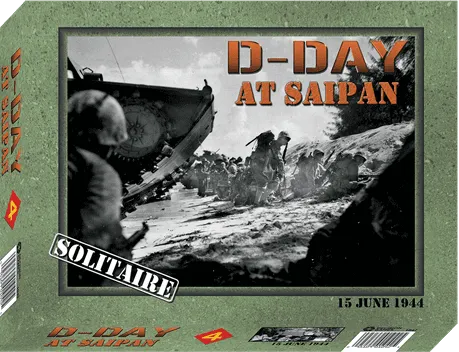
- BGG rank
- BGG #22,330
- BGG rating
- 6.5
D-Day at Saipan
- 1 player
- Complexity 3.8/5
- 2022
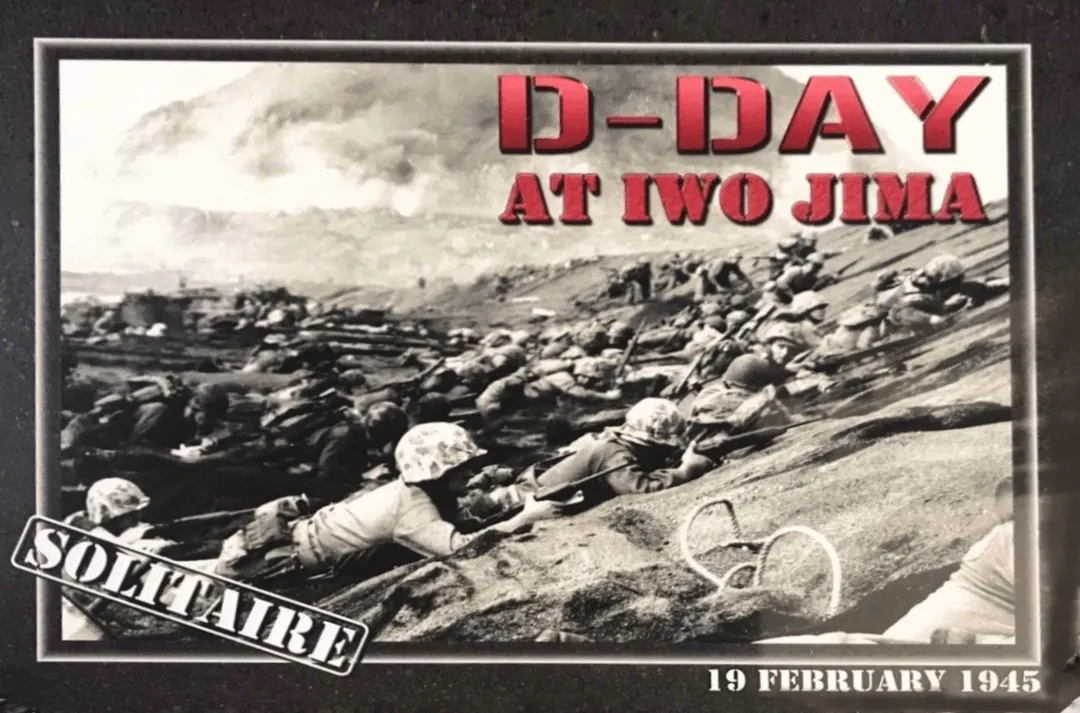
2018
Rules assistance for D-Day at Iwo Jima
Plain-language explanations of turns, card effects and disputed situations, with official source references and saved question history.
For 1 player
What would you like to know?
Answers come from the official rulebook, with the page to check.
D-Day at Iwo Jima is a board game released in 2018 for 1–2 players and 90–360 minutes per game. It was designed by Joe Youst and its main mechanics are Dice Rolling, Grid Movement, and Hexagon Grid.

Description from the publisher: D-Day at Iwo Jima is a Solitaire wargame simulating the amphibious invasion of Iwo Jima. The five-week battle was some of the bloodiest fighting in the Pacific. In one of the costliest intelligence failures of the war, the planners had completely misjudged the situation that would face the Marines. The beaches had been described as excellent and the advance inland was expected to be easy. Instead, the Marines were faced with 15-foot-high slopes of soft black volcanic ash that brought the normally rapidly moving Marines down to a slow plod. In addition, the lack of a vigorous response led the Marines to believe that the bombardment had completely suppressed the defenses. However, Gen. Kuribayashi was far from beaten. Understanding that his forces were insufficient to defeat the massive American invasion force, he had decided to defend the island in-depth. In D-Day at Iwo Jima, designer Joe Youst builds on John Butterfield’s award winning solitaire game system. The player controls three US Marine divisions against a determined Japanese defense. The no-dice combat system highlights the unknown enemy deployments and coordination of the right weapon systems and tactics. Players familiar with the previous three games in the system will be able to quickly set up and play this latest version. New features include a random fortification generation system that simulates the ability of the Japanese forces to “re-fortify” supposedly weakened positions and an updated infiltration system that encourages the player to maintain a continuous line. Scenarios: D-Day (19 February) – Covers the first day in six turns. Surabachi (20 to 24 February) – The 28th Marine Regiment’s capture of Surabachi. Drive to the North (20 to 24 February) – The attack on Airfield One and advance by the 4th and 5th Marine Divisions. Hot Rocks (25 February to 4 March) – The attack to clear the Motoyama Plateau. Drive to the Sea (6 to 10 March) – The final attack on the plateau and the end of organized Japanese resistance. Sands of Iwo Jima Campaign (19 February to 11 March) – The campaign combines all aspects of the previous scenarios into one look at the entire campaign. Game Contents: 528 Die-cut counters One 34” x 22” Mounted Game Board One 11” x 17” Set-Up Map Player Aid Cards Color Rules booklet Color Campaign Analysis 55 Event cards
D-Day at Iwo Jima supports 1–2 players according to the catalogue. This range comes from the publisher’s listed player count, so the game can be set up for any group size within it. Some setups, rules and scoring details may still vary by player count, so check your edition’s rulebook for the exact configuration.
The listed playing time for D-Day at Iwo Jima is 90–360 minutes. This is the publisher’s estimate for a full game. The actual duration depends on the group, the player count and familiarity with the rules: first sessions usually run longer, while experienced groups often finish faster. Setup and teaching time are not included in this estimate.
D-Day at Iwo Jima has a complexity rating of 4.3 out of 5 from BoardGameGeek players, which makes it a heavy game. The rating reflects how much rules knowledge, planning and decision-making a typical game demands. Expect a longer first teach for heavier games, and use a preparation guide before game night.
D-Day at Iwo Jima belongs to these categories: Wargame and World War II. Its main mechanics are Dice Rolling, Grid Movement, and Hexagon Grid. Categories describe the theme and setting of a game, while mechanics describe what players actually do on their turns. Each mechanic links to a catalogue hub with similar games, which helps when you want something comparable.
The credited designers of D-Day at Iwo Jima are: Joe Youst. These credits come from the published game data and name the people responsible for the game’s design, not its illustrators or publishers. Designer pages on MeepleRules collect other titles by the same designers, which helps when you enjoy a game and want to find similar ones.
The catalogue lists D-Day at Iwo Jima as a base game. It can be played on its own with the components in the box and does not require any other title. Expansions, if any exist, add new content or rules on top of it and are listed separately in the catalogue with a link back to this base game.