
- BGG rank
- BGG #13,278
- BGG rating
- 7.6
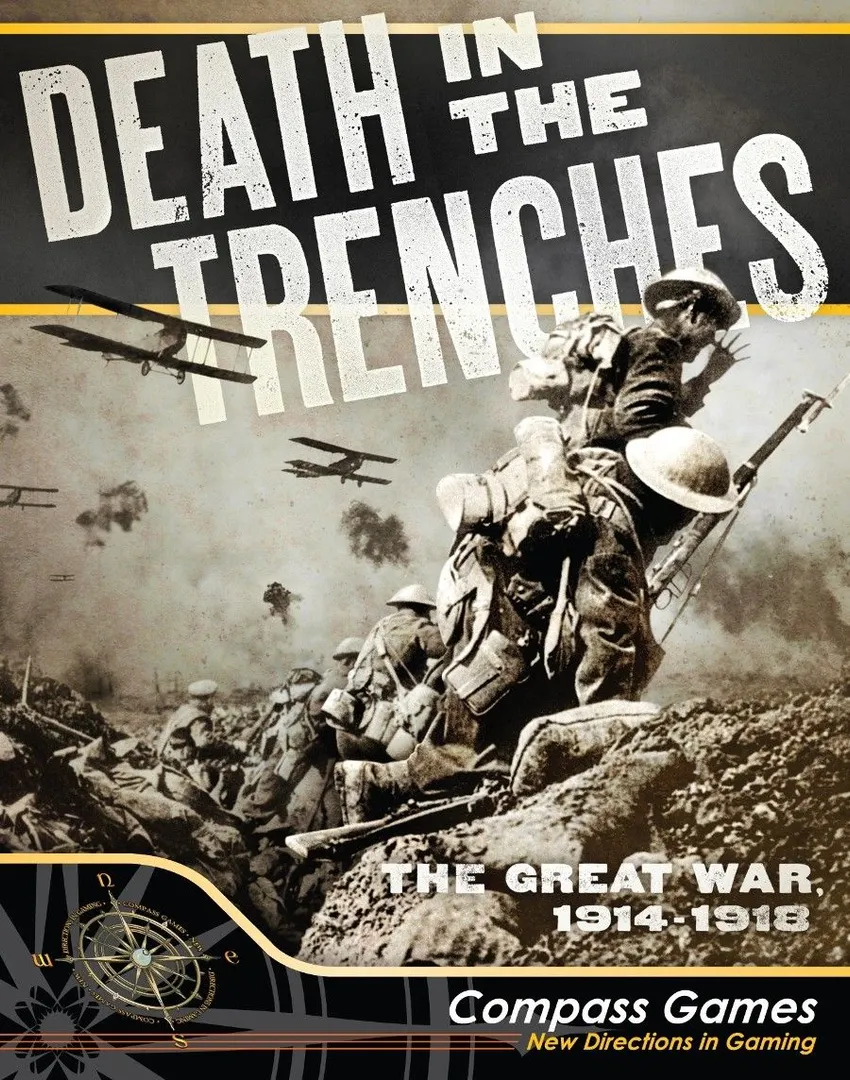
Death in the Trenches: The Great War 1914-1918 (Second Edition)
- 1–2 players
- 300 min
- Complexity 3.6/5
- 2022
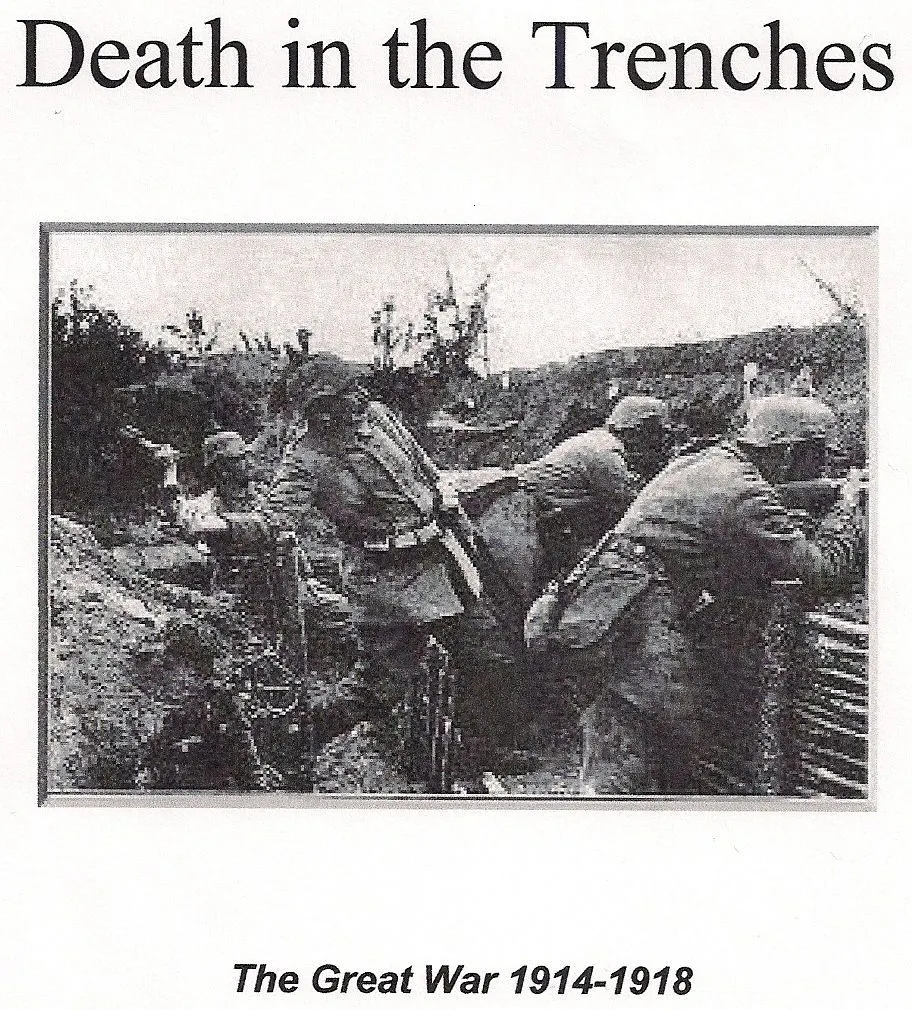
2005
Rules assistance for Death in the Trenches: The Great War, 1914-1918
Plain-language explanations of turns, card effects and disputed situations, with official source references and saved question history.
For 1 player
What would you like to know?
Answers come from the official rulebook, with the page to check.
Death in the Trenches: The Great War, 1914-1918 is a board game released in 2005 for 1–2 players, 960 minutes per game, and ages 12 and up. It was designed by Ben Madison and Wes Erni and its main mechanics are Dice Rolling, Hexagon Grid, and Simulation.
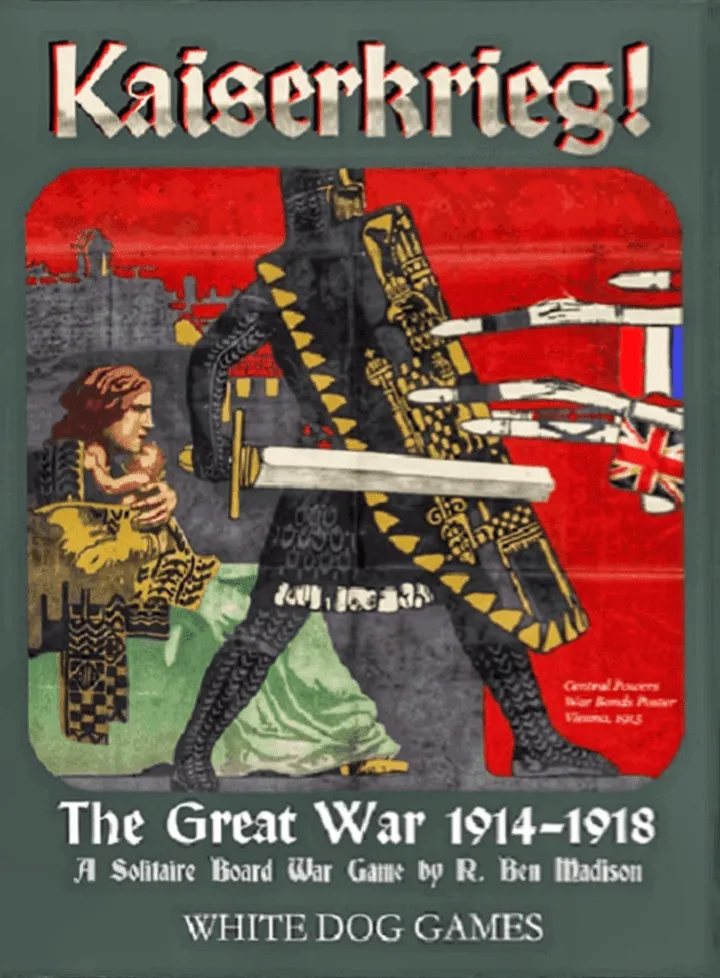
DEATH IN THE TRENCHES is a strategic-level World War I game covering the entire war, from the opening shots in Serbia and Belgium to the final defeat -- or victory! -- of Germany and Austria-Hungary in 1918. The game includes a map stretching from the Pyrenees to Moscow, and from Norway to the Sudan, covering every square inch of territory in Europe and the Near East which saw combat from 1914 to 1918, in a manageable 34x22" format. An additional map shows the German colonies The game also features 400 beautifully-illustrated counters depicting the national armies that fought in the war -- from the Germans, French, British and Russians all the way down to the Persians, Montenegrins, Armenians, South Africans, and a host of other specialized units (French Foreign Legion, Gurkhas, Italian "Arditi", Cossacks, Tyrolean Kaiserjaeger, Zionists, Bavarians, "Dunsterforce"... even the Chinese may send a small expeditionary force). DEATH IN THE TRENCHES includes a deceptively simple twelve pages of rules (and an additional twelve pages of random events) detailing the game's unique combat system (no CRT!) which portrays the grinding nature of World War I combat in a realistic way that still gives players plenty of options to pursue. Using army-level units (which contain numbers of divisional level formations, represented off-map), players use numerous special military abilities to drive back the enemy. Detailed random events rules give you more gory details about World War I than you've ever seen before in a game, while helping keep play simple and straightforward. Lenin, the Senussi revolt, intrigue in the Romanian court, the Cruise of the Emden, the Armenian Massacre, the Sinai Pipeline, the Ukrainian Reactionary Hetmanate, Rasputin, Mata Hari, the Russian shell shortage, the murder of Edith Cavell, Wilhelm Wassmuss (the "German Lawrence"), Lawrence of Arabia, the Nestorian resistance, Pancho Villa, the Grand Duke Nicholas, Thomas Masaryk, the Red Baron, Czech Legion, Irish Rising, Berber Revolt, air raids, typhus, influenza... they're all here. For the World War I buff, "DITT" has everything: Tanks, Alpenkorps, artillery barrages, flamethrowers, poison gas, Krupp guns, Mustapha Kemal, the Royal Air Force, French elan... while the great wartime leaders all leave their mark (good or bad!) on history: Bruchmuller, Haig, Hoffmann, Mackensen, Hindenburg and Ludendorff, Rennenkampf and Samsonov, Sarrail, Von Francois, Foch, Brusilov, Nivelle, Plehve, Putnik, Yudenich... they're all here. Players command the armed forces of nearly forty nations, in a game that still manages to be small enough to fit on your table! It sounds like a massive game, but it isn't. DEATH IN THE TRENCHES is designed to be played--easy to play, hard to master. You'll learn things about World War I you never knew before, and you'll have to face the same crises the leaders of the Entente and Central Powers did. Think you can do better than Douglas Haig and Robert Nivelle? Now it's your turn. Death in the Trenches won the Charles S. Roberts awards for Best DTP-Produced Boardgame (Charles S. Roberts Awards) for 2005.
Death in the Trenches: The Great War, 1914-1918 supports 1–2 players according to the catalogue. This range comes from the publisher’s listed player count, so the game can be set up for any group size within it. Some setups, rules and scoring details may still vary by player count, so check your edition’s rulebook for the exact configuration.
The listed playing time for Death in the Trenches: The Great War, 1914-1918 is 960 minutes. This is the publisher’s estimate for a full game. The actual duration depends on the group, the player count and familiarity with the rules: first sessions usually run longer, while experienced groups often finish faster. Setup and teaching time are not included in this estimate.
The catalogue lists Death in the Trenches: The Great War, 1914-1918 for ages 12 and up. This is the publisher’s recommendation and reflects reading demands, rule complexity and small components rather than theme alone. Younger players can often join with help from an adult, so check the age guidance on your edition and consider your group’s experience with board games.
Death in the Trenches: The Great War, 1914-1918 has a complexity rating of 2.8 out of 5 from BoardGameGeek players, which makes it a medium-light game. The rating reflects how much rules knowledge, planning and decision-making a typical game demands. Expect a longer first teach for heavier games, and use a preparation guide before game night.
Death in the Trenches: The Great War, 1914-1918 belongs to these categories: Wargame and World War I. Its main mechanics are Dice Rolling, Hexagon Grid, and Simulation. Categories describe the theme and setting of a game, while mechanics describe what players actually do on their turns. Each mechanic links to a catalogue hub with similar games, which helps when you want something comparable.
The credited designers of Death in the Trenches: The Great War, 1914-1918 are: Ben Madison and Wes Erni. These credits come from the published game data and name the people responsible for the game’s design, not its illustrators or publishers. Designer pages on MeepleRules collect other titles by the same designers, which helps when you enjoy a game and want to find similar ones.
The catalogue lists Death in the Trenches: The Great War, 1914-1918 as a base game. It can be played on its own with the components in the box and does not require any other title. Expansions, if any exist, add new content or rules on top of it and are listed separately in the catalogue with a link back to this base game.