

- BGG rank
- BGG #12,084
- BGG rating
- 7.6
The First Jihad: The Rise of Islam 632-750
- 1 player
- 30–120 min
- Complexity 3.5/5
- 2020
2019
Rules assistance for Nubia: Egypt's Black Heirs
Plain-language explanations of turns, card effects and disputed situations, with official source references and saved question history.
For 1 player
What would you like to know?
Answers come from the official rulebook, with the page to check.
Nubia: Egypt's Black Heirs is a board game released in 2019 for 1 player, 30–60 minutes per game, and ages 10 and up. It was designed by Ben Madison and Wes Erni and its main mechanics are Dice Rolling, Point to Point Movement, and Area Majority / Influence.








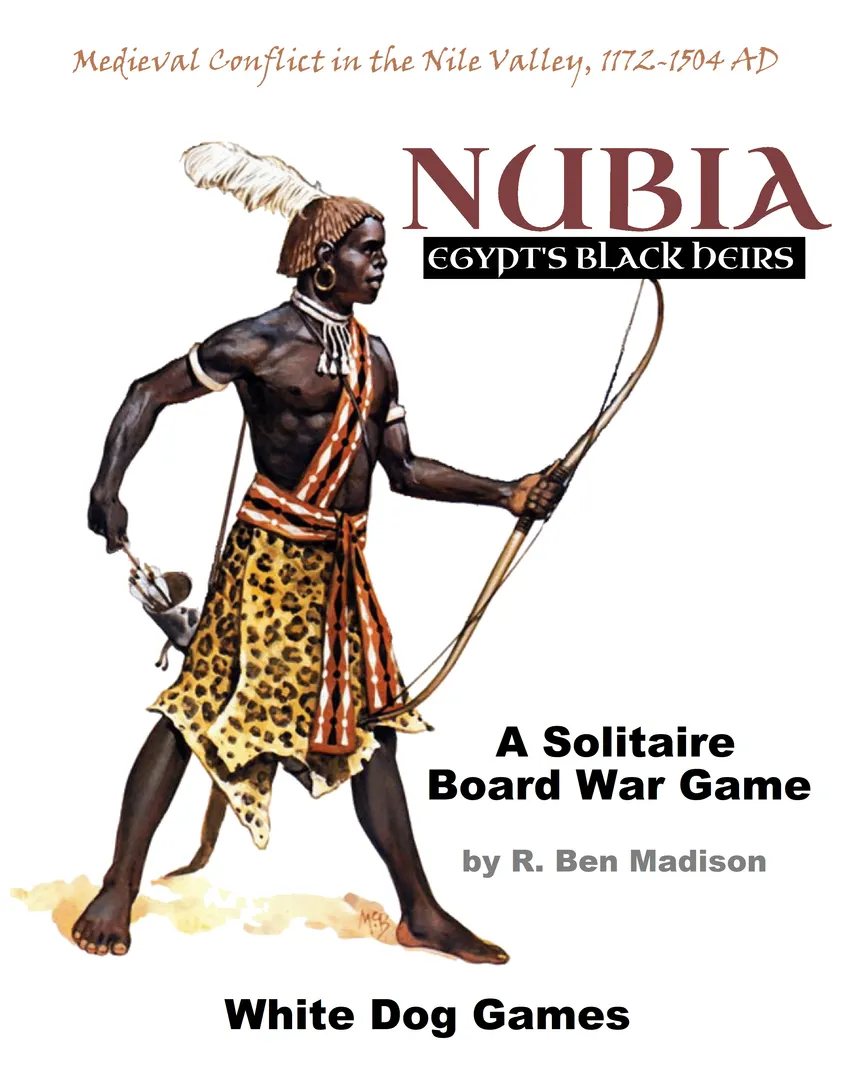
Nubia is a solitaire game where you rule a Black African civilization of three Christian kingdoms in the Nile Valley: Nobadia, Makuria, and Alodia. Your culture is an heir to the glories of Ancient Egypt and the legendary Kingdom of Kush, but long gone are the days when you were conquering and ruling Egypt. In the game, it is A.D. 1172 and Nubia is under siege! For 400 years, you will battle to defend civilization against the fierce pagans of the Funj, and a jihad of marauding land-hungry Arabs. Deploy your famous archers, build fortified monasteries, send the Crown Prince into battle, and marry off your daughters in a desperate effort to stem the tide. This fast-play, fun, and educational solitaire game uses a system created by Darin Leviloff. “Mek” markers on five converging paths represent hostile Arab and pagan armies that surround your kingdoms. The paths all meet in Soba, your fabulously wealthy capital at the juncture of the Blue and White Nile rivers, where the danger of a “Collapse” exists if any of those armies makes it that far. In addition, three tracks representing medieval Nubian society (Nobility, Kingship, and the Army) greatly impact the overall situation. A card draw determines which paths and tracks move against you this turn, while the cards teach you about the history of ancient and medieval Nubia. The number of “Efforts” which you can use to move them back in your favor (if the Effort die roll succeeds) depends on the personal talents of your current Uru (king) and his chief advisor, the Metropolitan Bishop of the Coptic Orthodox Church. Managing Efforts is key to the game, and you never have as many as you want. You can obtain more by selling off land and using your bishops for political gain instead of their natural religious calling: a short term strategy that can cost you victory points in the end. Each risky gambit is aimed at averting a system-wide social collapse, which can end the game suddenly. Your success (or failure) in holding off the five hostile armies helps determine how many noble families are still on your side when a Collapse approaches, so the better you play the game, the less chance the Collapse gets off the ground. As the game draws to a close, the Portuguese are searching Africa for the fabled Christian “Kingdom of Prester John.” Those legends may refer to you! Can you hold medieval Nubia together long enough to make contact with them and win the game? —description from the publisher
Nubia: Egypt's Black Heirs supports 1 player according to the catalogue. This is the publisher’s listed player count, so the game is designed for exactly that number of participants. Variants for other group sizes, if any, are described in the rulebook of your edition, so check it before setting up a different configuration.
The listed playing time for Nubia: Egypt's Black Heirs is 30–60 minutes. This is the publisher’s estimate for a full game. The actual duration depends on the group, the player count and familiarity with the rules: first sessions usually run longer, while experienced groups often finish faster. Setup and teaching time are not included in this estimate.
The catalogue lists Nubia: Egypt's Black Heirs for ages 10 and up. This is the publisher’s recommendation and reflects reading demands, rule complexity and small components rather than theme alone. Younger players can often join with help from an adult, so check the age guidance on your edition and consider your group’s experience with board games.
Nubia: Egypt's Black Heirs has a complexity rating of 2.9 out of 5 from BoardGameGeek players, which makes it a medium-light game. The rating reflects how much rules knowledge, planning and decision-making a typical game demands. Expect a longer first teach for heavier games, and use a preparation guide before game night.
Nubia: Egypt's Black Heirs belongs to these categories: Wargame, Medieval, and Religious. Its main mechanics are Dice Rolling, Point to Point Movement, and Area Majority / Influence. Categories describe the theme and setting of a game, while mechanics describe what players actually do on their turns. Each mechanic links to a catalogue hub with similar games, which helps when you want something comparable.
The credited designers of Nubia: Egypt's Black Heirs are: Ben Madison and Wes Erni. These credits come from the published game data and name the people responsible for the game’s design, not its illustrators or publishers. Designer pages on MeepleRules collect other titles by the same designers, which helps when you enjoy a game and want to find similar ones.
The catalogue lists Nubia: Egypt's Black Heirs as a base game. It can be played on its own with the components in the box and does not require any other title. Expansions, if any exist, add new content or rules on top of it and are listed separately in the catalogue with a link back to this base game.