

- BGG rank
- BGG #22,658
- BGG rating
- 5.9
Book of Dragons
- 1–8 players
- 15–60 min
- Complexity 1.3/5
- 2018
2018
Rules assistance for Doppelgänger
Plain-language explanations of turns, card effects and disputed situations, with official source references and saved question history.
What would you like to know?
Answers come from the official rulebook, with the page to check.
Doppelgänger is a board game released in 2018 for 4–8 players, 45 minutes per game, and ages 10 and up. It was designed by Stephen Avery and Robert Burke and its main mechanics are Cooperative Game and Open Drafting.





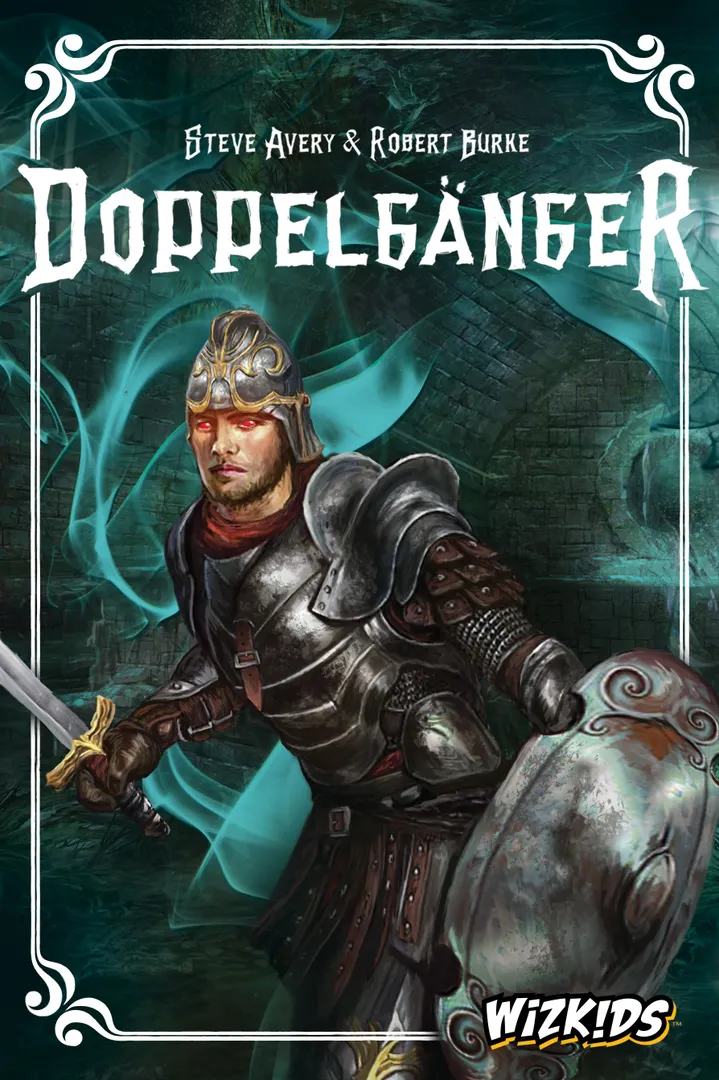
"I'm telling you something isn't right..." whined the rogue. "Shut it Tanlyn. And keep your mind on the quest before us. No more talk of 'seeing a doppelgänger.'" Bogrim the barbarian readied his great sword for the encounter ahead as the rest of the party drew close. "This will not end well." Tanlyn replied. She kept her hand resting on the familiar weight of her dagger's pommel. Someone here was a traitor... if only she knew who. Doppelgänger is a hidden role game designed by Steve Avery and Robert Burke. Each player takes the role of an intrepid adventurer who will help the group overcome great perils. However, some among them are conniving doppelgängers who work against the party to bring their downfall. Each turn the players confront a challenge that requires teamwork. The party leader selects which adventurers will help him win the encounter. Everyone selected contributes a card to the pool, and others are added from the draw pile. The party leader then distributes one item to each party member to help them in their quest. Success brings rewards and moves the party closer to uncovering the hidden truth. Failure brings pain and moves the doppelgängers one step closer to victory. Doppelgänger feels like a fast, co-operative dungeon delve, but with the added tension of significant distrust. Game Overview Each round, the players confront a new Quest that requires teamwork, and a rotating Party Leader selects which adventurers go on that Quest. Every player selected contributes one Item card to a common pool, and other items are added randomly from the draw pile. These cards can be helpful, non-helpful, or even harmful. The Party Leader distributes one card to each party member, and the Quest commences, with each player taking a turn using the item they were given, if able. To use the items given, each player uses dice that are secretly pulled and rolled, but beware, doppelgängers may choose to roll cursed dice! If the party succeeds, the Party Leader may search for an Artifact of Light. Find three of these, and the loyal adventurers win the game. However, if a Quest fails, an Artifact of Darkness may be found, and if three are uncovered, the doppelgängers win. Players must also take care to watch their health, because if any player dies, the game ends, and the dead player's loyalty determines the winners and losers.
Doppelgänger supports 4–8 players according to the catalogue. This range comes from the publisher’s listed player count, so the game can be set up for any group size within it. Some setups, rules and scoring details may still vary by player count, so check your edition’s rulebook for the exact configuration.
The listed playing time for Doppelgänger is 45 minutes. This is the publisher’s estimate for a full game. The actual duration depends on the group, the player count and familiarity with the rules: first sessions usually run longer, while experienced groups often finish faster. Setup and teaching time are not included in this estimate.
The catalogue lists Doppelgänger for ages 10 and up. This is the publisher’s recommendation and reflects reading demands, rule complexity and small components rather than theme alone. Younger players can often join with help from an adult, so check the age guidance on your edition and consider your group’s experience with board games.
Doppelgänger has a complexity rating of 2.5 out of 5 from BoardGameGeek players, which makes it a medium-light game. The rating reflects how much rules knowledge, planning and decision-making a typical game demands. Expect a longer first teach for heavier games, and use a preparation guide before game night.
Doppelgänger belongs to these categories: Card Game, Fantasy, and Deduction. Its main mechanics are Cooperative Game and Open Drafting. Categories describe the theme and setting of a game, while mechanics describe what players actually do on their turns. Each mechanic links to a catalogue hub with similar games, which helps when you want something comparable.
The credited designers of Doppelgänger are: Stephen Avery and Robert Burke. These credits come from the published game data and name the people responsible for the game’s design, not its illustrators or publishers. Designer pages on MeepleRules collect other titles by the same designers, which helps when you enjoy a game and want to find similar ones.
The catalogue lists Doppelgänger as a base game. It can be played on its own with the components in the box and does not require any other title. Expansions, if any exist, add new content or rules on top of it and are listed separately in the catalogue with a link back to this base game.